The Bambers of Poznań: Layers of Dress, Culture and Craft
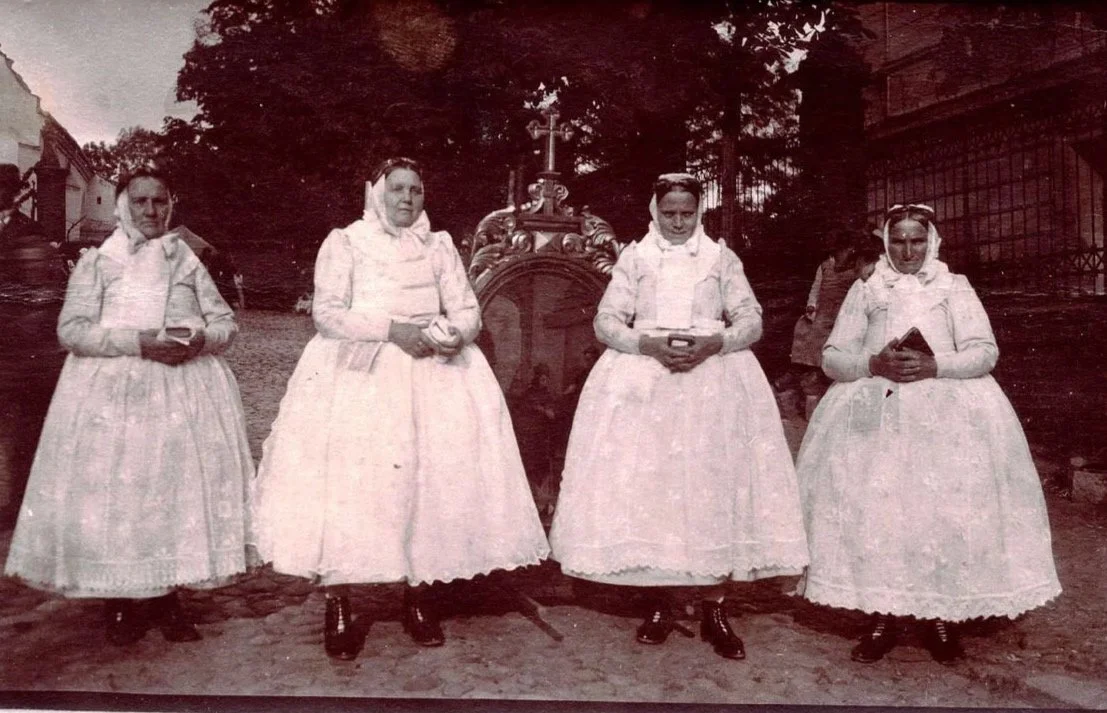
Bamber women in festive attire; 1938; courtesy of Museum of World Cultures in Poznań
Every year on the first weekend of August, Poznan's main square fills with a vivid procession of colour: women and girls in towering floral headpieces, sculptural skirts and ribbons that catch the light as they move. It is a celebration of a community that once arrived as migrants and gradually became woven into the region’s cultural fabric. Their story, layered and resilient, translates into the layered fullness of their traditional costume.
The story of the Bambers begins in the region of Bamberg, in Franconia (currently part of Bavaria). In the early eighteenth century, after years of war and epidemics emptied many villages around Poznań, the city invited skilled farming families from the German south to settle and cultivate the land. Between 1719 and 1753 several groups made the long journey eastward, establishing themselves in what were then rural settlements e.g. Jeżyce, Rataje, Wilda and Bonin. Over generations these villages were absorbed into the expanding city, placing Bamber culture quietly at its heart.
The newcomers brought agricultural expertise, elements of their material culture, and importantly, their Catholic faith, which they shared with the local population. In the eighteenth century, this common ground helped them settle into the villages they repopulated. Over time, and despite the layers of their heritage, Bambers came to identify strongly with the local community. In the nineteenth century the image of the “Bamberka”, a young woman in festive attire, had become so emblematic that it remains one of the most recognisable symbols of Poznań today.
Among the most distinctive expressions of this heritage is the women's costume - a sculptural, multi-layered ensemble reflecting both painstaking craftsmanship and the prosperity of the farming families who wore it. Though the Bambers arrived from Franconia, their iconic attire did not travel with them. As historians emphasise, it developed here, shaped by the aesthetic and social rhythms of the villages around Poznań. What began as a modest rural outfit evolved through the nineteenth century into a sumptuous display of colour, structure and ornament. Embroidered caps, quilted petticoats, meticulously constructed bodices and skirts had a remarkable volume and created a distinctive silhouette.
Local memory preserves charming, humorous details: in the interwar years, it is said that when Bamber women travelled by tram to the Corpus Christi procession in the city centre, transport authorities added extra carriages simply to accommodate the volume of their festive dress.
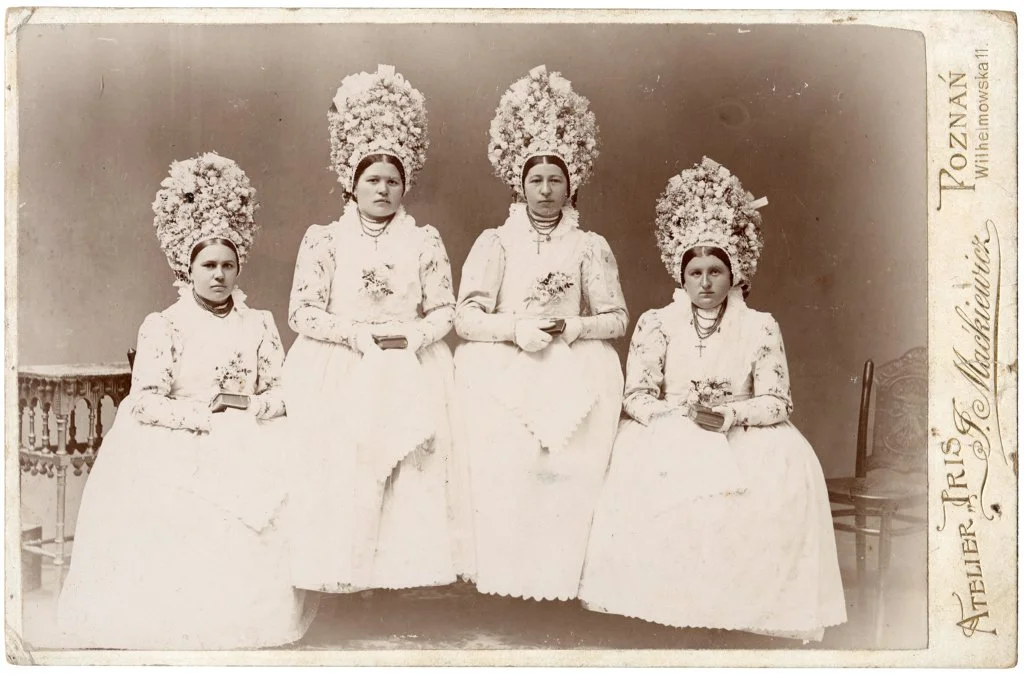
Bamber women in festive attire, 1900; phot. Atelier Iris, J. Maćkiewicz; courtesy of Museum of World Cultures in Poznań
The flower cornette
Perhaps the most striking element of the Bamber women’s attire is the flower cornette, a lavish floral headpiece worn by unmarried women and one that has come to define the entire silhouette.
The cornette functions almost as a ceremonial crown. It is a structured object composed of tiny blossoms, glass beads, delicate feathers and long ribbons, its fullness echoing baroque and rococo influences. The form itself required precision: about twenty-three centimetres long, made from cardboard and wire, and engineered to sit securely on the head without straps or hidden supports. Wearing it demanded perfect posture and no small amount of strength, as a cornette could weigh up to four kilograms! Unsurprisingly, it was the most expensive and cherished element of the festive ensemble. Families stored these headpieces in special cupboards with glass doors, often shaded by a lace curtain.
hand embroidered bonnet with jedwabnica; phot. A. Cieślawski; courtesy of Museum of World Cultures in Poznań
jedwabnica; phot. by E.Koprowski; courtesy of The Ethnographic Museum in Warsaw
While unmarried women dazzled in the soaring floral cornette, married Bamber women expressed their status through a more understated, though equally refined, head covering. Their embroidered bonnet was made of fine netting or tulle and adorned with intricate whitework embroidery. Subtle differences in its shape and density of stitching signalled both marital status and regional variation.
A distinctive element accompanying the bonnet was the “jedwabnica”, a silk scarf folded diagonally and wrapped tightly around the bonnet. It framed the face and tied at the back in long, fluid ends. Its colour was symbolic. Blue silk accompanied the white festive costume. Green was worn with the red or green ensemble. Violet, deep and dignified, appeared particularly during mourning.
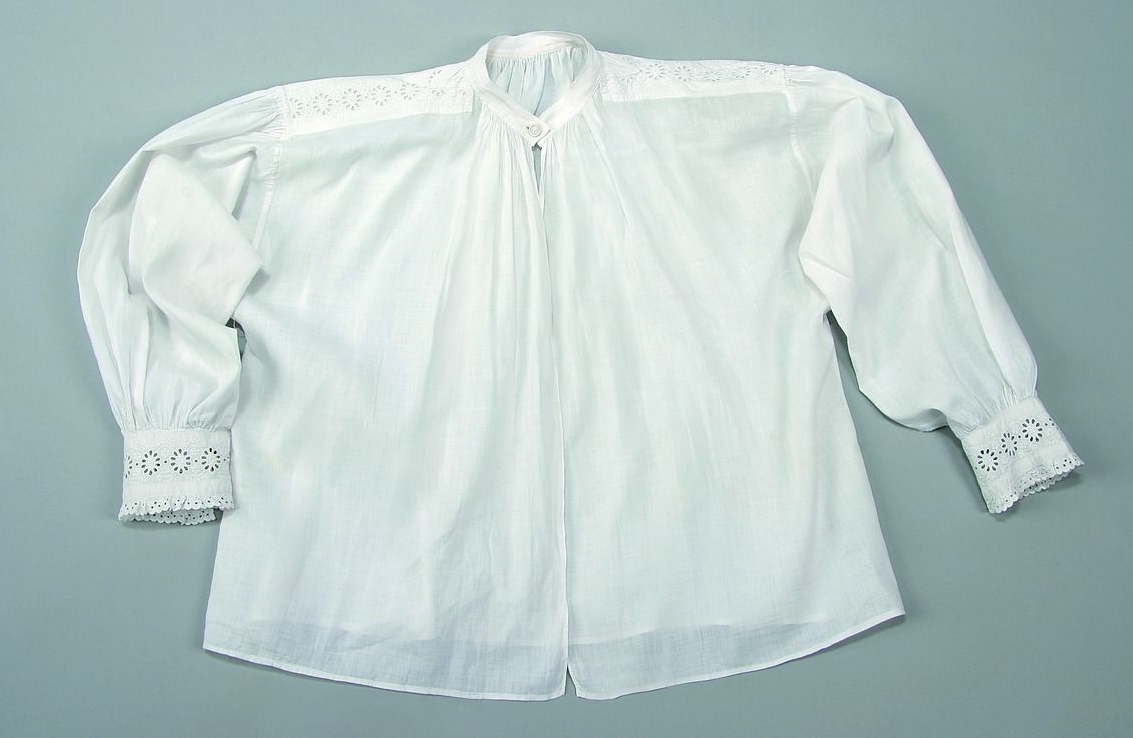
batiste shirt; photo by A.Cieslawski; courtesy of Museum of World Cultures in Poznań
The Shirt
The shirt, or koszulka, was usually made of lightweight batiste. Although an undergarment, it did not lack refinement. Fine hand stitching, lace trims and delicate finishing made the neckline and sleeves decorative in their own right, often visible beneath the outer layers of the costume.
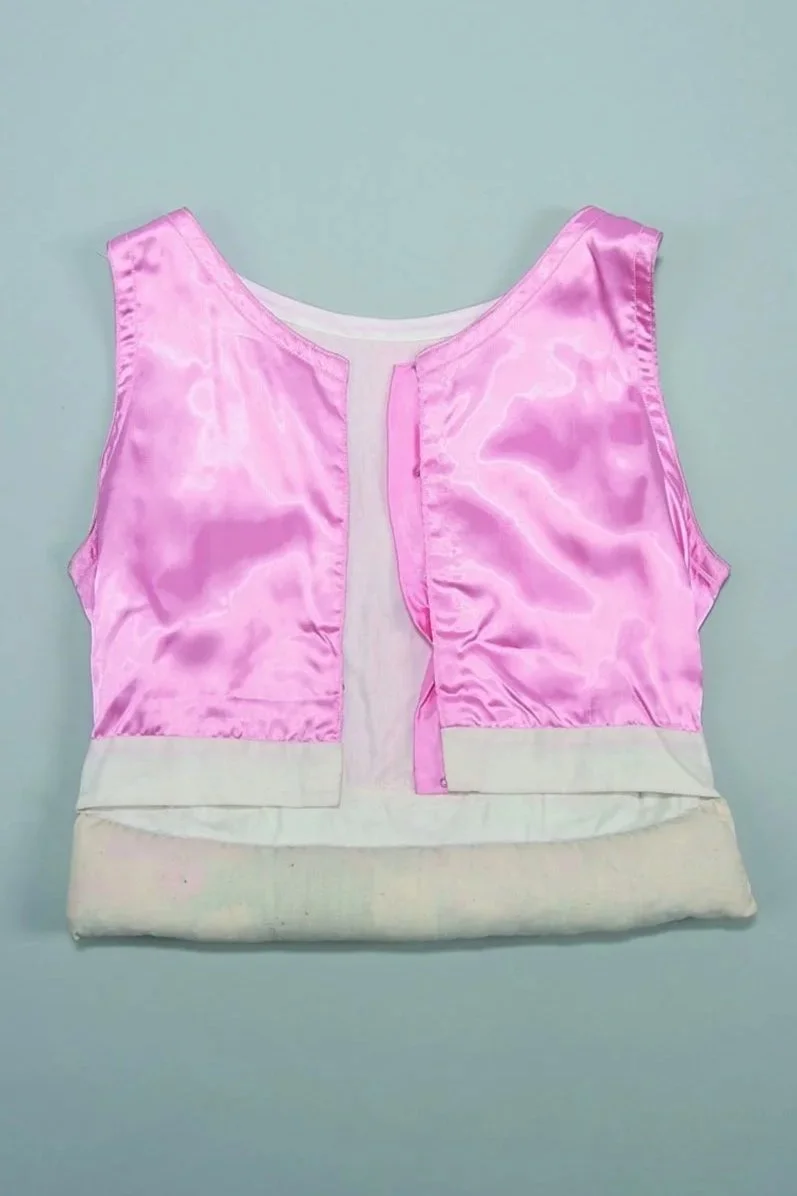
“sznurowka spodnia” with padded roll “kiszka”; courtesy of Museum of World Cultures in Poznań
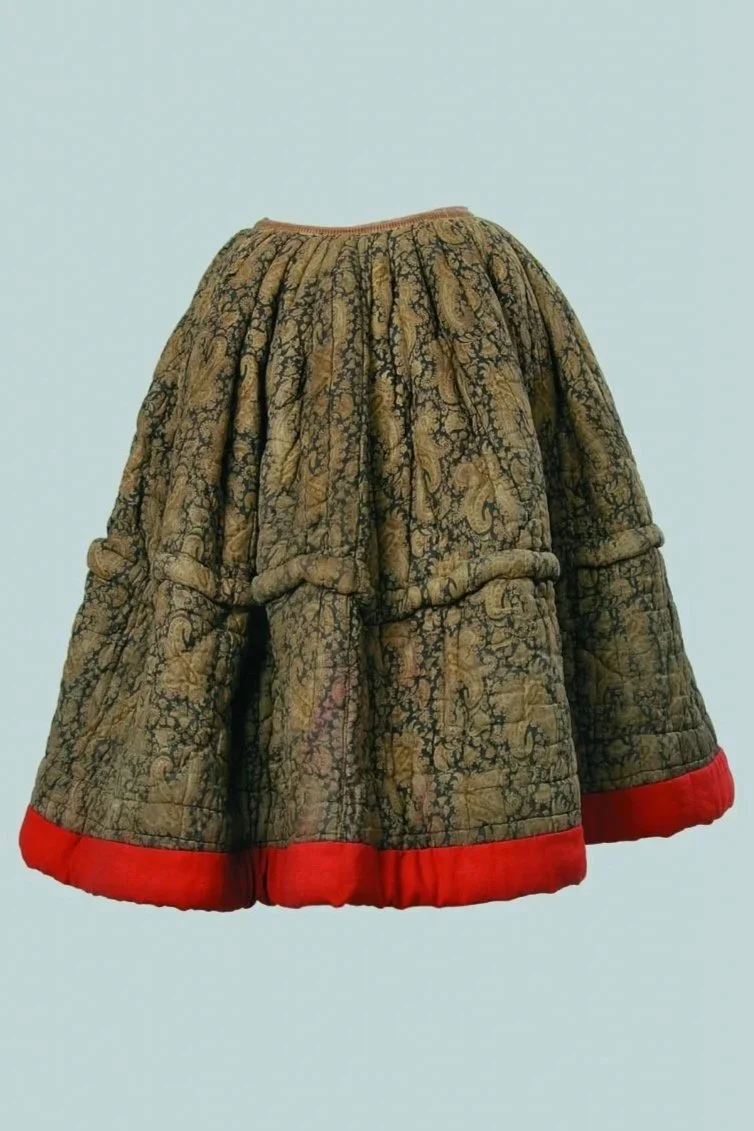
“watówka” - quilted petticoat; courtesy of Museum of World Cultures in Poznań
Architecture of the Bamber Silhouette
Beneath the opulent surfaces of the Bamber costume lies a true architectural foundation. At its centre was the “sznurówka”, a fitted bodice fastened with laces, hooks or small buttons. For girls, it was sometimes worn as an outer garment, made from pink batiste or occasionally satin, shaping the torso in a neat and gently disciplined line.
Hidden beneath the festive layers was “the sznurówka spodnia”. Made from sturdy, inexpensive fabrics, it featured a band of white linen at the waist with an attached “kiszka”, a padded roll stuffed with scraps or wadding. This construction played an essential role in shaping the silhouette, as reaching a sense of visual fullness and abundance was key.
Over the sznurówka and under the decorative outer skirt, women wore “watówki”, quilted petticoats that provided warmth and most crucially volume. Two were worn for everyday dress, and three for festive occasions. Together, these layers created the iconic wide, almost balloon-like shape of the Bamber skirt, giving the figure its characteristic buoyancy and dimension.
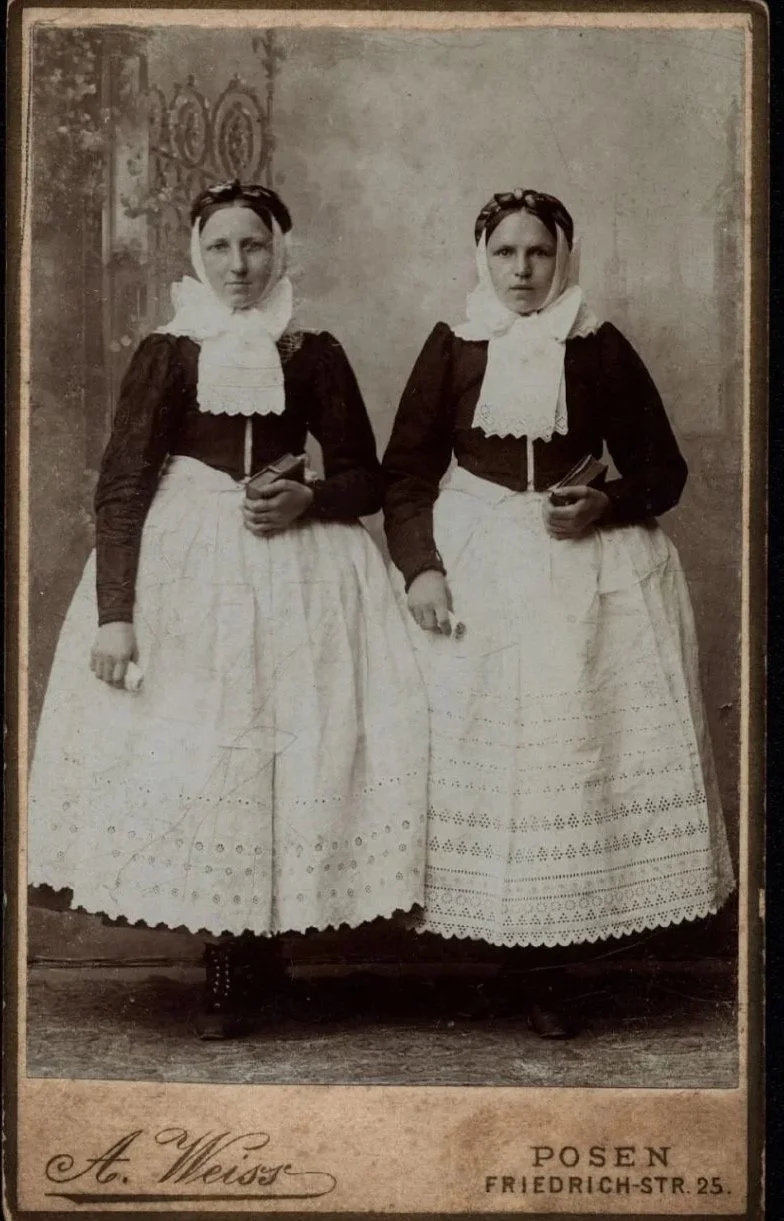
Bamber women in festive dress; courtesy of Museum of World Cultures in Poznań
Outer Layers and Accessories
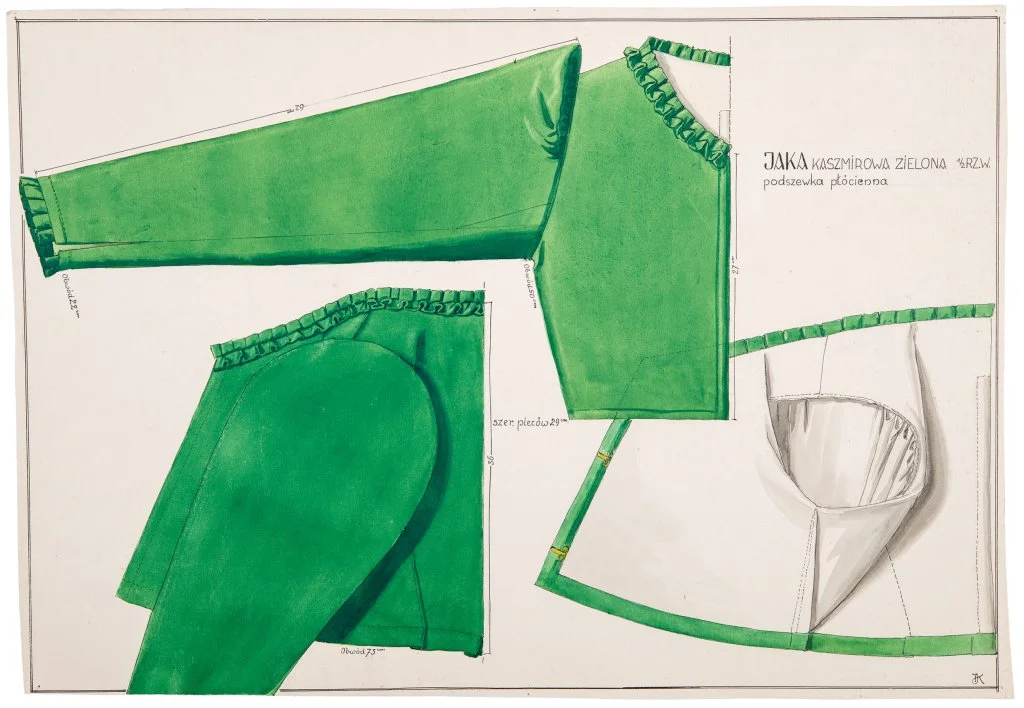
Historical photographs often show the “kaftan”, an outer garment with softly puffed sleeves and narrow cuffs, its structure stiffened with whalebone sewn into the placket and the back.
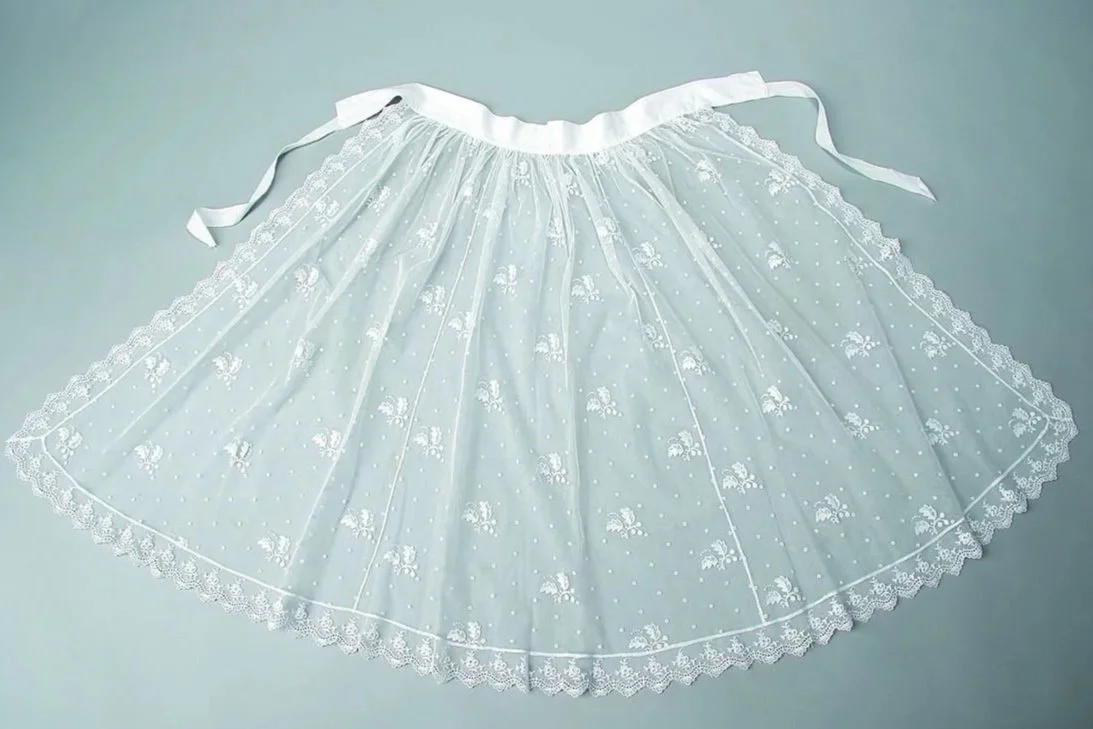
The apron was an essential accessory, tied at the back with double ribbons. For everyday dress it could be colourful, while for festive occasions it was always made of white batiste or tulle. A small, separate pocket was attached to the waist with two ties, with embroidered initials on proud display. Footwear typically took the form of black leather lace-up ankle boots. For church ceremonies and processions, women often added rosaries, ribbons or symbolic ornaments.
courtesy of Museum of World Cultures in Poznań
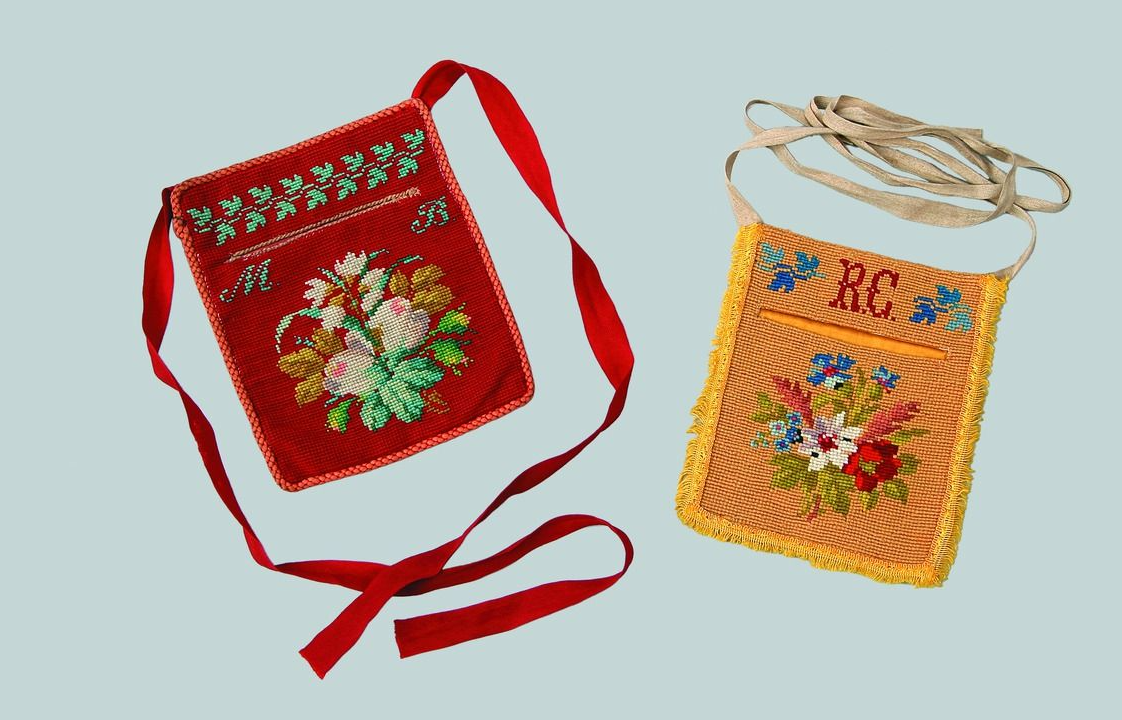
lace-up angle boots; courtesy of Museum of World Cultures in Poznań
Tradition continued
The survival of Bamber dress and tradition, with the unique pieces we can admire today, was saved at the very last moment. The Poznań Bamber Society was founded in 1996, thanks in large part to Professor Maria Paradowska, an ethnologist and leading scholar of Bamber history. Soon after, families and descendants of the original settlers, encouraged by the re-appreciation of their culture, started coming forward, opening cupboards and long-closed family archives, sharing garments, photographs and stories.
The transmission of this material culture across generations had long been fragile. After the Second World War, during the PRL era, Bamber identity became increasingly associated with “Germanness,” a label burdened with political tension. Therefore many families hid their traditional garments out of caution. Others disappeared for more ordinary reasons: older women were often buried in their traditional dress and over time many pieces were cleared from homes as unfashionable “old things.”
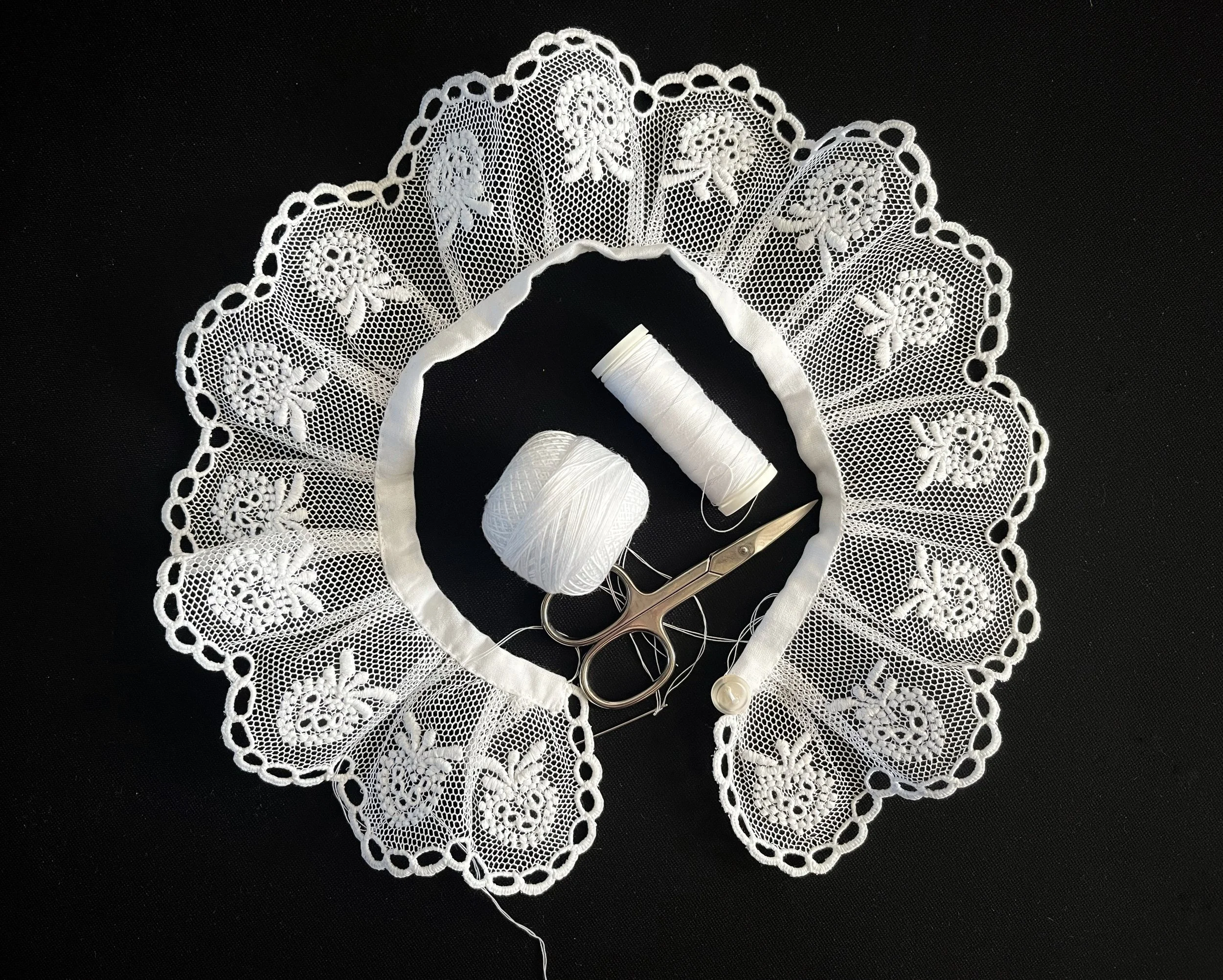
embroidered collar; courtesy of Paulina Młynarczak
Despite the sculptural richness of the Bamber costume, the humble refinement of its whitework embroidery draws the eye. Yet this delicate element is also the one least preserved. Very few original whitework patterns survived. Most embroiderers left behind no documentation at all.
Today, this nearly lost practice is being revived by a remarkably small circle of women - just eight embroiderers working closely with the Museum of the Poznań Bambers. Among them is Paulina Młynarczak. Her days are spent in IT, but any free hour belongs to handcraft, which is not just a passion, but something that feels like a true calling. Paulina approaches embroidery with the curiosity and discipline of a researcher. She visits museums, studies garments up close, photographs details, searches newspaper archives and reaches out to embroiderers in other regions.
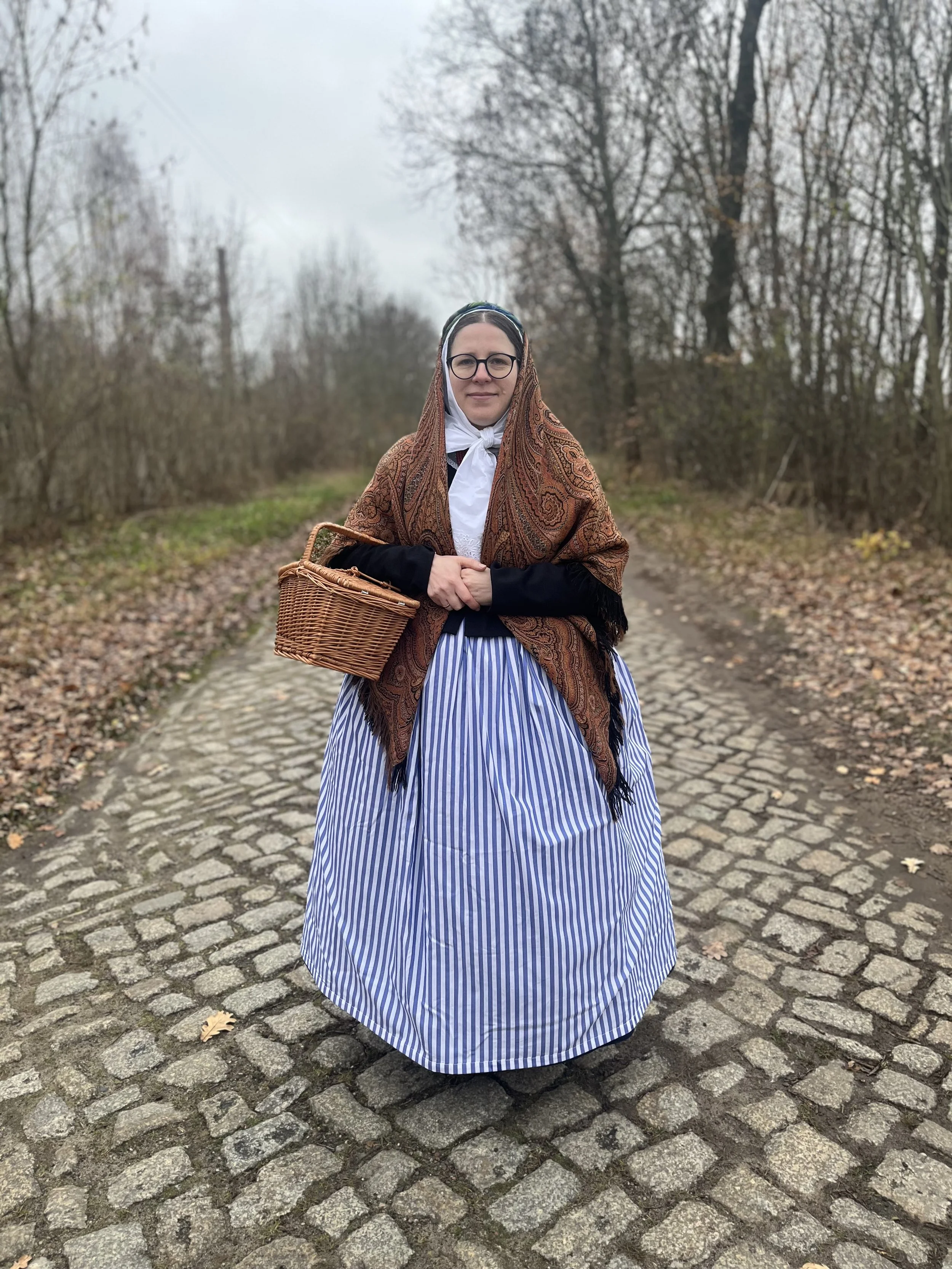
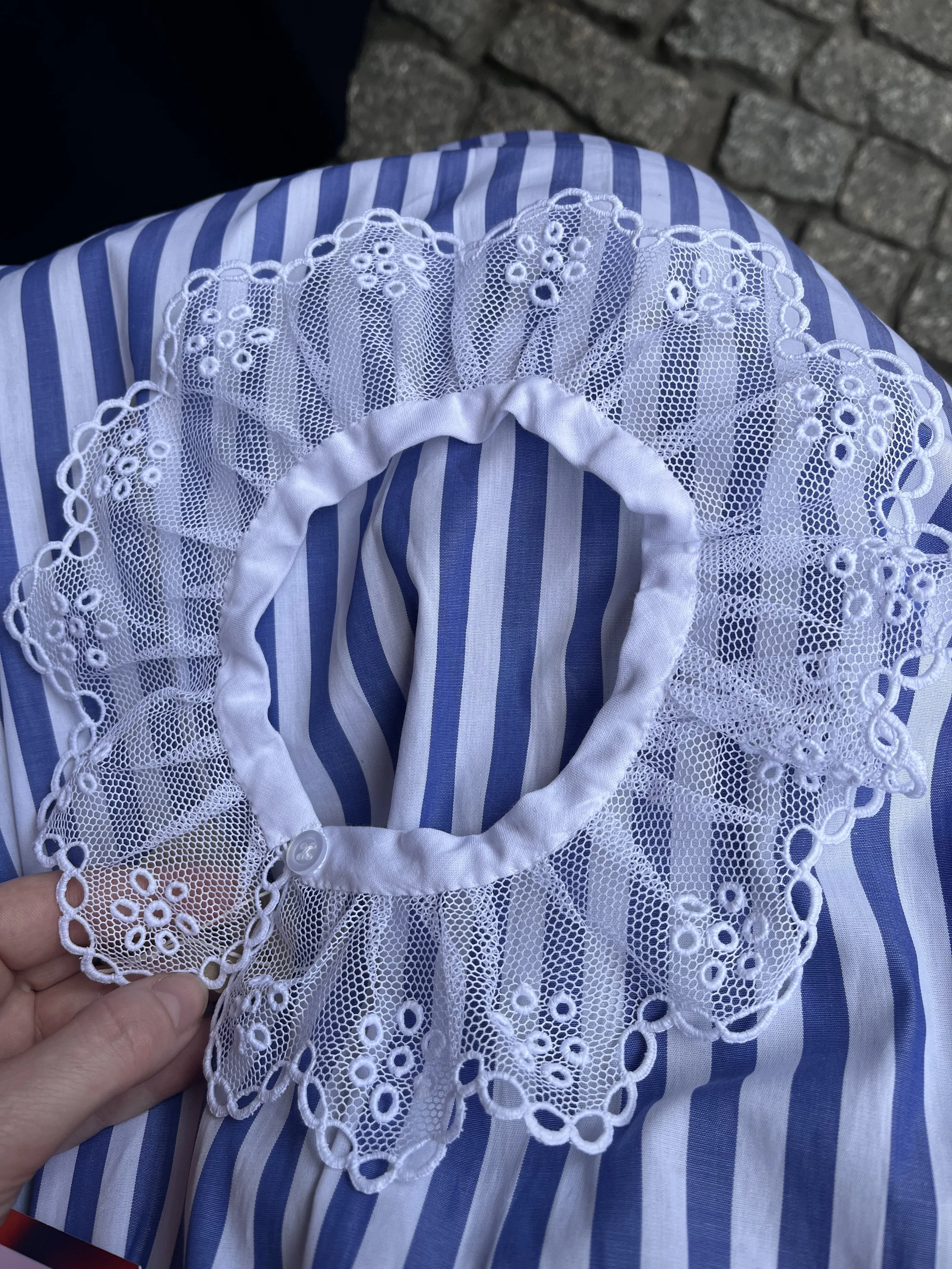
embroidered collar; courtesy of Paulina Młynarczak
“Two years ago I was searching for someone who could exchange techniques and experience and approached the Poznań Bamber community,” she recalls. To her surprise, she discovered that no active embroiderer remained who could guide her deeper into the technique. “The museum invited me in, so I could study the surviving garments up close, and it was then that the idea for a project took shape.”
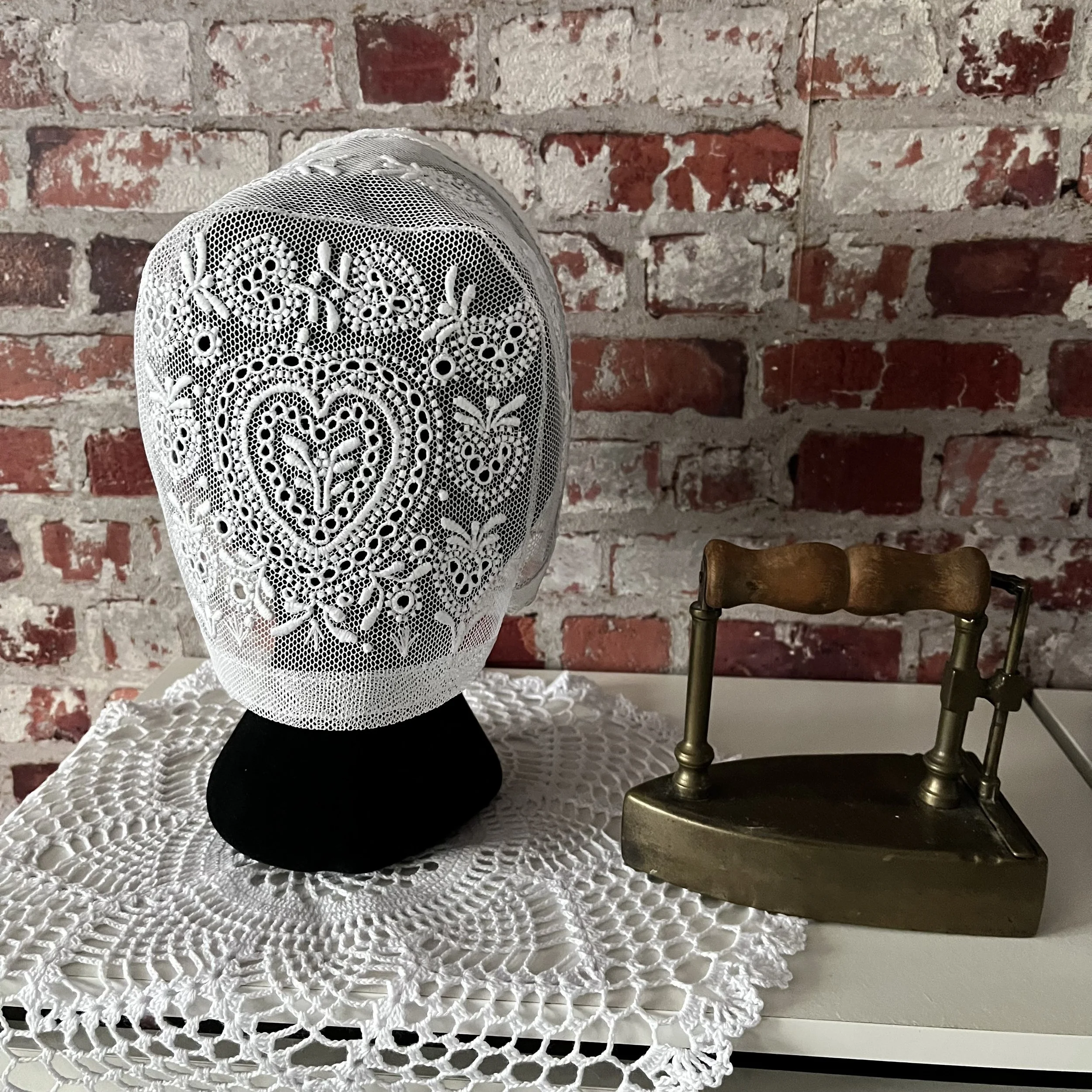
embroidered bonnet; courtesy of Paulina Młynarczak
Paulina applied for a regional scholarship with a year-long proposal first to document the motifs visible on historical Bamber garments; then to redraw them into patterns, then to embroider samples herself, and finally to form a workshop group that could continue the tradition. This became the foundation of the small embroidery circle now operating within the museum and doing truly essential work.
What may come as a surprise is the age of the group. Most are very young, a sign of how strongly the new generation seeks connection with heritage and the slow, meditative process of making. As Paulina explains: “it’s surprisingly low… the group ranges from around 19 years old, then we have women in their 30s and one in her 40s. So compared to other embroidery circles, this is a very young group. There simply aren’t older members, and that influences the way we look at the embroidery. We haven’t stopped at the idea that ‘this is how our grandmother did it, so we must do the same.’ No. We approach it differently, we try to adapt it to ourselves, to our generation, so that it feels right for us.”
There is a visible joy when Paulina speaks about her workshops and the talks she has been part of. She has the warmth and patience of a natural teacher, and her passion for the craft is genuinely contagious. Her portfolio includes pieces made to order, personal experiments and contemporary interpretations that sit respectfully alongside work rooted in tradition like reconstructed motifs or meticulously crafted bonnets.
Explore her work and get in touch via Instagram. She is an inspiring collaborator for anyone interested in embroidery, heritage or contemporary craft.
And on your next visit to Poznań, don’t miss the Museum of the Poznań Bambers. Its exhibitions, workshops and community initiatives continue to bring this heritage to life - visit their website here.
Words by Paulina Czajor
____________________________________
Are you into crafts? Here’s more to read…
-Bobbin Lace From Poland
-Koniaków Lace
- Double Warp Weaving
____________________________________