Paweł Robuta - craft, form and becoming
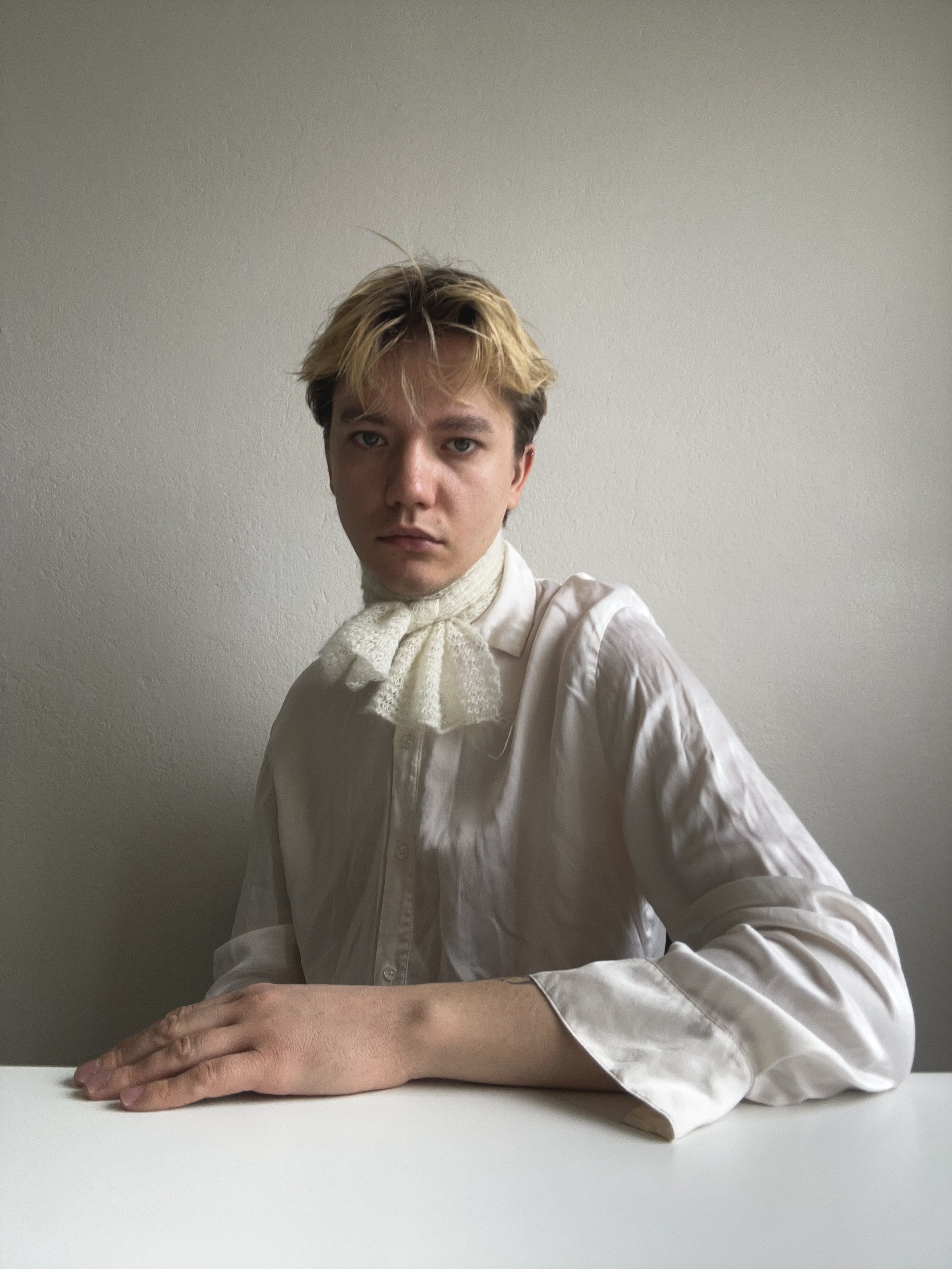
Paweł Robuta
Ask Paweł Robuta what he's manifesting for the future and he doesn't reach for the obvious answers. "I manifest working in the atelier of Dior and sewing haute couture by hand," he says with a smile. "To learn all the secrets that the people in those ateliers carry." There is something quietly radical about a young designer whose primary dream isn't to go viral with his fashion label, but rather to keep honing the craft. In an industry that has learned to speak fluently about craft while quietly sidelining it, Robuta treats it not as an aesthetic afterthought but as foundation. "At some point I also thought - maybe I could move to the countryside and apprentice with a lace maker for a while… To really possess the craft in my hands."
Born in Sandomierz, Poland, Robuta holds a BA from the Warsaw Academy of Fine Arts and an MA from the Swedish School of Textiles. As we connect online, he's just moved to Paris, where at the time he’s interning at the small studio Alphonse Maitrepierre. By most measures, he is still at the beginning of his career- yet his work has already moved across contexts and geographies. His MA collection was presented at Copenhagen Fashion Week; a leather collaboration was shown during Paris Fashion Week; his uniform designs are now worn by guides at the United Nations Headquarters in New York; and his work has also appeared at Panorama Editions, staged in a historic fort near Dharamsala, India. His portfolio is an unusual constellation of experiments and approaches.
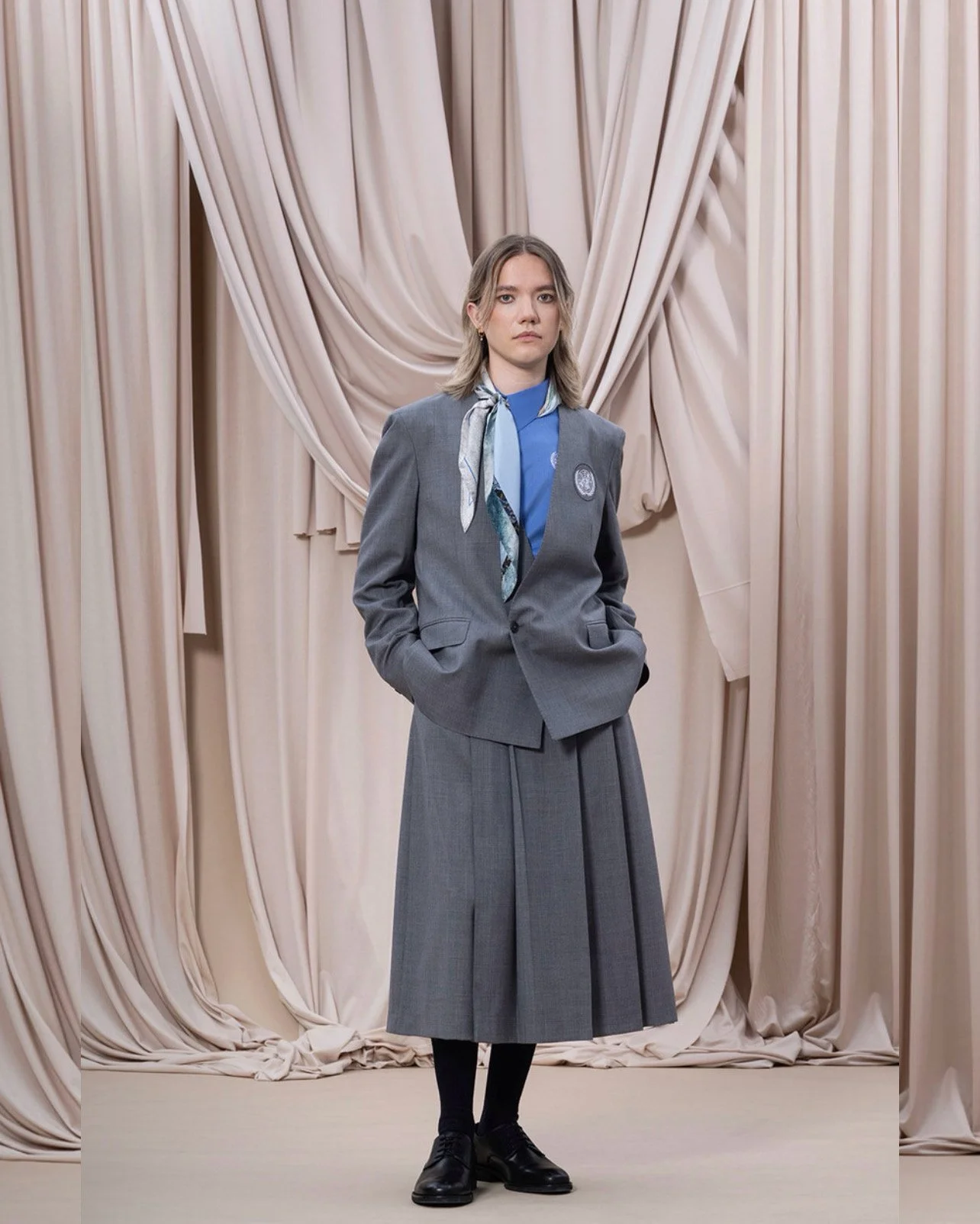
Paweł Robuta wearing one of his designs for the UN Headquarters’ guides; photo courtesy of designer
LEARNING TO SEE
Throughout his childhood, one thing was constant: he was surrounded by art and making. Much of that came from his mother - a hairdresser who crocheted, sewed, painted. "There was always this element of working with your hands," he recalls, "of making things - not necessarily practical, but creative, always leaning towards art." It shaped a particular way of seeing: the understanding that any object, however ordinary, carries the trace of the person who made it. Then there was Rome. His grandmother had lived there for thirty years, and as a child Robuta visited often, accompanying her into Italian homes where she worked caring for children, cooking, cleaning. Moving through other people's domestic spaces left a lasting memory. "Those spaces were filled with art and design," he recalls. "Without really understanding what I was looking at, I'd see works by Andy Warhol on the walls, or encounter this incredibly beautiful Italian design."
It was his grandmother, again, who first shaped his eye for images. She sent him his very first issue of Vogue Italia, back in 2010 as he recalls. "I remember it felt incredible. I used to read a lot of fantasy books, and that issue of Vogue felt like a fantasy story to me - only it was about fashion." He began collecting. What kept him returning was the magazine's deep entanglement with art under Franca Sozzani's direction, the sense that fashion and art were not separate disciplines but in constant conversation. A Tim Walker editorial. A Steven Meisel cover in tones of yellow and blue. "That's when I fell in love with fashion" he recalls.
FILM SETS LIKE LIVING MOODBOARDS
Already studying at Warsaw's Academy of Fine Arts, he began working on film production sets alongside his degree. His first role was as assistant to costume designer Katarzyna Lewińska on The Peasants, Dorota Kobiela's animated historical drama. For months he lived almost entirely inside the production's world, the rhythms of Polish village life, its textures, its palette. This experience gave him something more than reference material, but a sense of world actually lived in. That immersion found its way into his BA pre-collection titled “Folk”, drawn directly from the visual language of Polish folklore. He recalls revisiting that thread later in a textile project inspired by the work of Zofia Stryjeńska, translating her illustrations into the rhythm and feel of fabric.
More film set experiences followed. "What I liked most about film sets is that each one is completely different. Every project tells a different story, so you start living a different life." Beyond The Peasants, he worked on the German Netflix series “Barbarians”, where he got to inhabit a Germanic village and a Roman Empire camp. Later came the series “1670”, also for Netflix, set in 17th-century rural Poland. "We were based in Kolbuszowa, which felt almost like a fairytale. There was no internet, no signal at all. Each time, you enter a completely different world, a different period, and you live as they do."
FINDING FORM THROUGH PROCESS
From Warsaw he moved to Sweden, enrolling in the masters programme at the renowned Swedish School of Textiles in Borås. It was where he found, for the first time, a structure built almost entirely around freedom and experimentation. "Their programme gives you a huge amount of time to explore and try different things," he says. "I spent most of my time in the labs-working on prints, experimenting with construction, just testing different directions." What emerged from that period was what he describes as a personal archive: a growing body of ideas, forms, and textile experiments shaped as much by error as by intention. Imperfection, unexpected outcomes, deviations, mistakes, it all became central to his way of working.
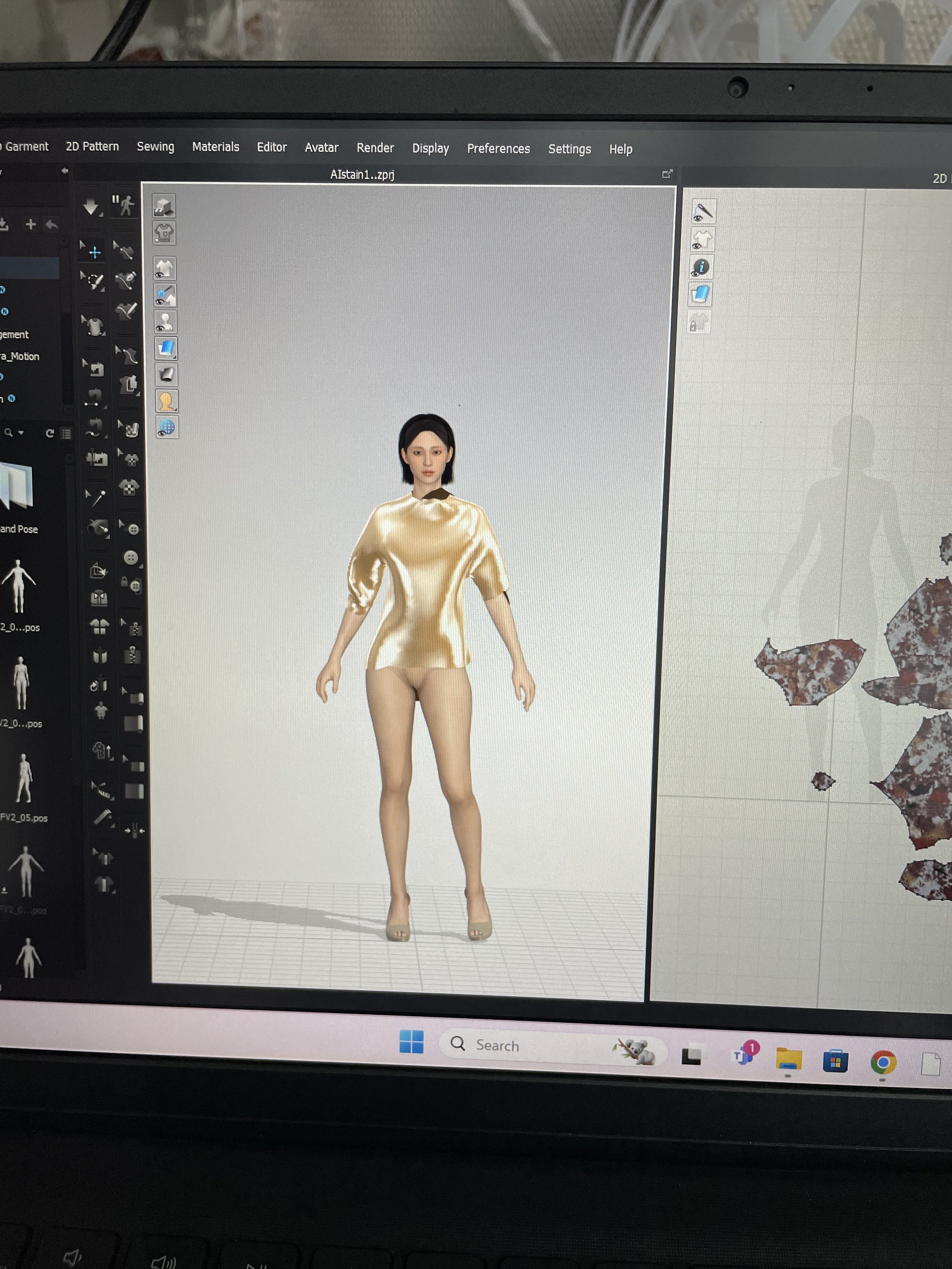
At one point, that exploration extended into working with AI. Instead of sketching, he began with text prompts, generating digital avatars that he then translated into physical form. “I would create these characters through AI, bring them into CLO, trace patterns, and then turn them into garments that I could put on people,” he explains. “It was about seeing what would come out of it and whether anything meaningful would emerge at all.”
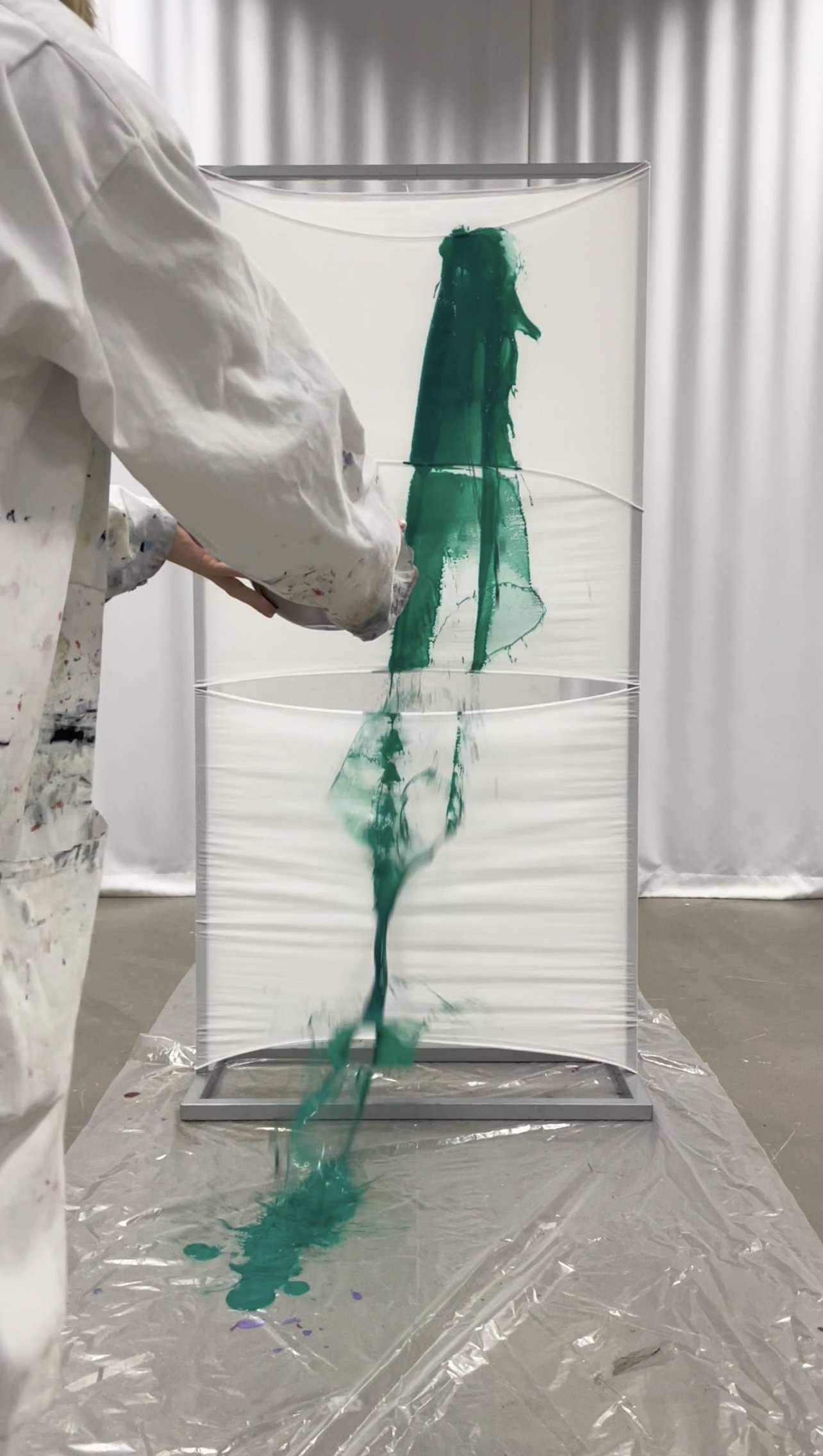
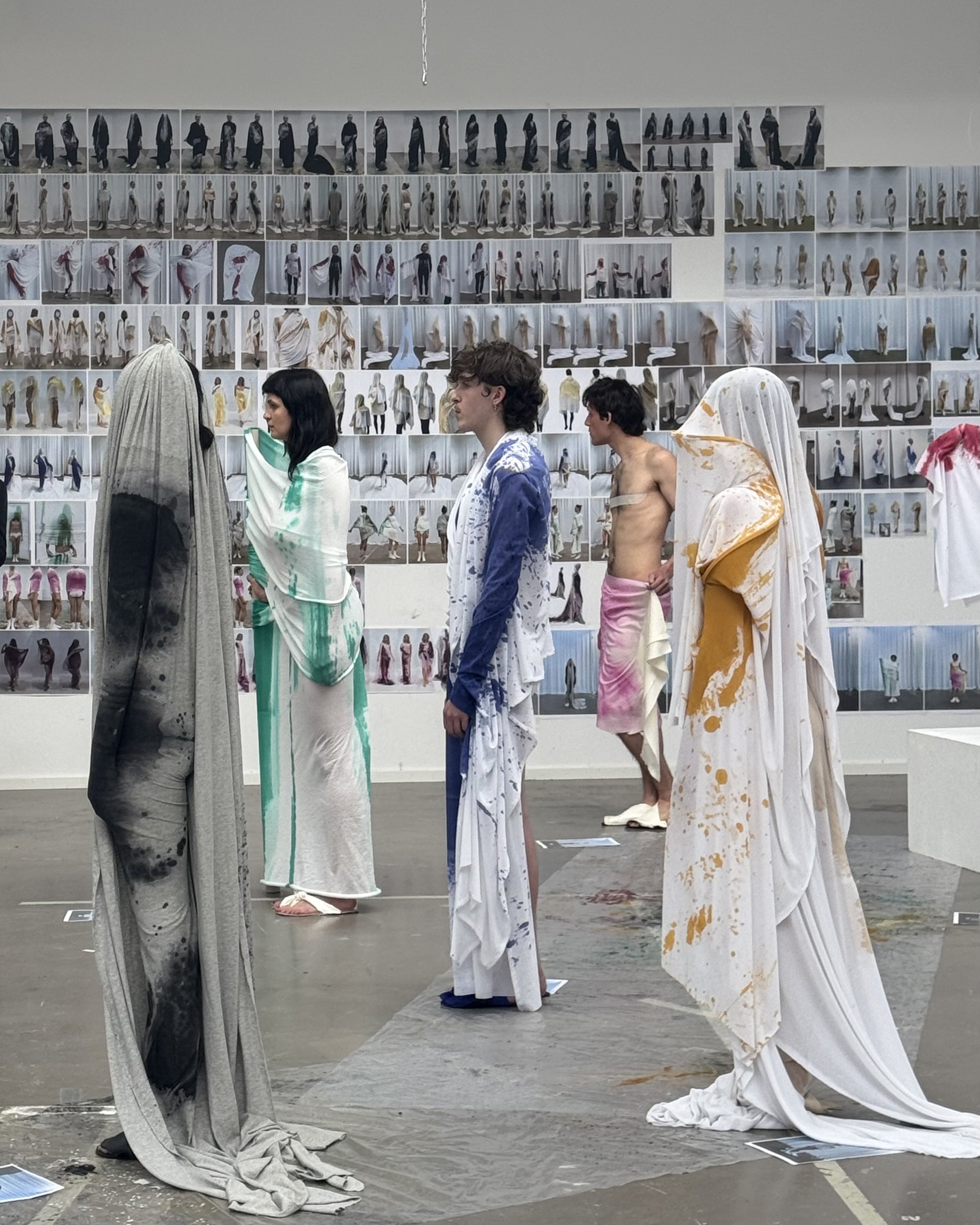
Liquid Relics collection process
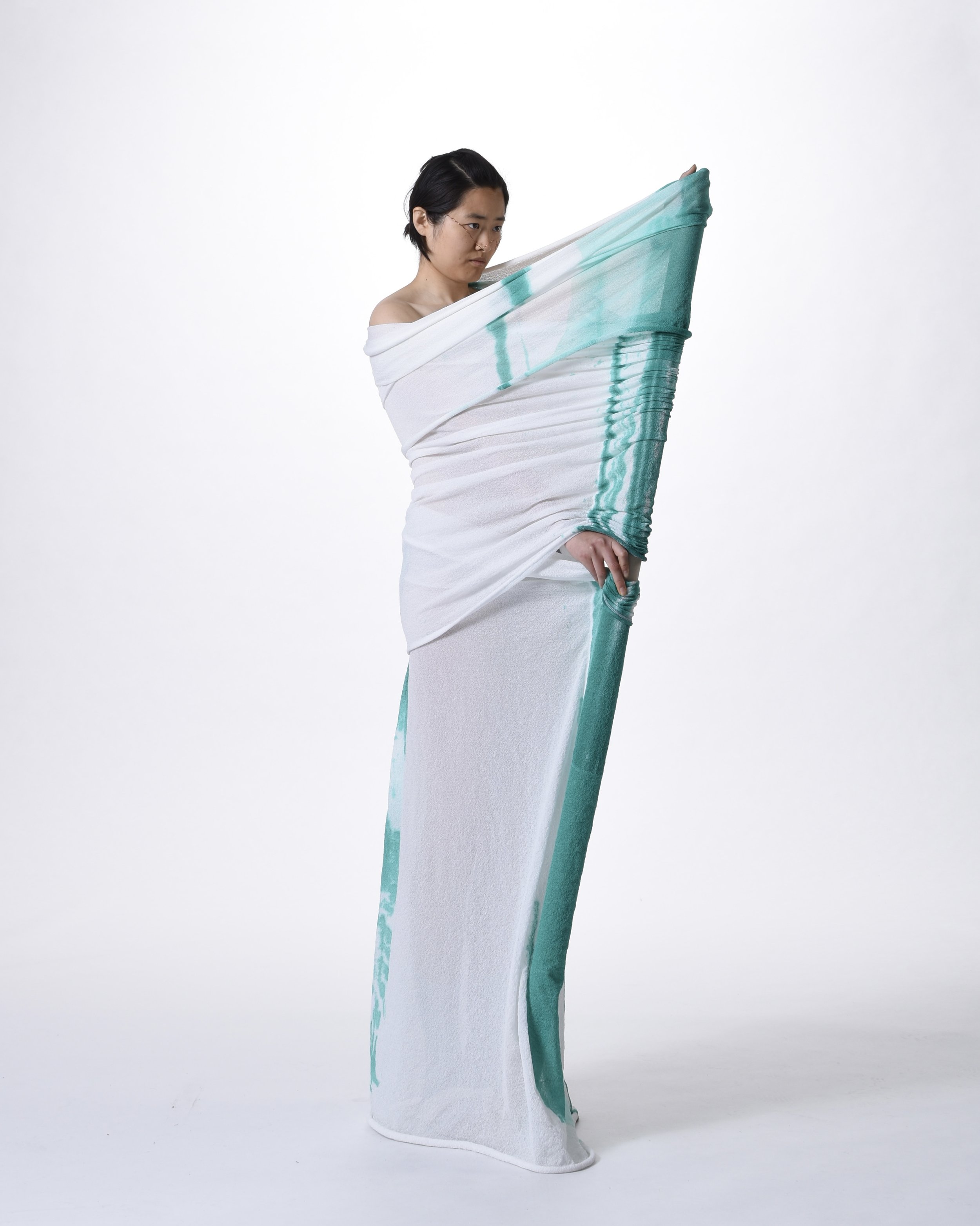
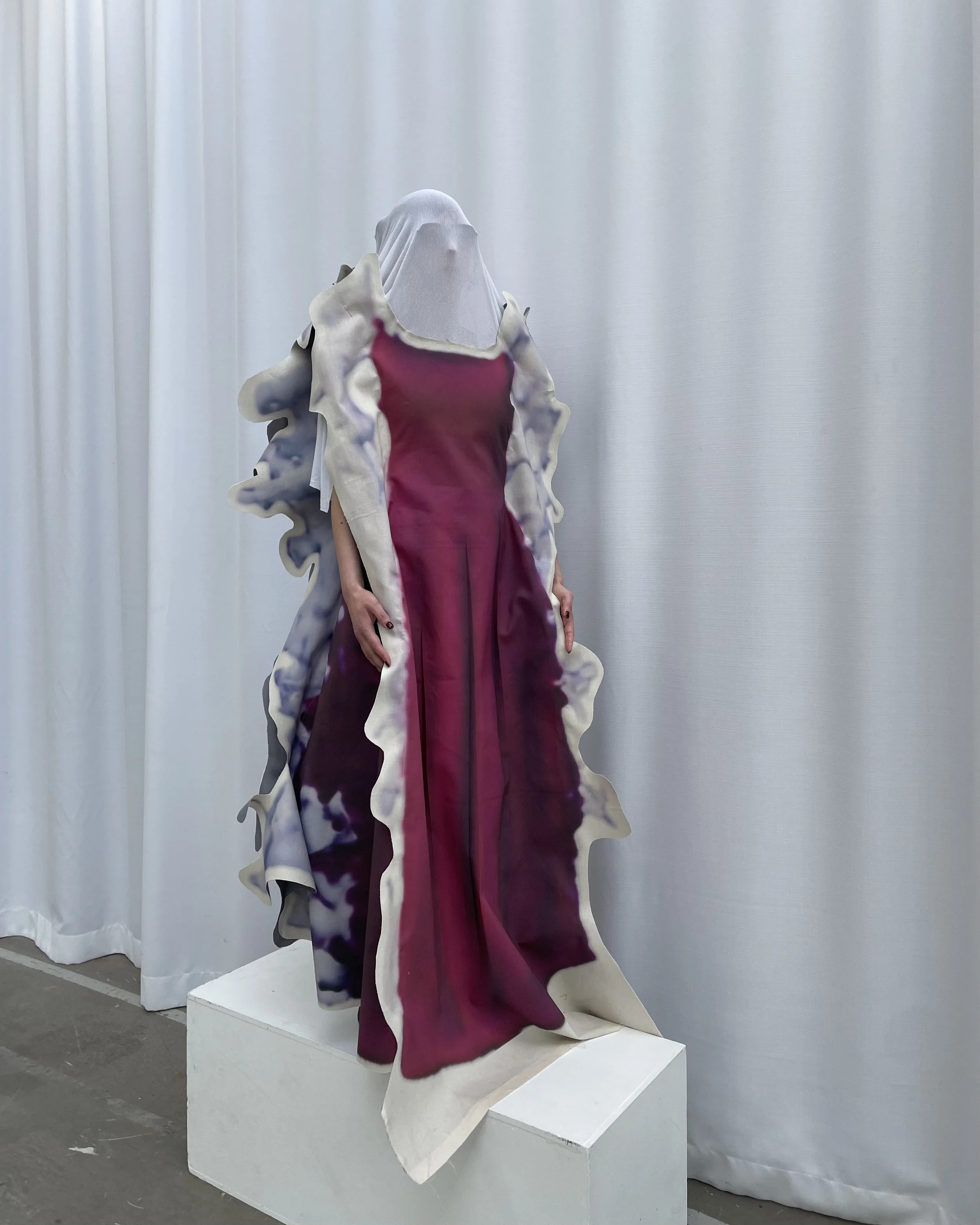
Liquid Relics collection look
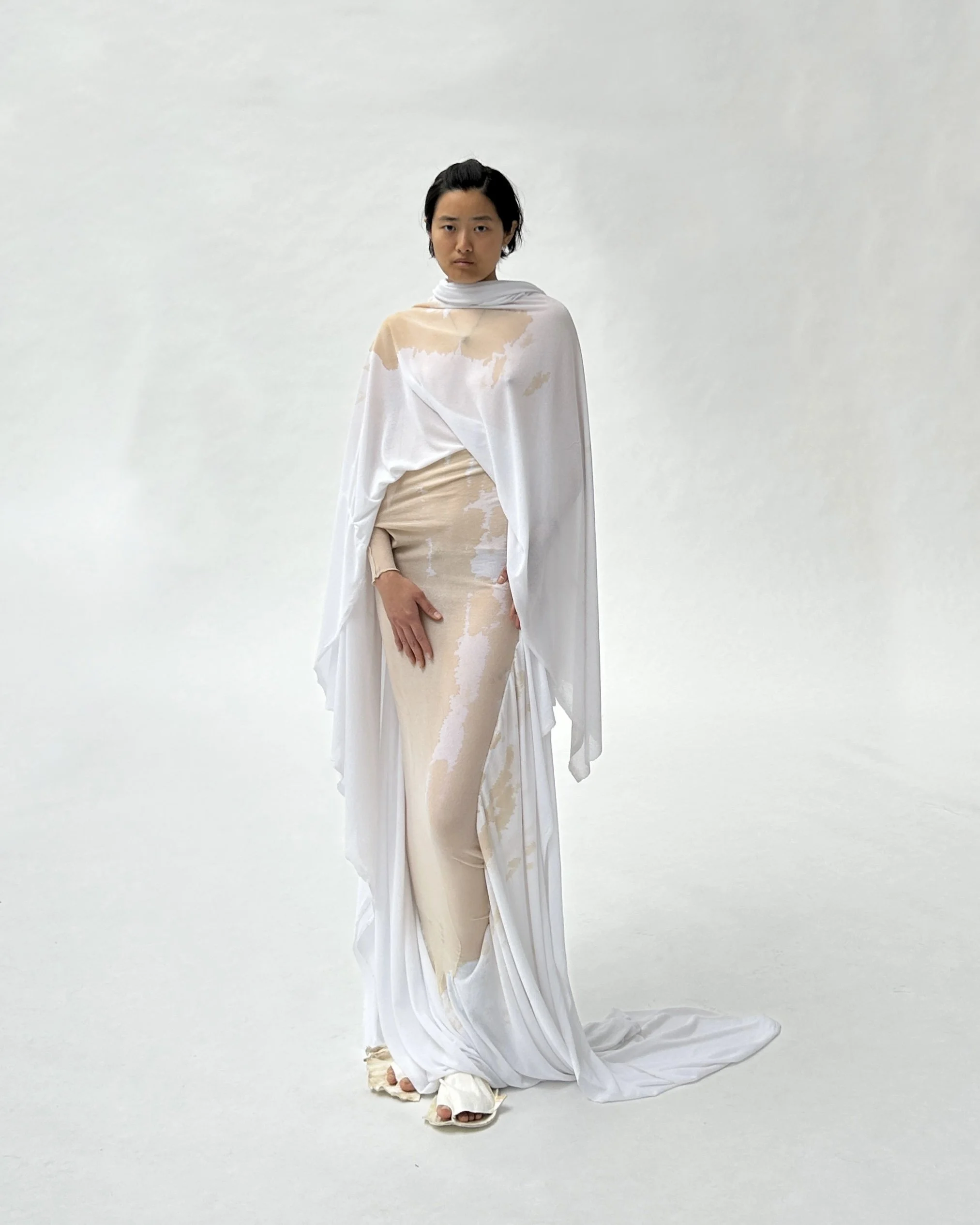
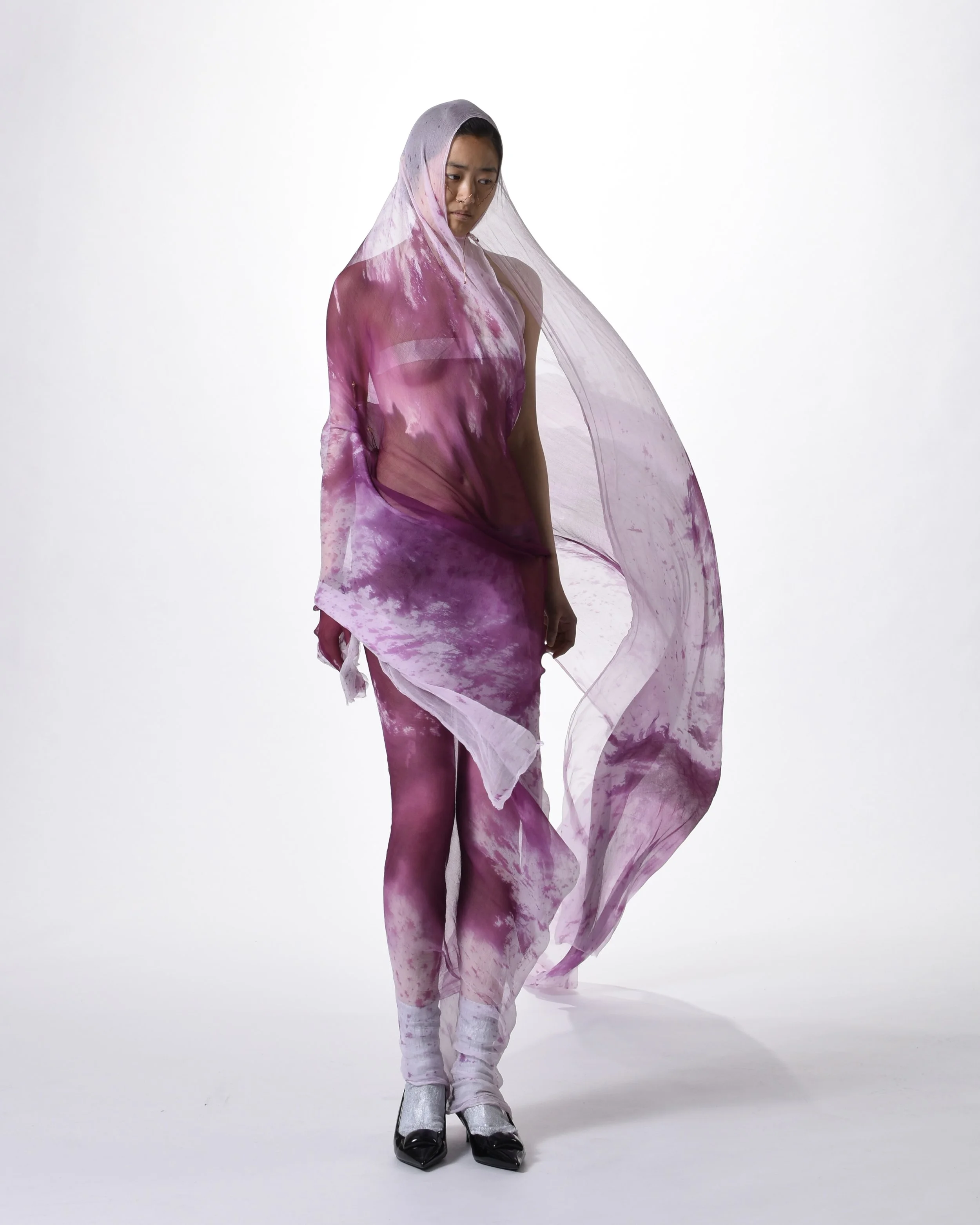
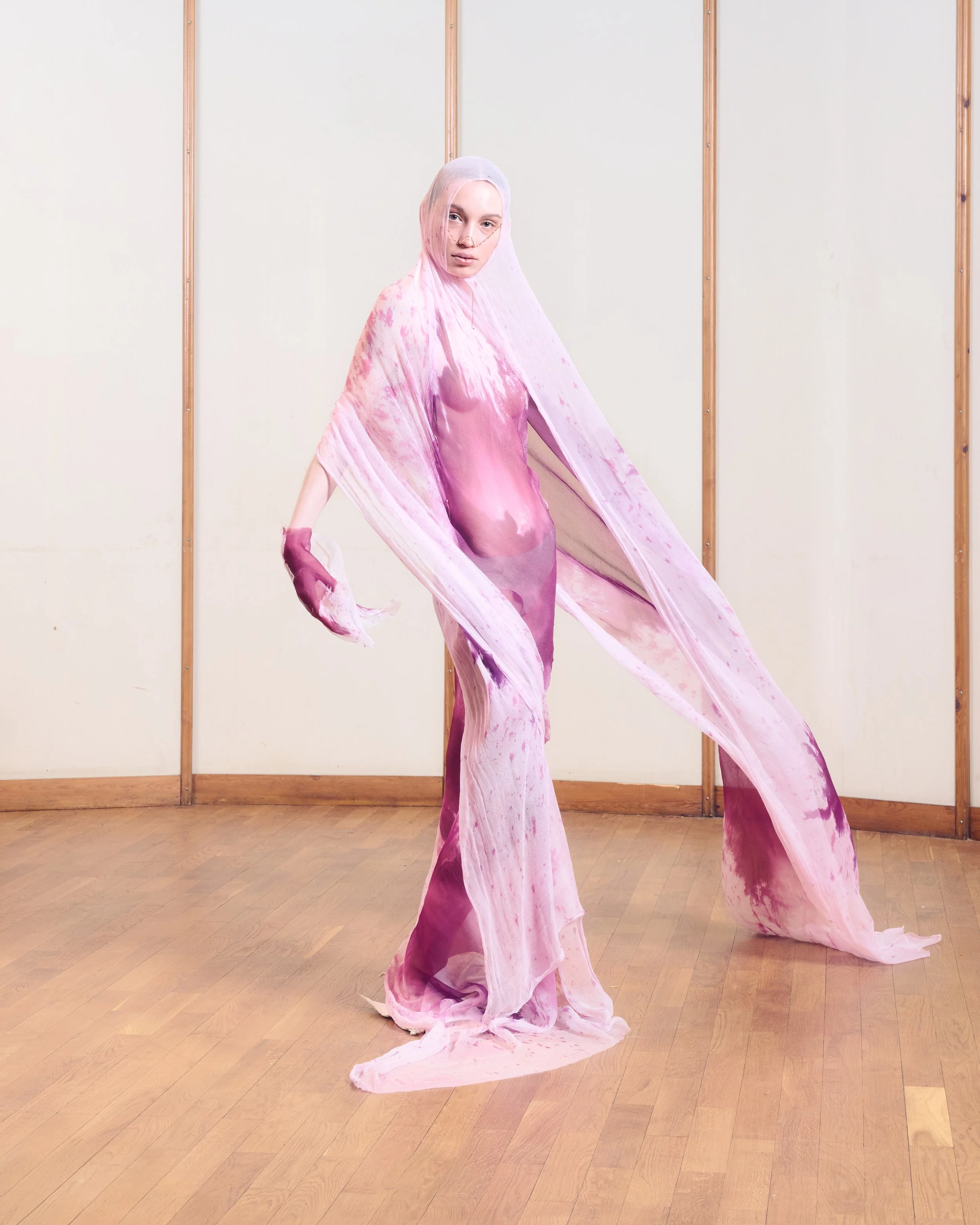
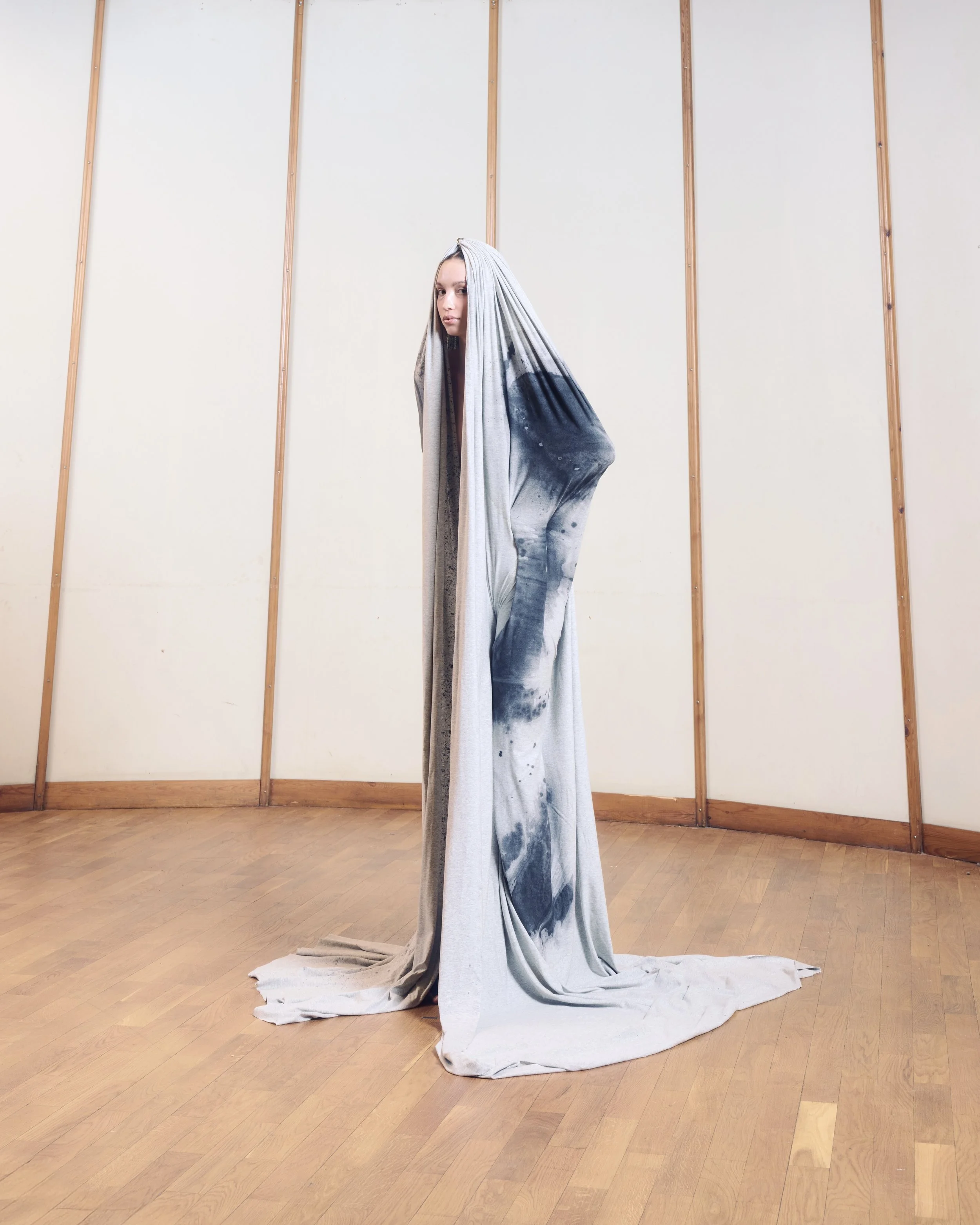
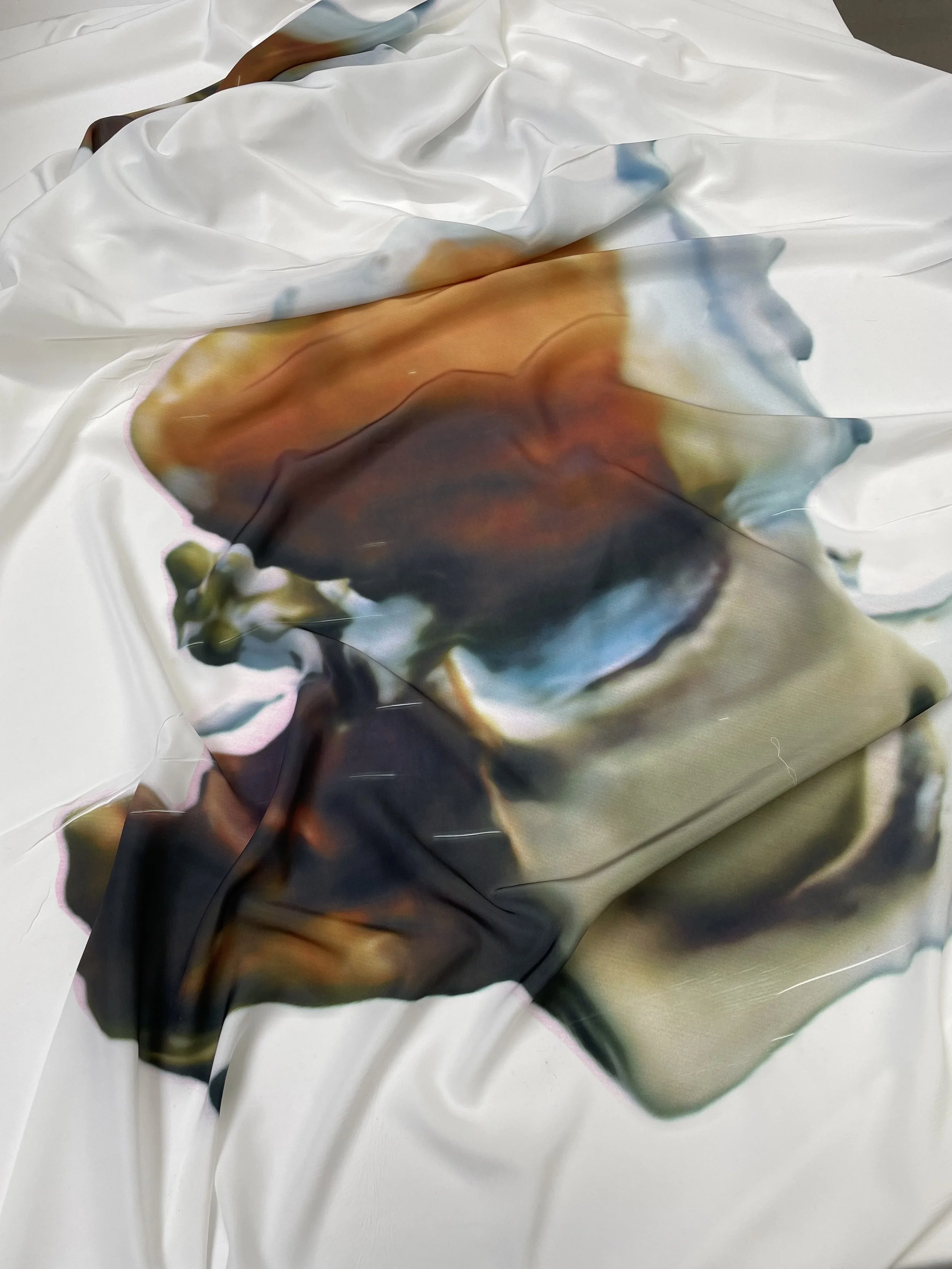
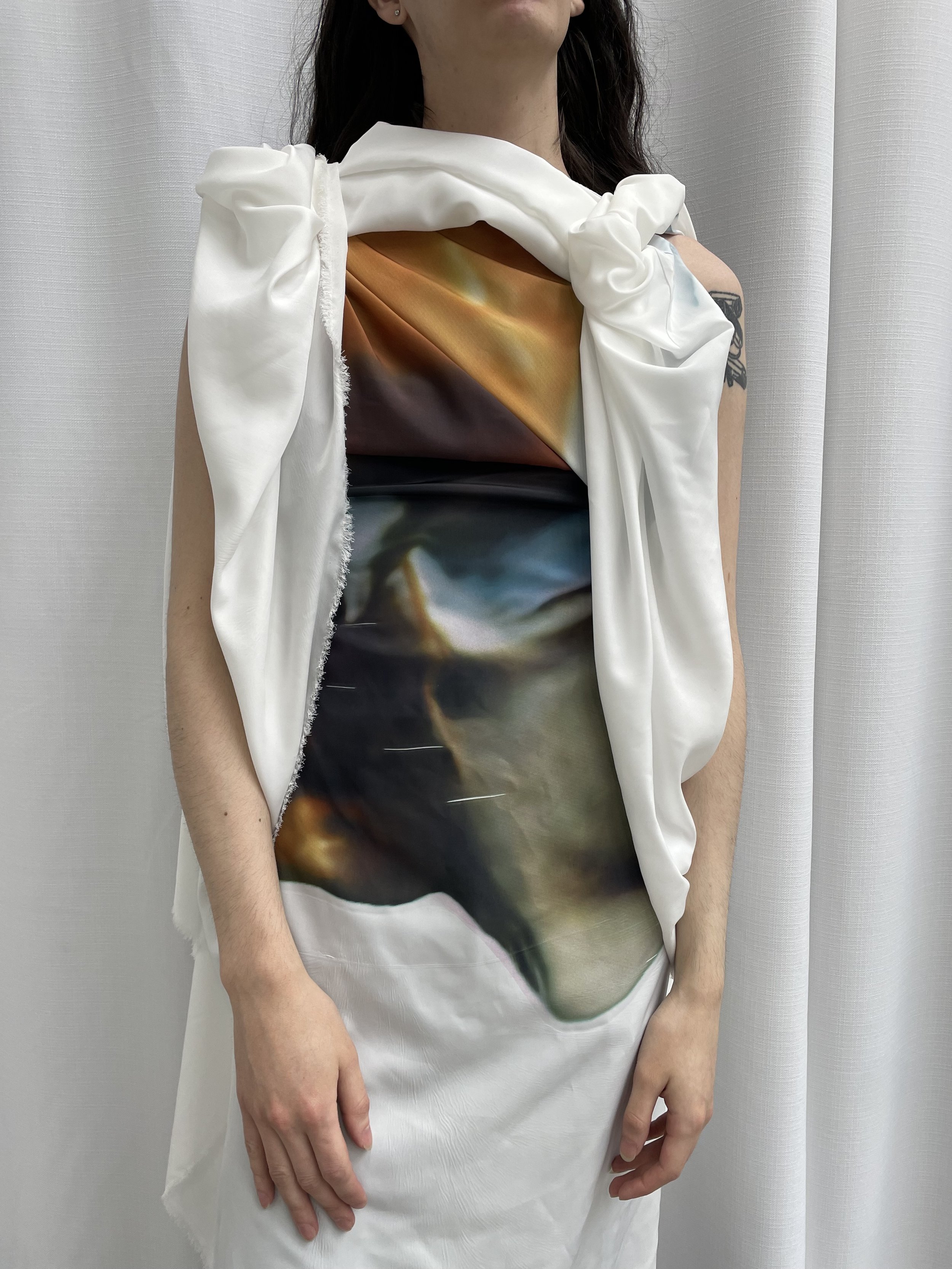
For his masters collection titled “Liquid Relics”, he chose to focus on draping and the idea of stains. Not as a flaw, but as a subject. "I looked at stains - what they are, what they mean. I explored it in two contexts. One was more religious or historical, where certain stains are considered sacred, like the Shroud of Turin,carrying a completely different emotional weight. And then there's a stain like coffee on your shirt, which is perceived very differently. That contrast really interested me, and I built my whole project around it." The programme required the work to be grounded in theory as much as in practice: a written thesis, a defined method, and an argument for how that method could extend beyond the project itself. Context, for him, became essential. "I always try to give my work a context," Without it, he suggests, you're working somewhat blind, making without knowing why. "I believe that if your work has context, it can more easily become universal. And if you understand the context of what you're doing, you can also break away from it and consciously try something new."
The programme, Robuta recalls, also sharpened his relationship to materials and to responsibility. He gravitated towards found fabrics, deadstock, things overlooked or discarded. "I realised I like working with things that already exist, things that might otherwise be considered waste," he says, "and then trying to create something out of them." He is careful not to reach for the obvious label - "I don't necessarily want to call it a 'sustainable' approach - but it made me more conscious."
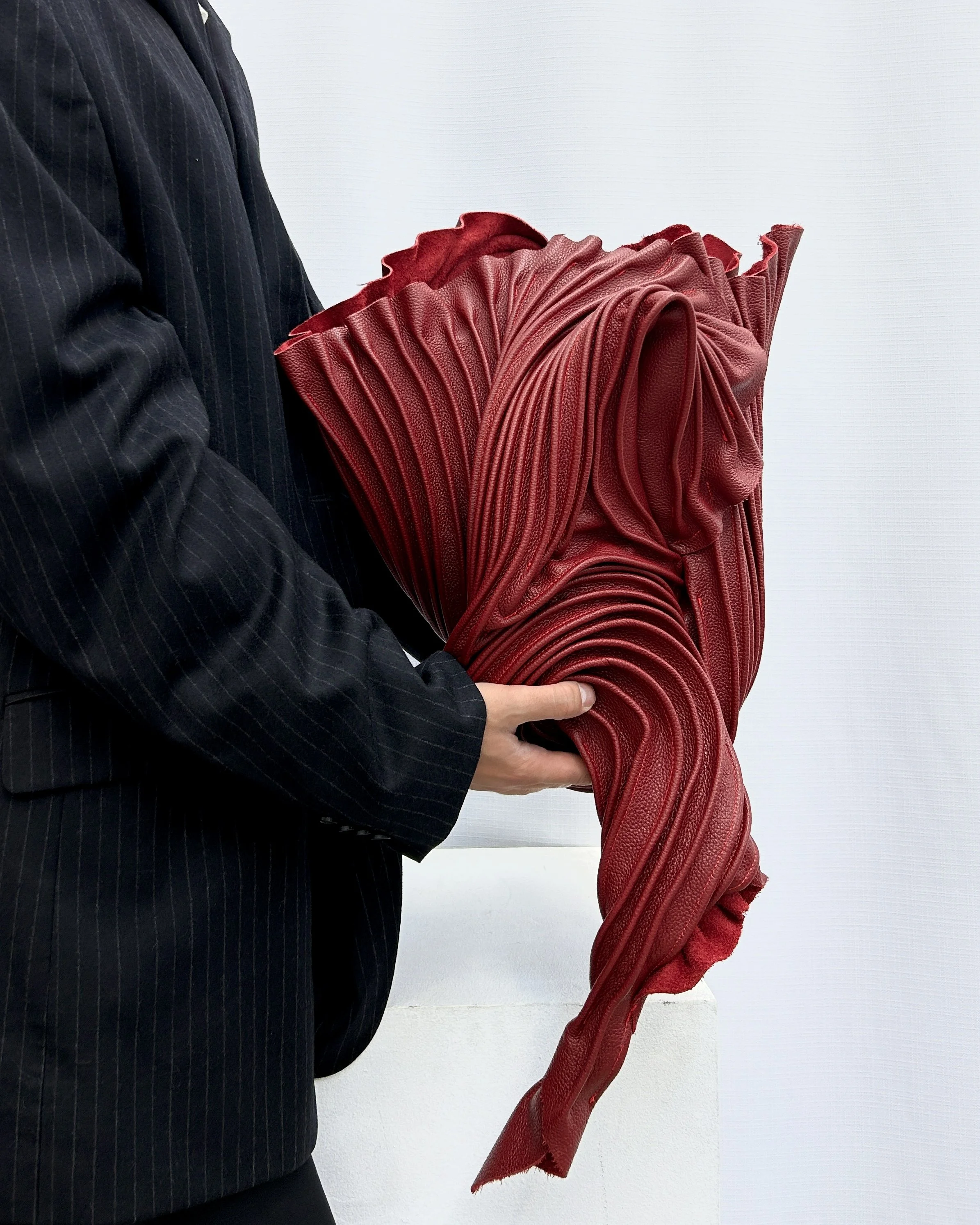
Burning Desire collection by Paweł Robuta
LETTING THE MATERIAL LEAD
On his Instagram profile, his motto reads: finding beauty in imperfections. When we speak about it, he brings up another line that has stayed with him, this time from Annie Ernaux’s The Years: “to save something from the time where we will never be again.” “I feel like the two are connected,” he says. The connection is visible across his work.
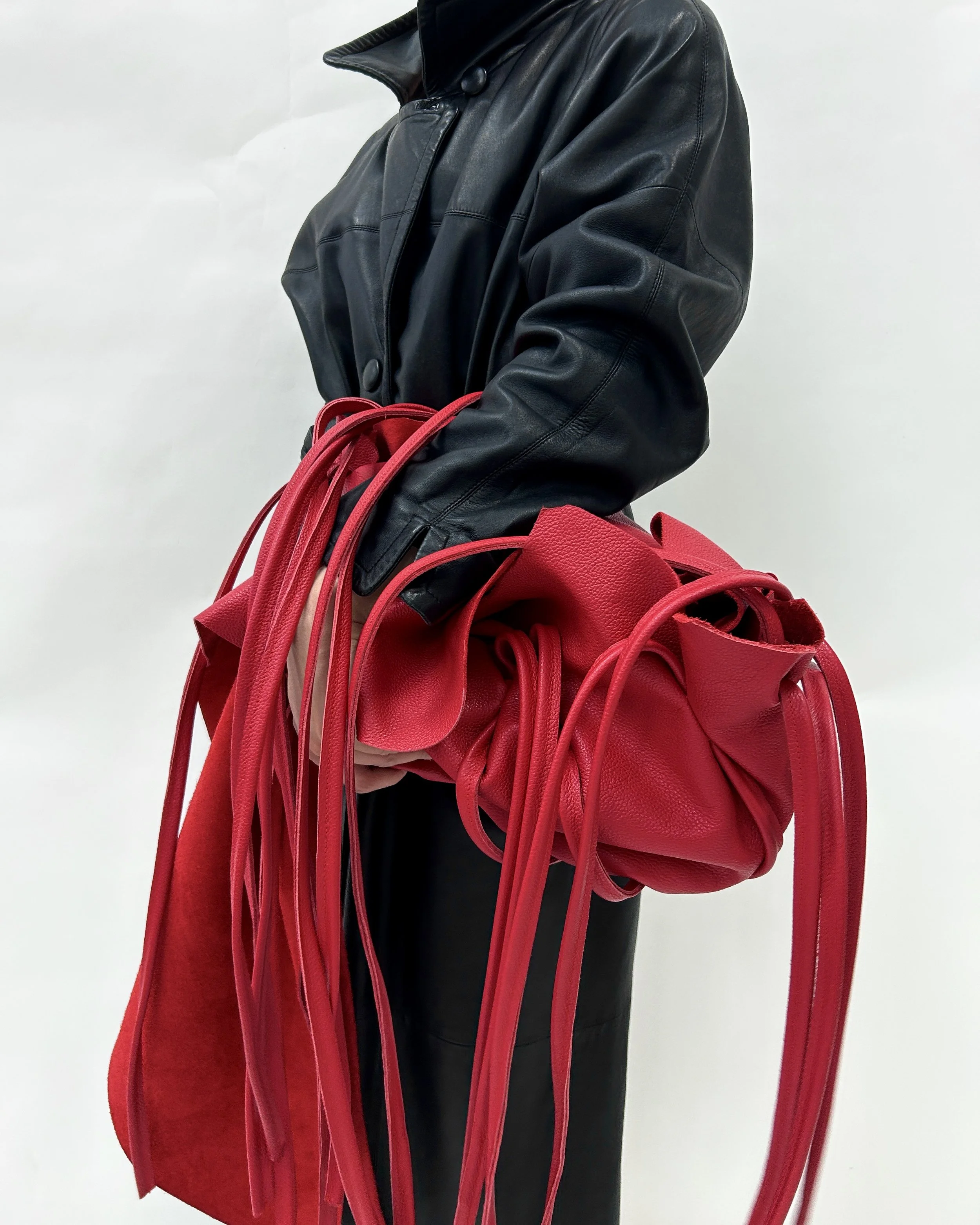
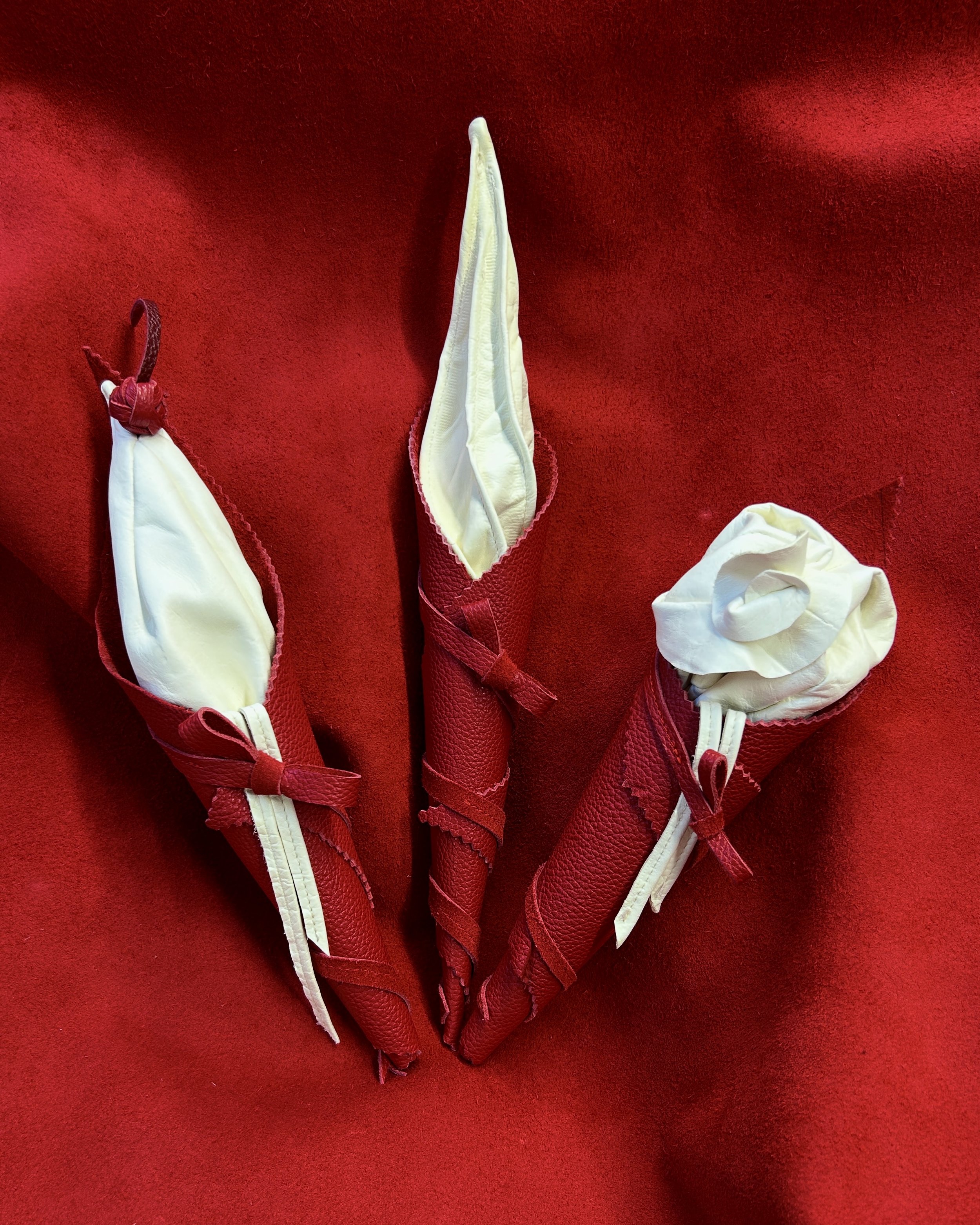
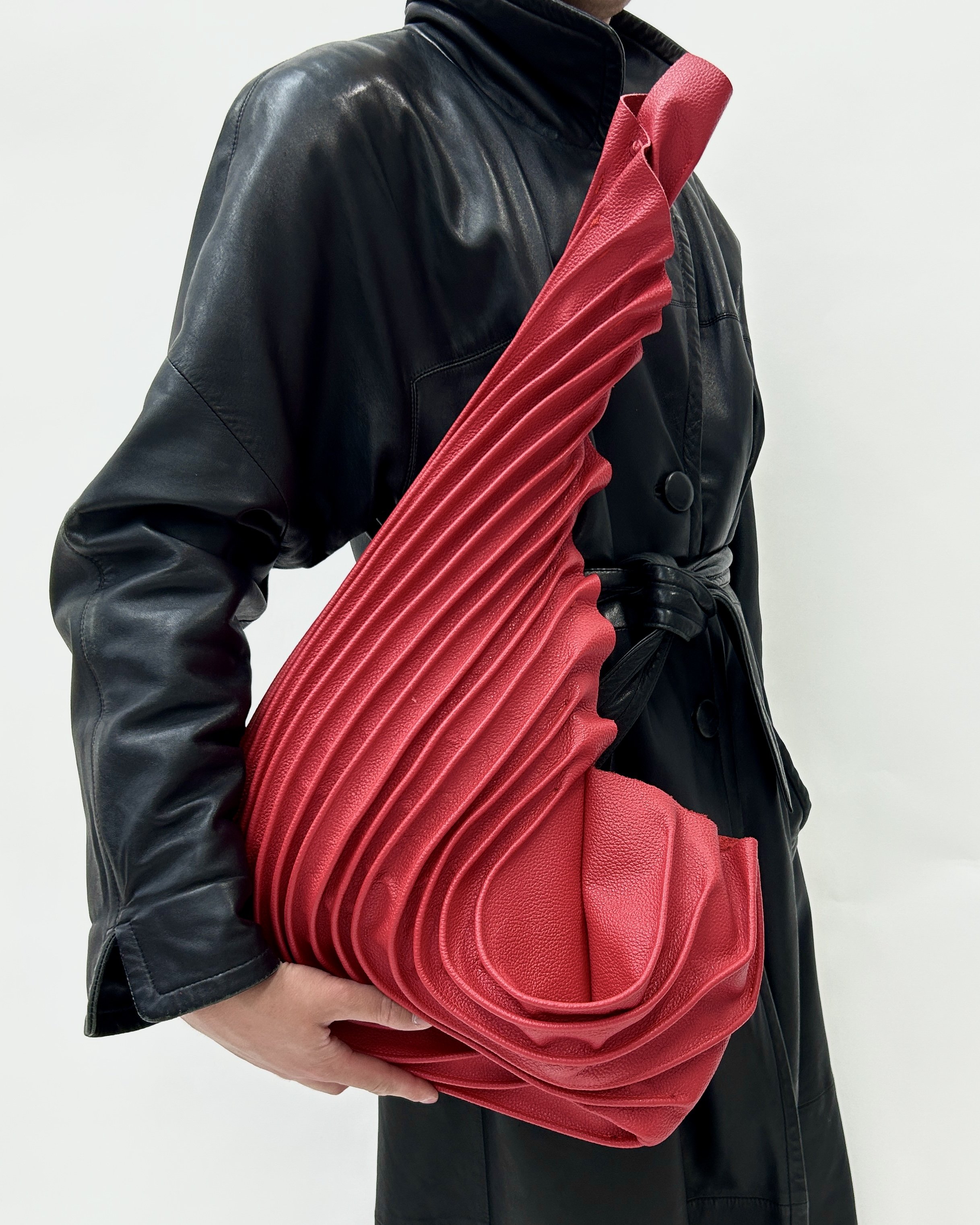
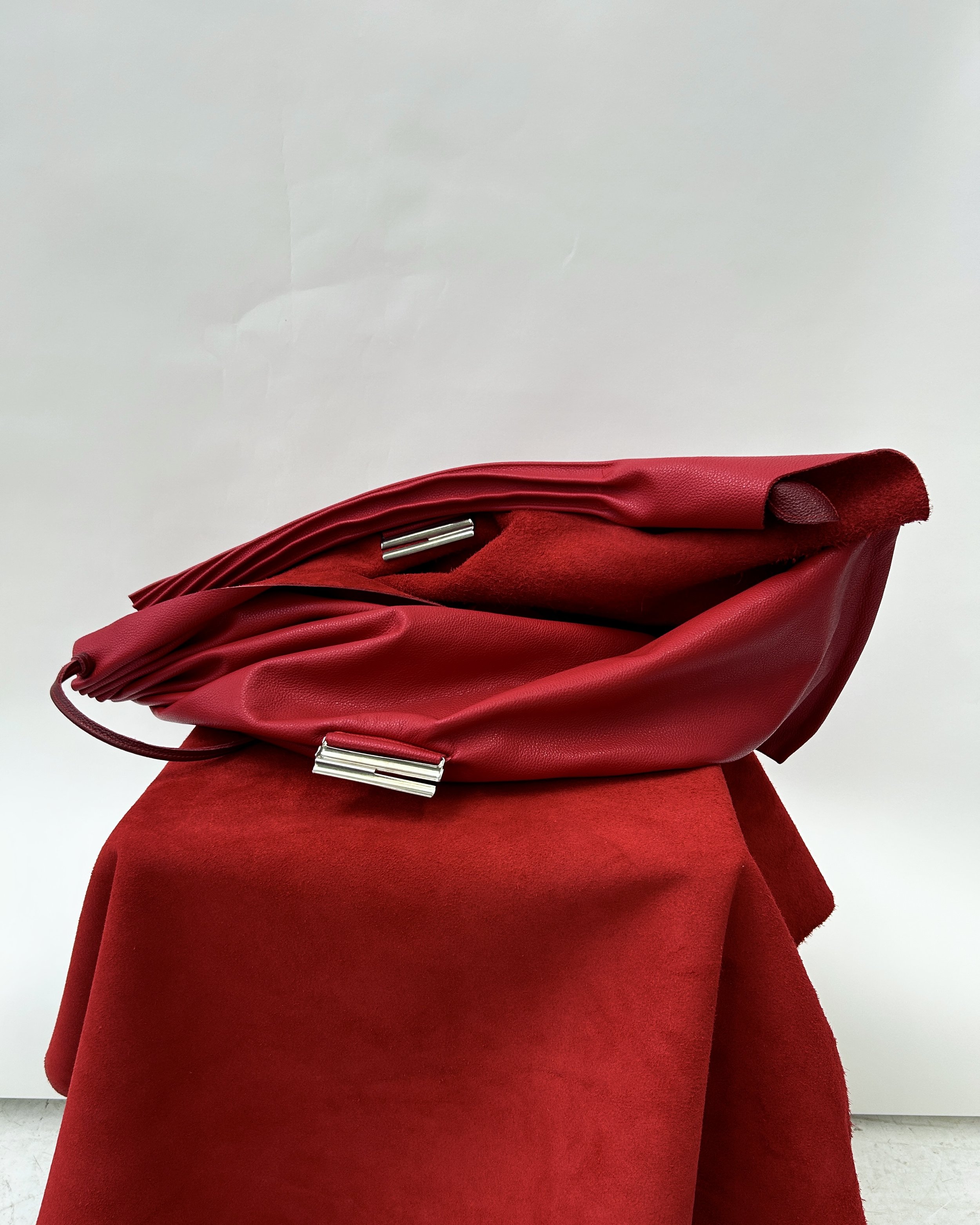
One project stands out particularly well: “Burning Desire”, a leather accessories collection made in collaboration with Readymade Archive, a studio that curates dead stock and discarded materials from Italian factories. The studio founder, Paola Barron, had reached out after coming across Robuta's work. She had just begun a new leather collaboration and wanted to explore what he might do with the material. One of Readymade's partners is Gruppo Mastrotto, a manufacturer that works with leather as a by-product of the meat industry - hides that would otherwise be discarded. "I asked Paola for leathers that no one wants," Robuta says. And so he got a dye lot in deep red, unpopular with buyers. It fit well into his practice of making from what others overlook.
For a fresh graduate, the project offered something rare - total freedom of an open brief. "I could just exhale and start making," he says. When leathers arrived, they exceeded his expectations "I thought I'd receive a small piece, but I got these generous, huge hides — three massive pieces, the size of whole cow skins. At first, I was terrified because I had no idea how to approach it." he recalls laughing. Then Lucio Fontana came back to him. The artist had been a reference since his Warsaw days - with his signature cuts through canvas, violent and precise and strangely tender. "The idea of the cut in Fontana's canvas led me to that line, to the pleat I created in the first bag," he says. The rest was less design and more of a process. "At the beginning, it felt like being a child given something new, like a new kind of clay you've never used before. I started playing with it, observing how the leather behaves. From there, I just let the material guide me. I kept stitching and stitching... What was most interesting was that the way I stitched, determined how the leather began to curl and shape itself. So in a way, the form emerged from how the material behaved." The outcome was a capsule of nine abstract pieces, each one resisting a final form, in a poetic state of constant becoming.
The project earned him a shortlist for the prestigious ITS Contest in Italy and, perhaps more importantly, opened up a new direction. "“That collection gave me a sense of freedom,” he reflects. “It made me realise that working with accessories and leather -even without mastering the craft fully yet - can still bring a kind of ease, excitement, something that drives and satisfies me.”
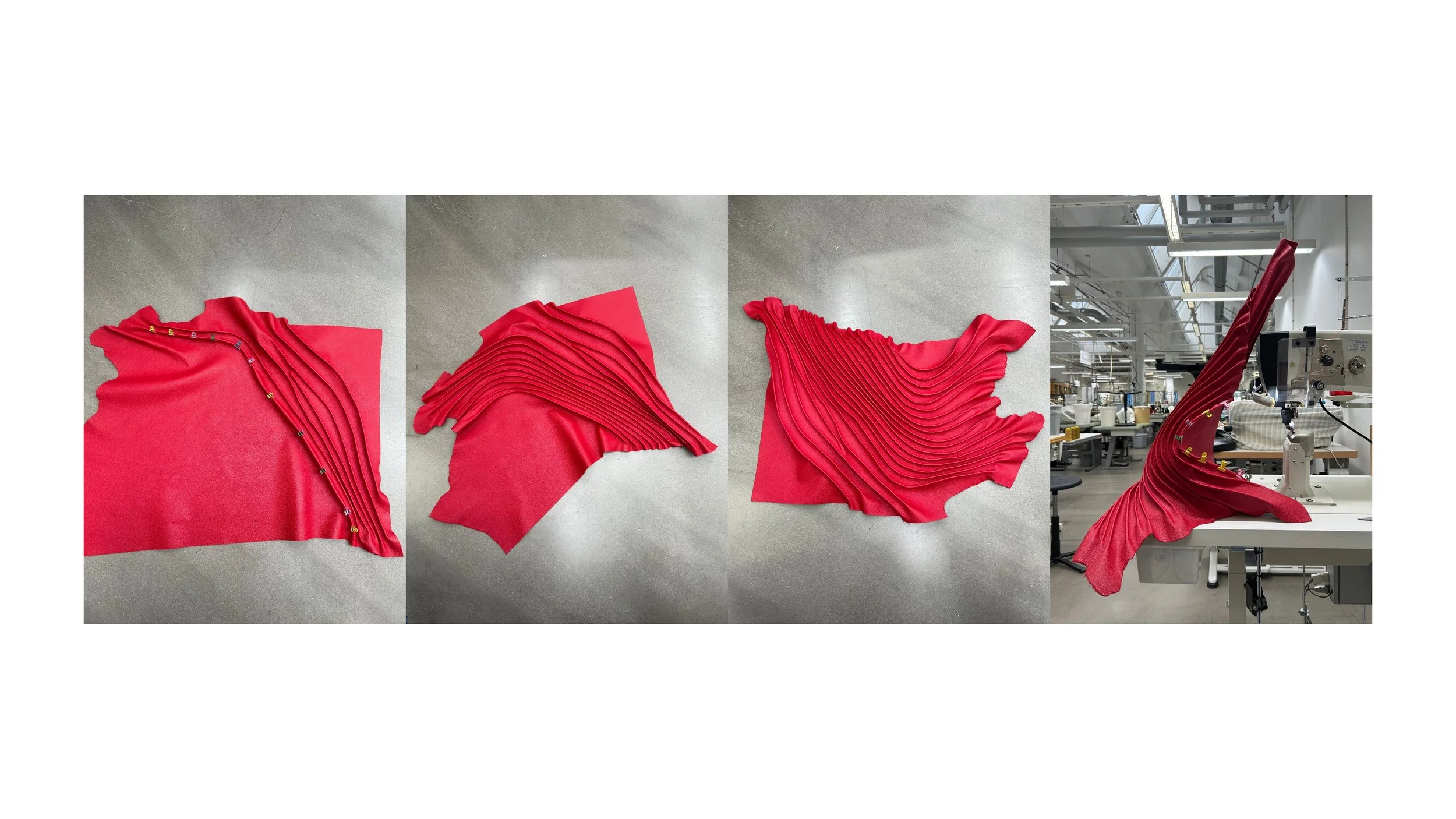
Burning Desire - process; courtesy of Paweł Robuta
BECOMING
Robuta’s next chapters are forming, with many directions and ideas on his radar to explore. When the conversation turns to what a label of his own might look like one day, he reflects:"I'd prefer it to be one rooted in craft - something more local rather than global. Of course, it's appealing to be a big fashion house conquering the world, but at the same time I feel like the future of fashion isn't in building massive global brands. It's more in this local approach - where craft, durability, attention to detail, and quality of making really matter." He pauses, before adding "I mean, that's what luxury fashion used to be, right?"
Which brings us back to where we started - the atelier, the maker, the secrets held in skilled hands.
For Robuta, the work has always been about the process, the becoming. Not a fixed destination in mind, but openness to the unexpected.
Follow Pawel Robuta’s Instagram and stay up to date with his projects.