Pola Wiślicz - Layers, Lace and Time
“I really like looking at beautiful historical textiles that have become a little dirty, a little torn, and trying to interpret that visually...”
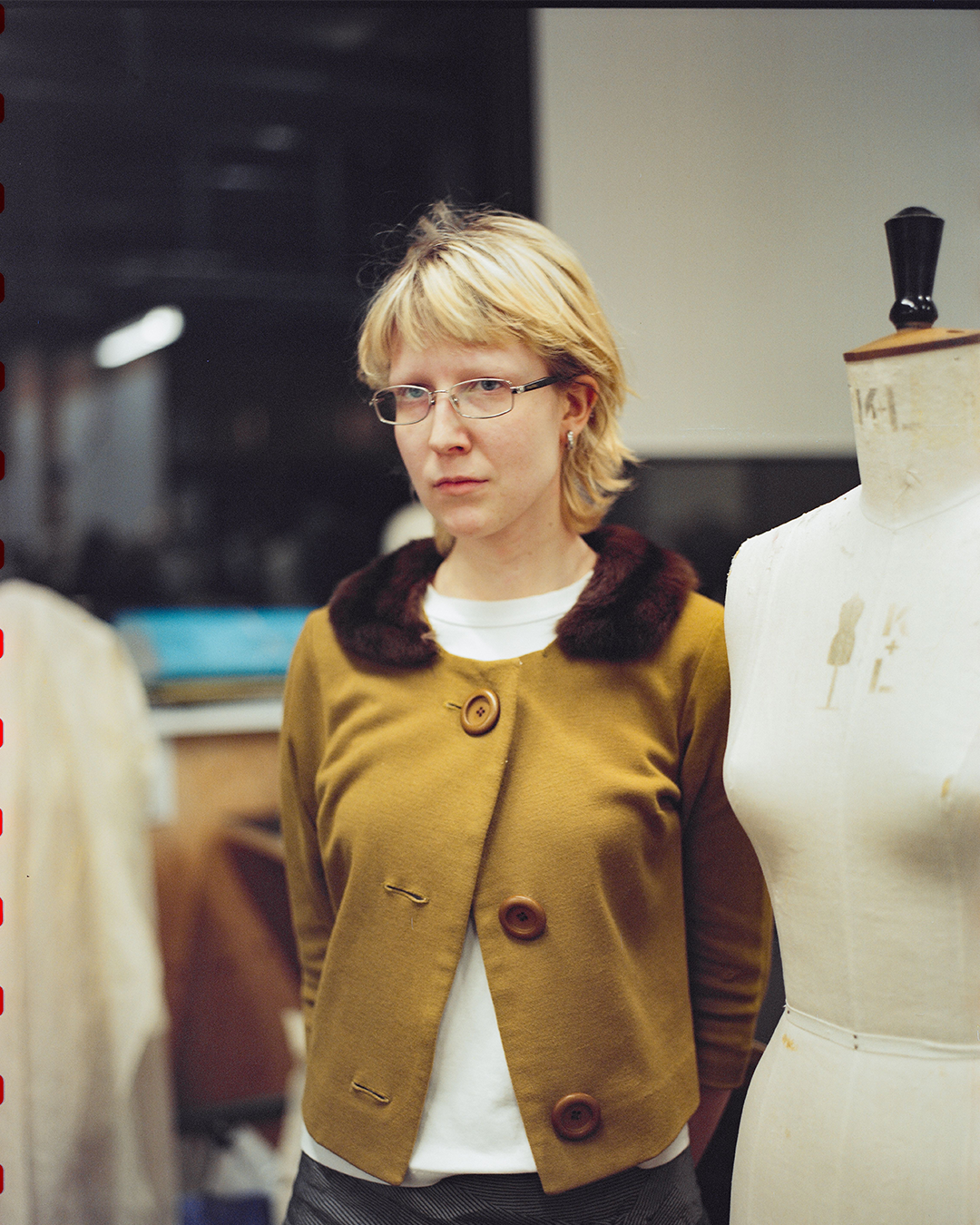
Pola’s portrait; courtesy of Pola Wiślicz
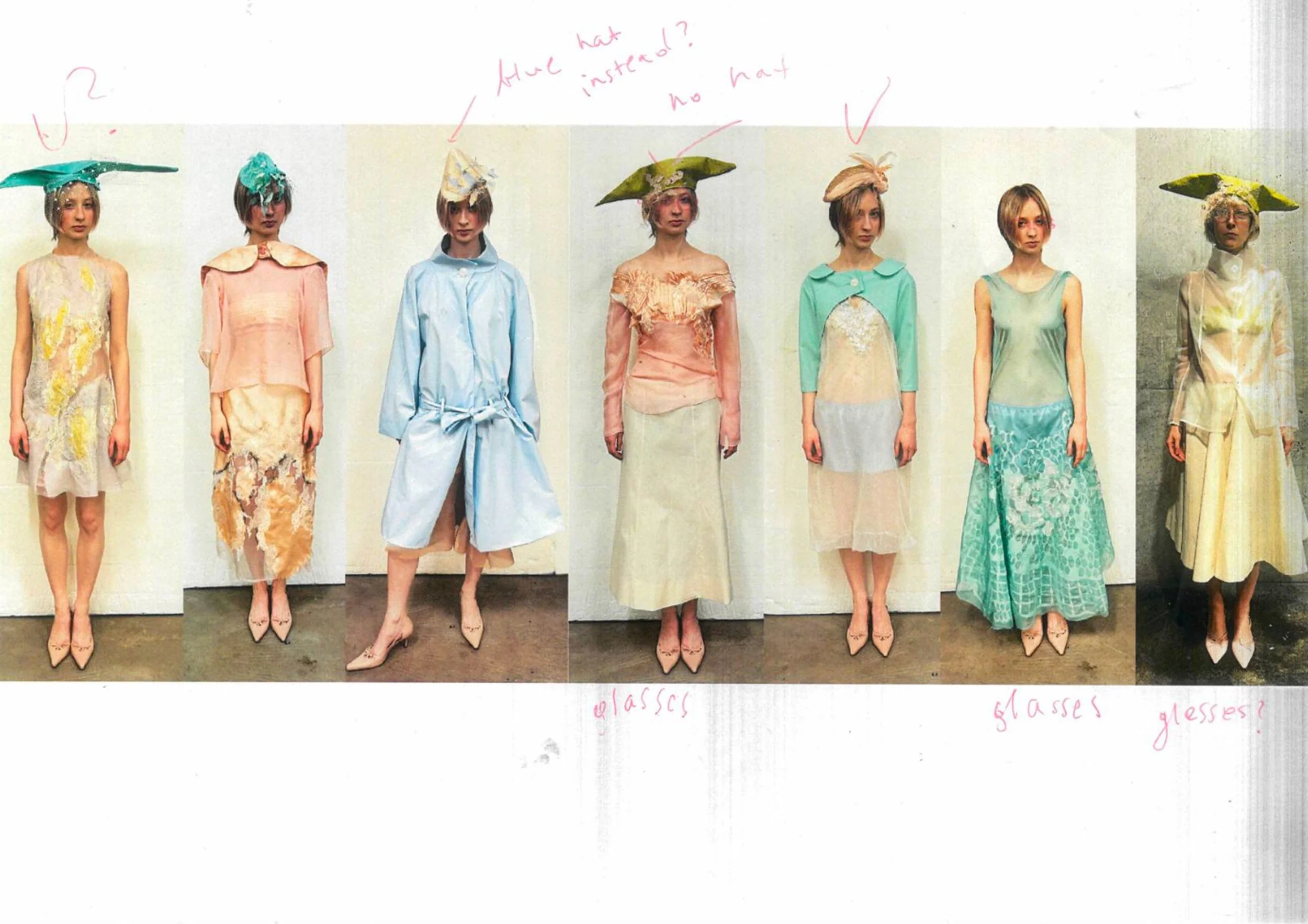
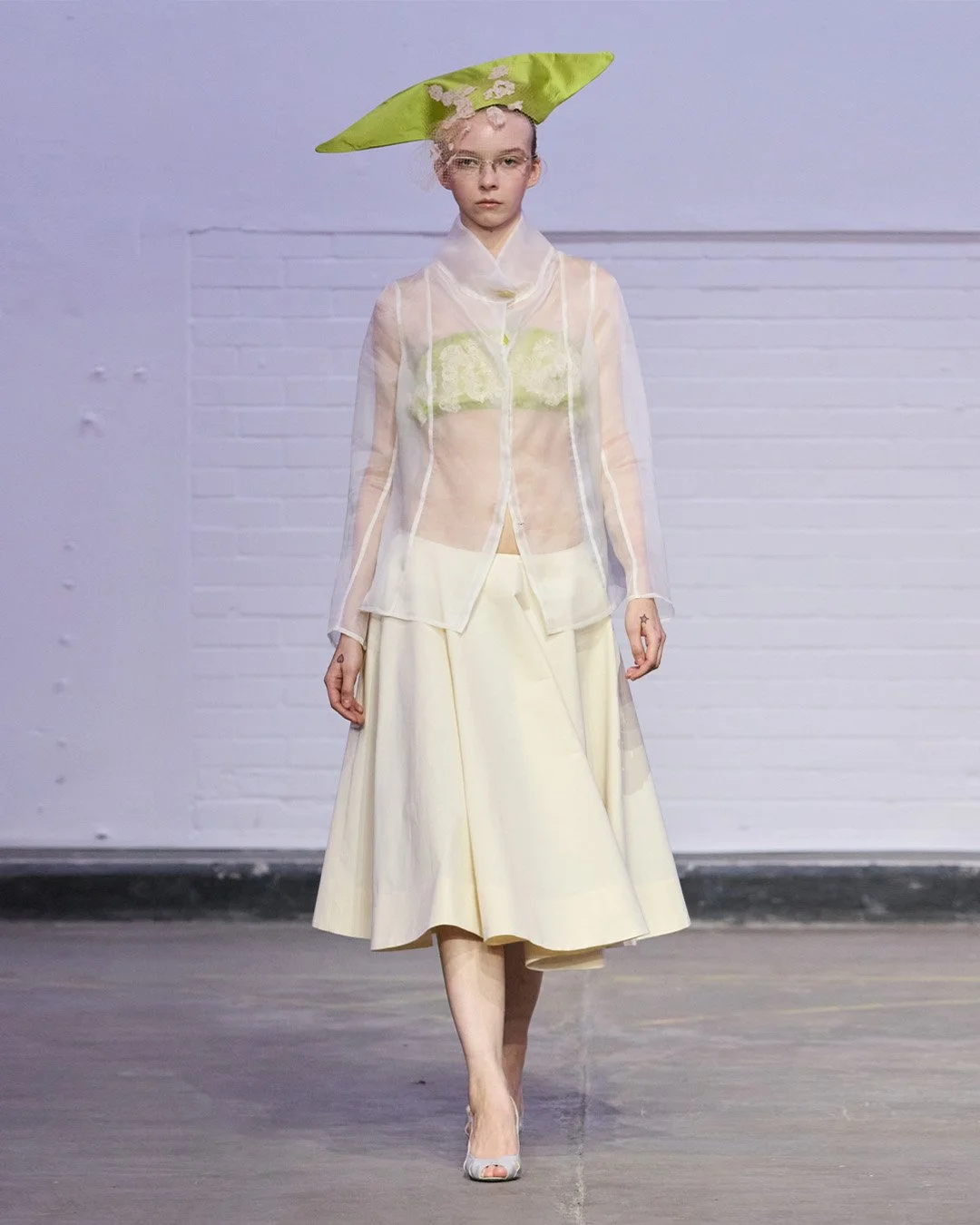
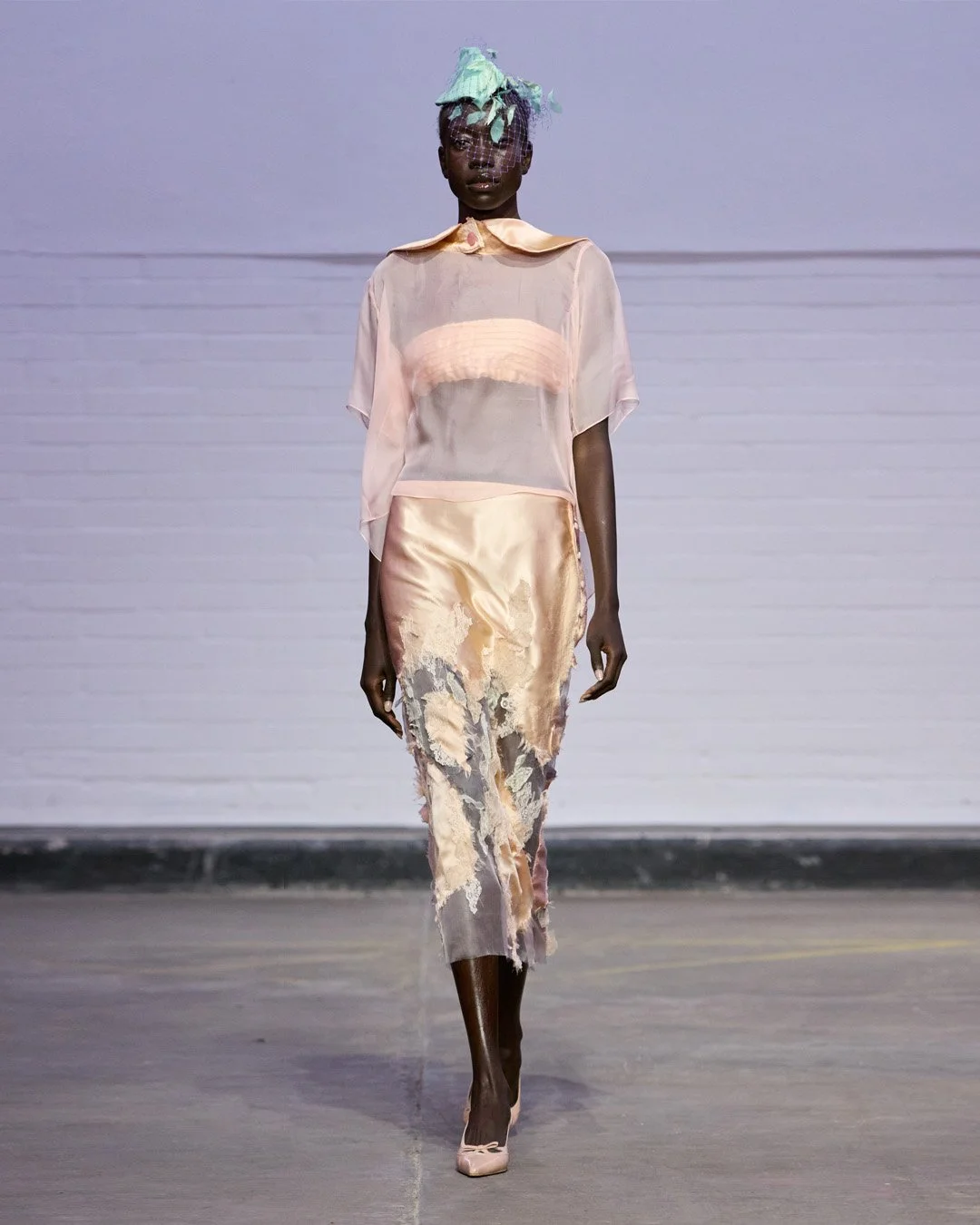
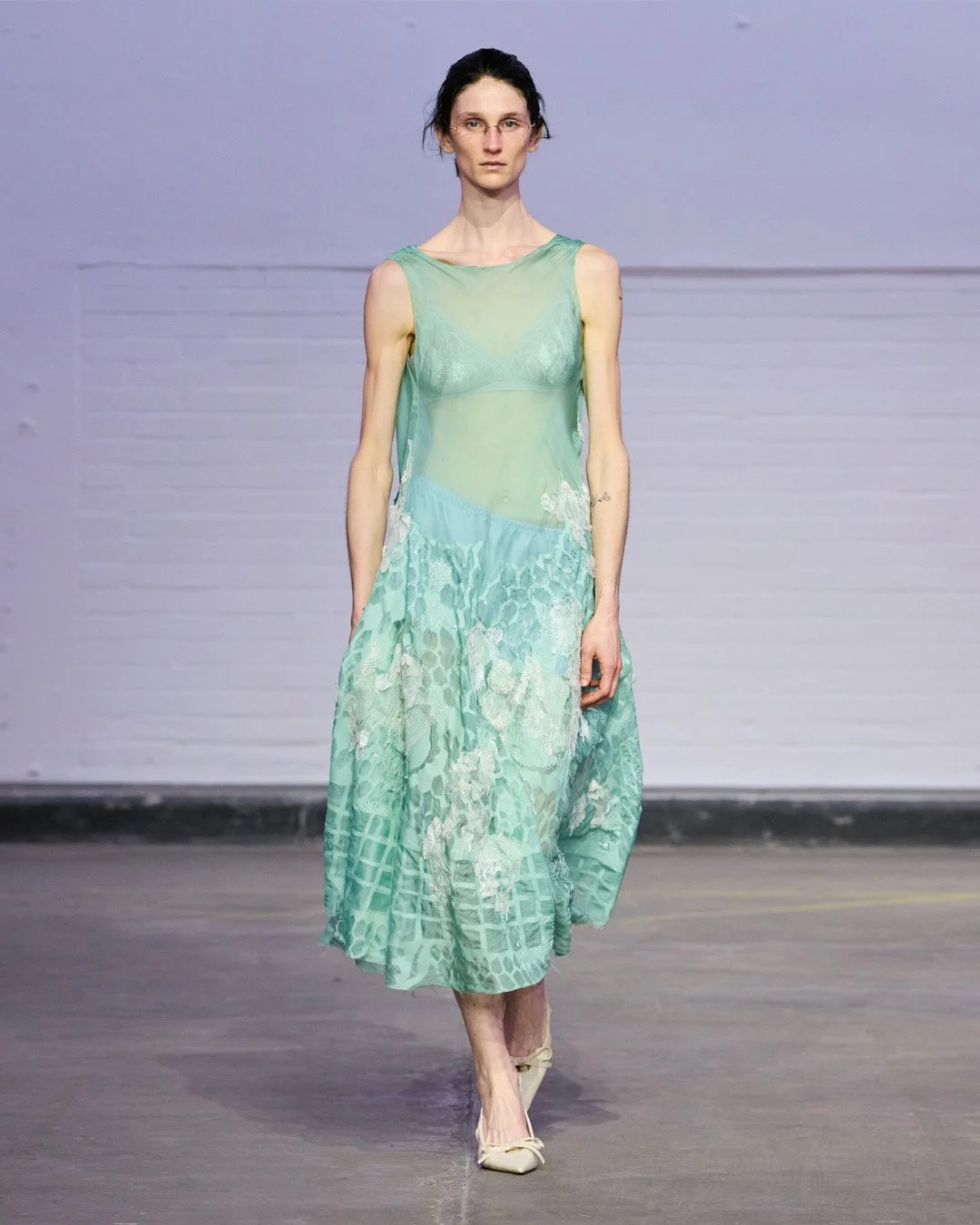
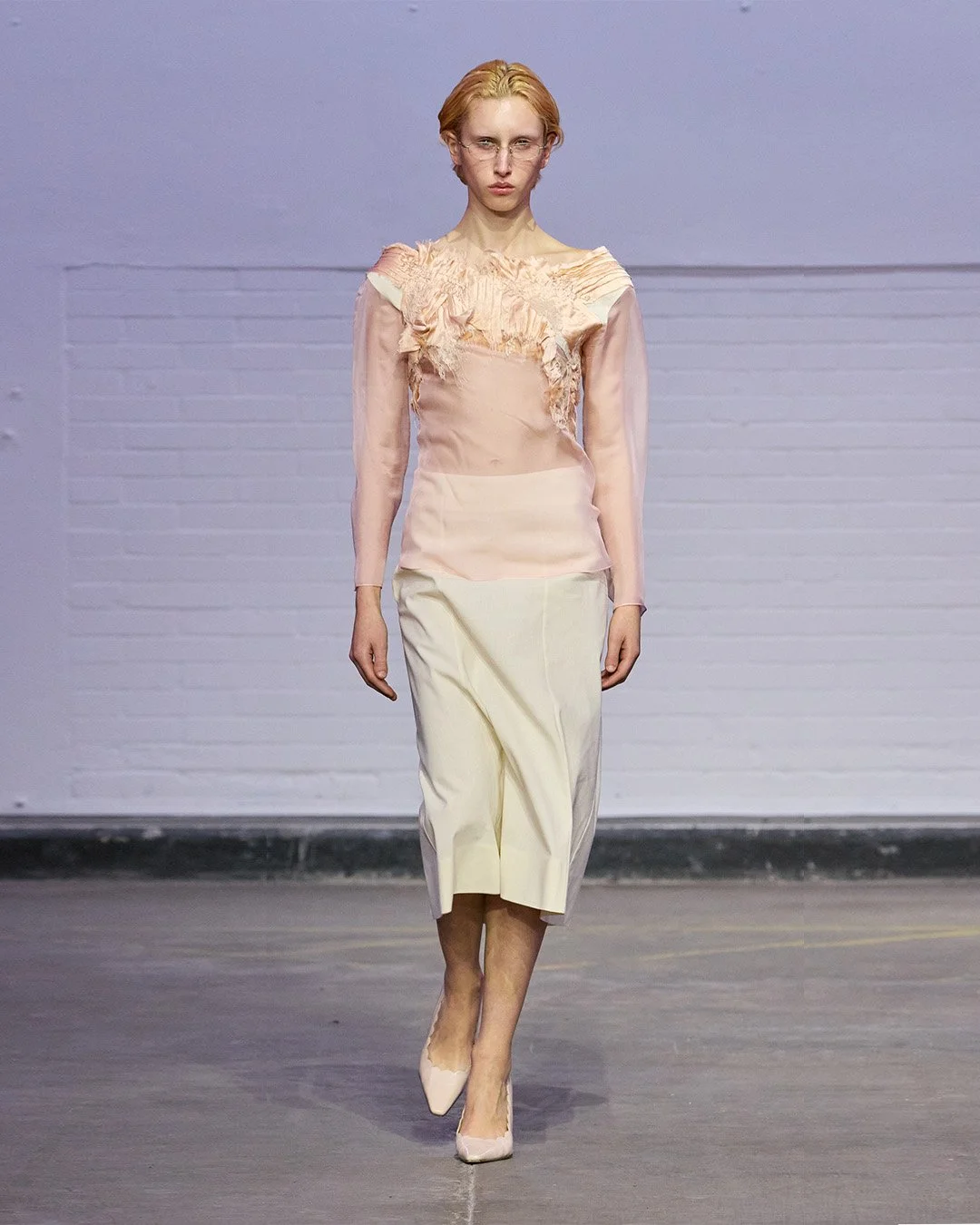
Pola Wiślicz’s graduate collection unfolds in poetic layers, designed not for a fleeting glance but to be revisited. Titled ‘Sharp, Strange and Beautiful’, it explores notions of beauty and femininity through an outsider and queer lens. The line-up is rich in contrasts, but they hush rather than shout, and reveal themselves through subtle shifts in texture, weight, and detail.
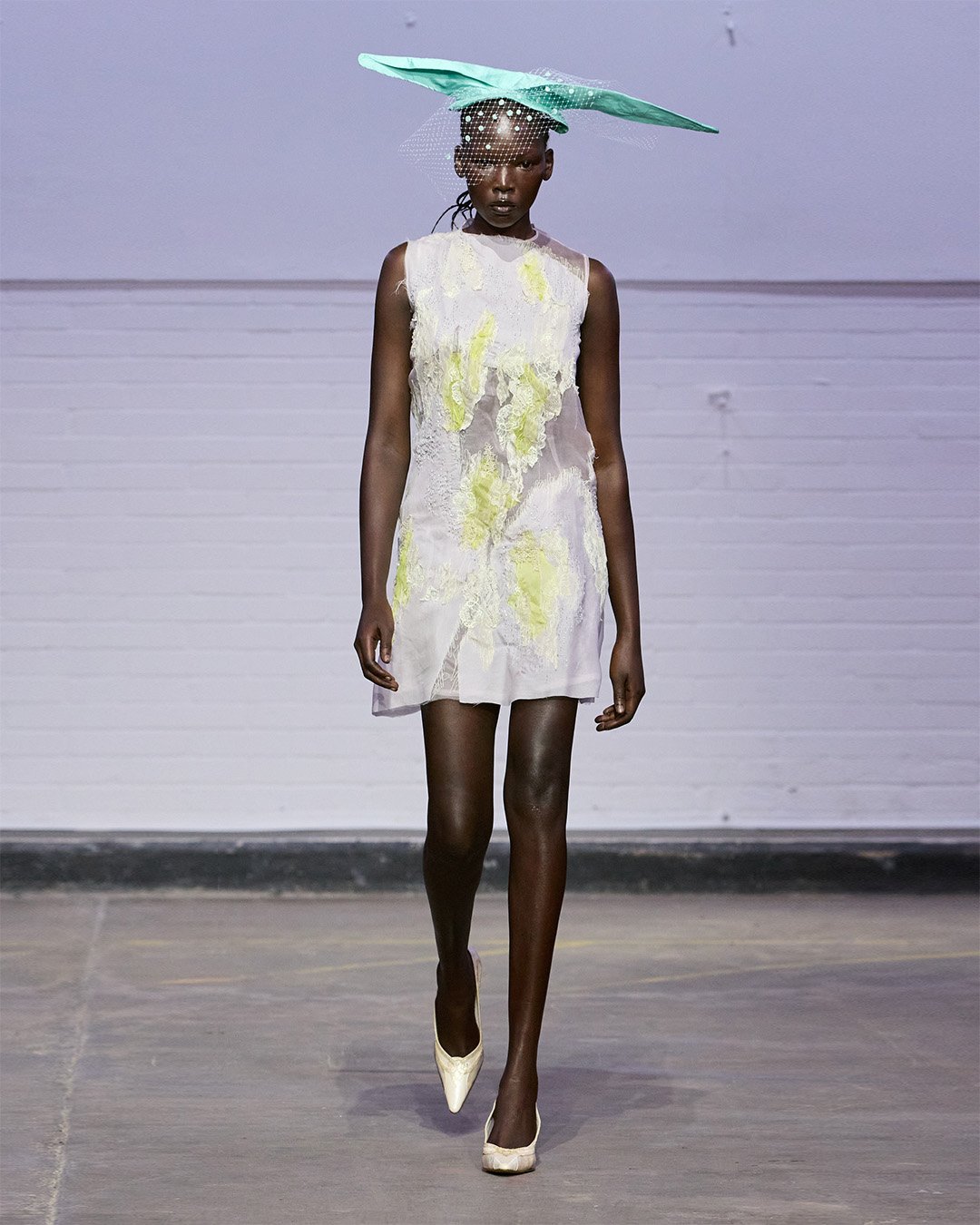
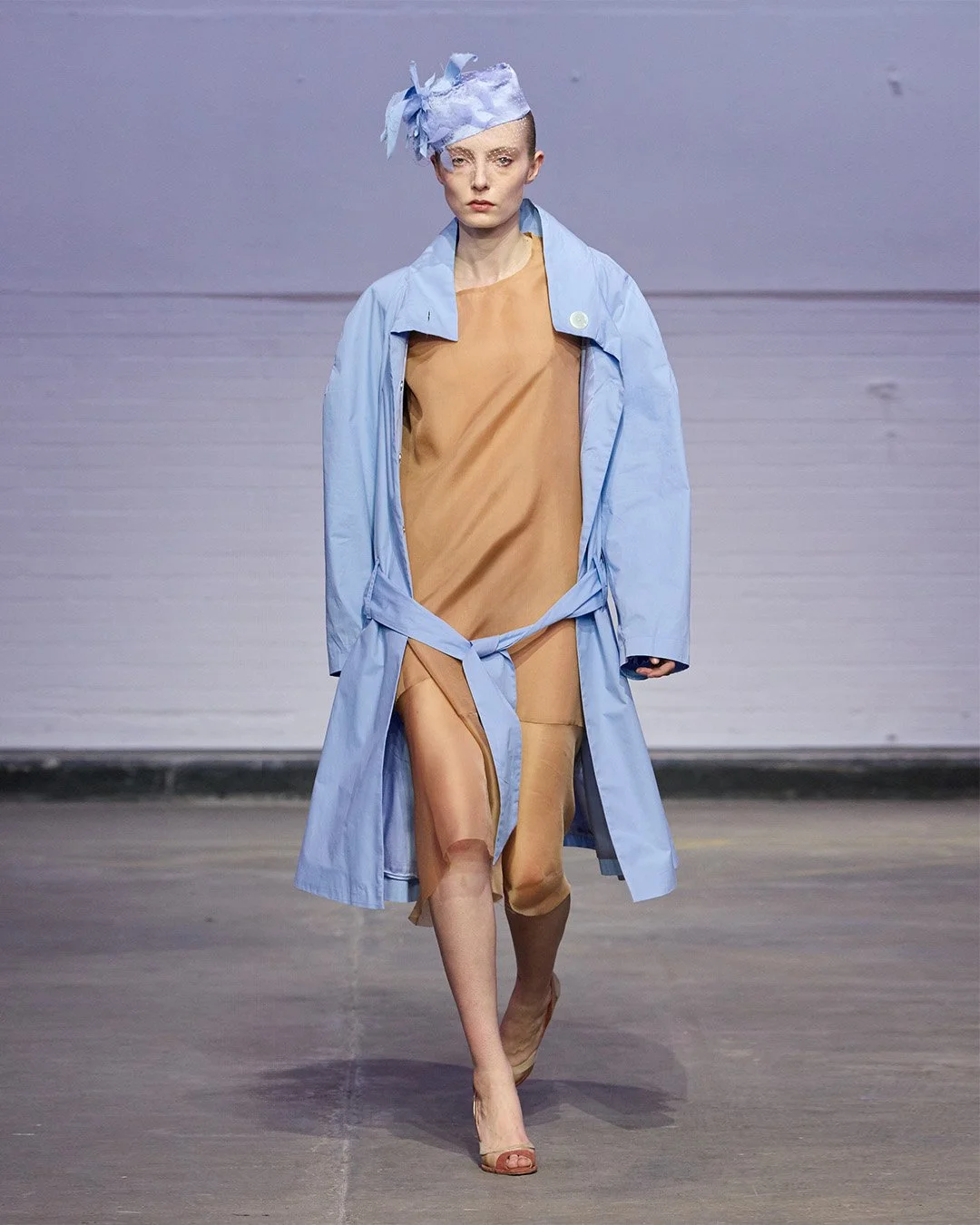
Deconstructing pieces familiar to classic women's wardrobe, Wiślicz reinterprets traditional tailoring and feminine tropes through unusual cuts, subtly distorted silhouettes and delicate veils of transparent textiles. Frayed antique lace collides with slick latex, raw calico sits against fragile, distressed fabrics; sculptural headpieces and the metallic shimmer of embroidered surfaces, all tempting to be experienced close. The line-up escapes easy categorisation, feeling at once historical and contemporary, coming apart and caught in the process of being made.
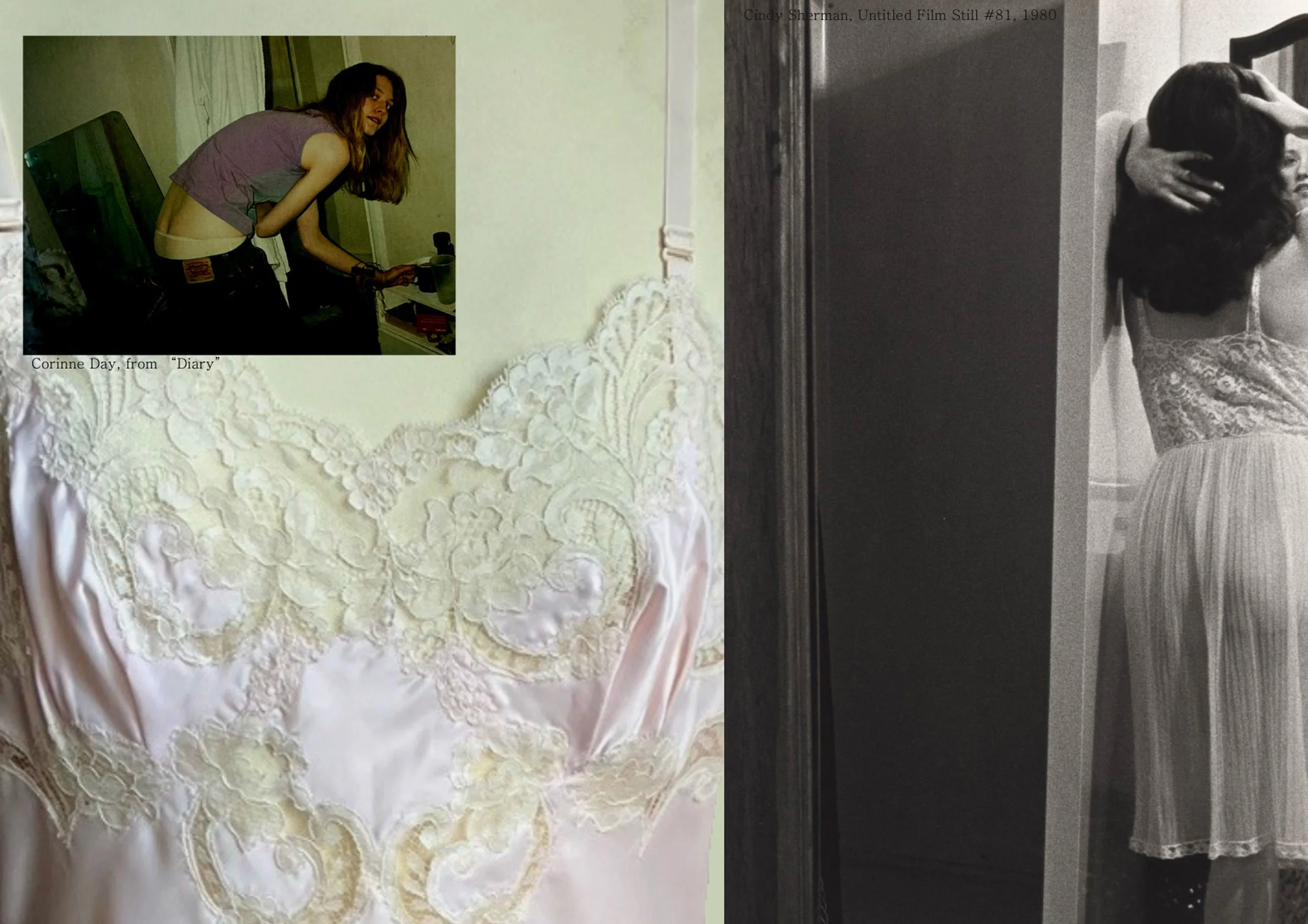
Running through Wiślicz’s practice is an interest in the passage of time and in what happens when textiles age, deteriorate or are combined together unexpectedly. “A lot of my embroidery is concerned with this process of fabric breaking down,” she explains. “I really like looking at beautiful historical textiles that have become a little dirty, a little torn, and trying to interpret that visually... To recreate these traces of damage on the fabric in a more painterly way, through embroidery.”
Textiles lie at the very heart of Wiślicz’s creative process. Born in Warsaw, she studied Fashion Design at the Academy of Fine Arts there before moving to London to complete her MA at Central Saint Martins. Currently based in Paris, she is undertaking an internship at Maison Lemarié, the historic French craft house specializing in intricate feather work and embellishment techniques.
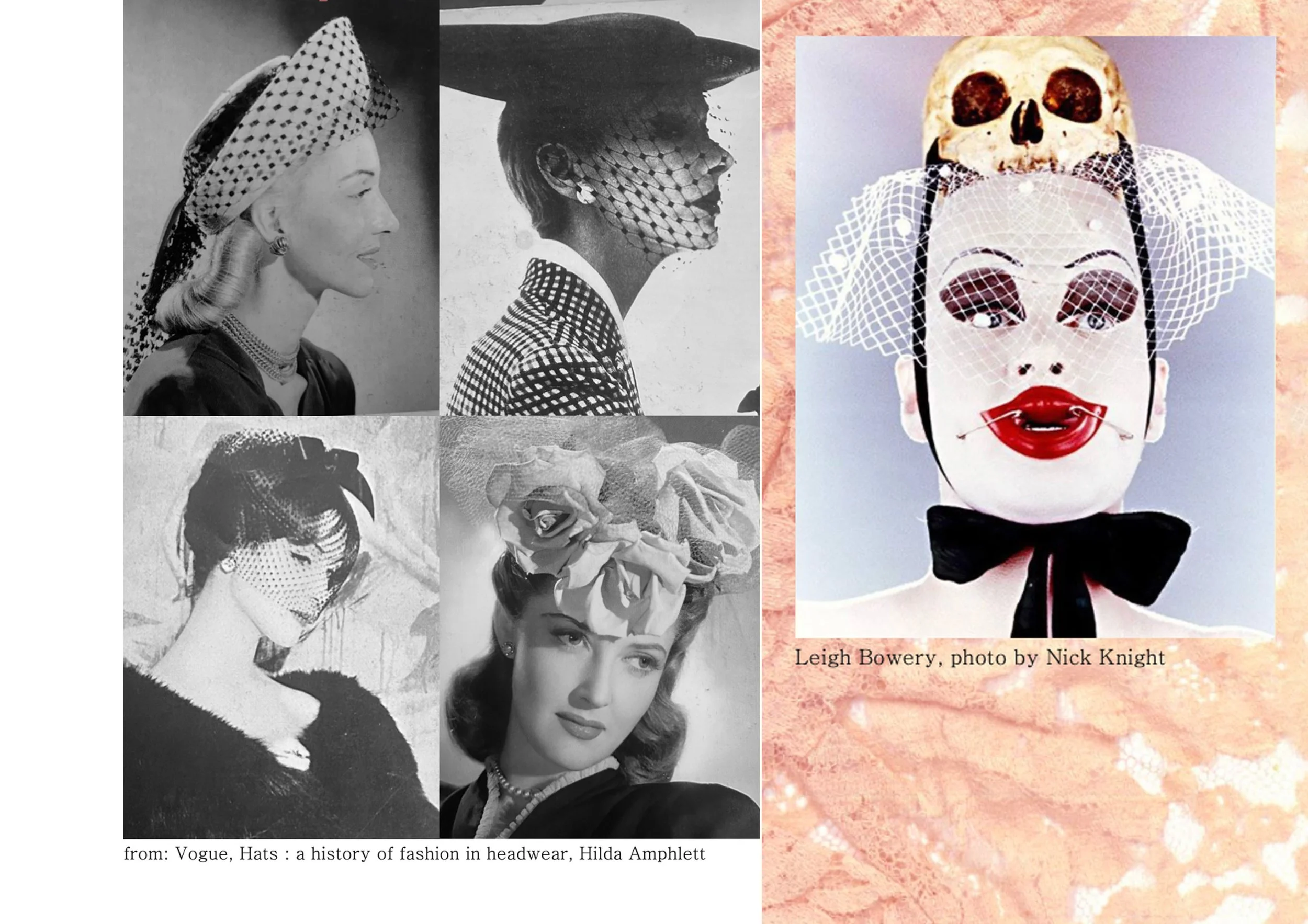
A Personal Archive
With both her parents being historians, Wiślicz grew up surrounded by history and art. Museum visits were part of everyday life, while her mother, whose research focuses on twentieth-century and women’s history, introduced her to women artists and in-depth ways of looking at art. “History and art were really what I grew up with,” she says. As a child, she imagined becoming a painter, though fashion was never out of her mind. She drew incessantly, almost exclusively focused on human figures. “Still lifes and that kind of thing never interested me much,” she recalls. Clothing was already part of how she saw and imagined the world. “At night, lying in bed, I would imagine how I’d dress different people…”
The possibility of turning that interest into a career came later, when she happened upon an article mentioning New York fashion schools. “It opened my eyes to the fact that fashion schools existed, that you could study it and that you could work in the industry. I hadn’t considered it before.”
Her references have since expanded across seemingly disparate worlds. Her first fashion book was a biography of Cristóbal Balenciaga. Polish critical art of the 1990s and feminist art became recurring touchstones, alongside Lady Gaga in McQueen, music video clips and contemporary pop culture. “I never looked down on pop culture. I think it can be very inspiring.” To this day, rather than separating high and low culture, Wiślicz takes from both, allowing different visual languages to collide.
Growing up in Poland has also given her a particular cultural archive to draw from. “I think it’s a big value for me that because I was born and raised in Poland, and surrounded by people who were interested in art from childhood, I have access to this kind of cultural database that most people don’t have if they aren’t from Poland. I want to process that identity through my designs.”
During her MA at CSM, V&A East Storehouse played a big part in her research “What’s so incredible about the Storehouse is that you can see everything up close. You can even touch the garments, wearing gloves and being very careful, of course, but you can actually feel them.” For Wiślicz, that tangible encounter is key to the process.
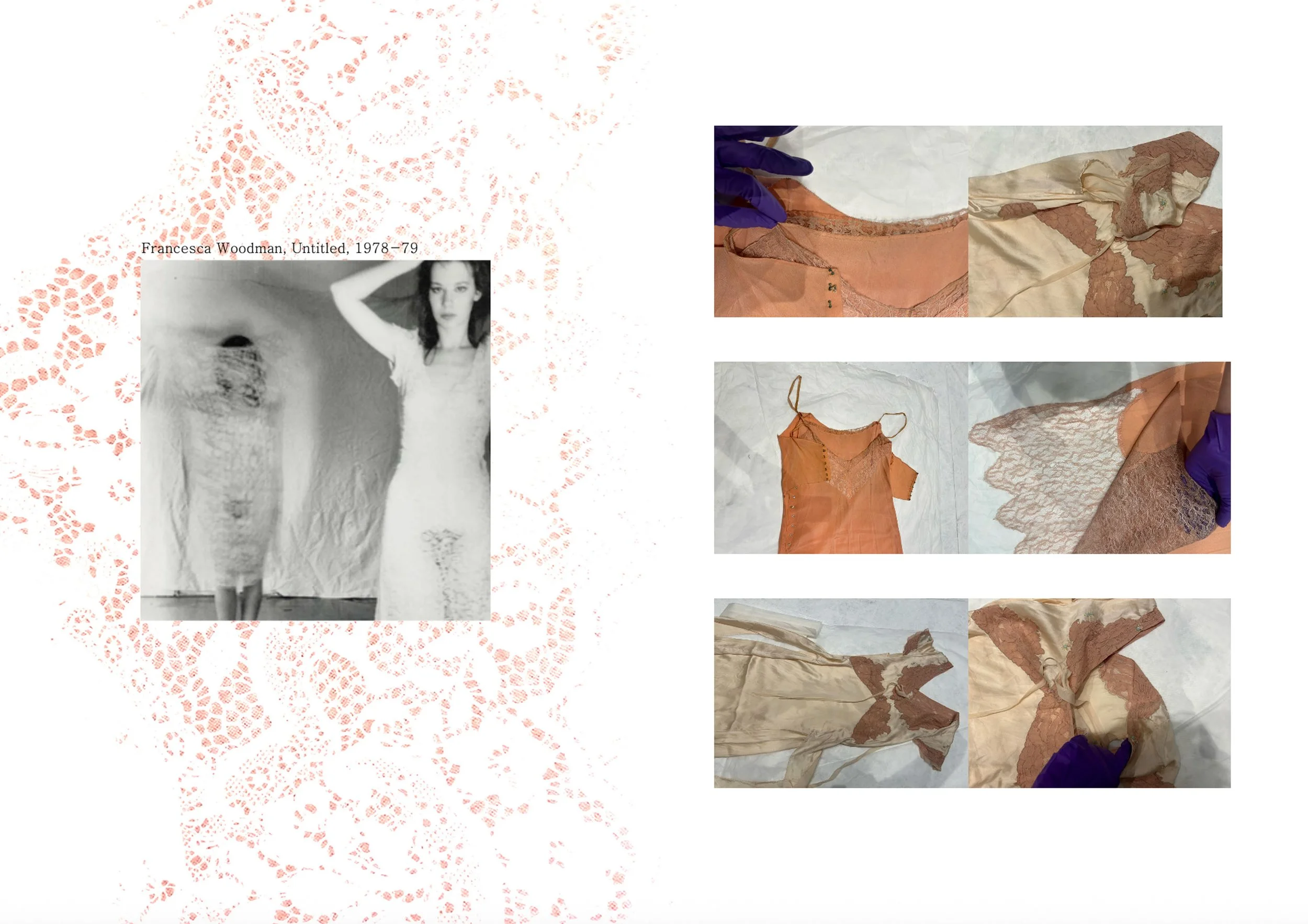
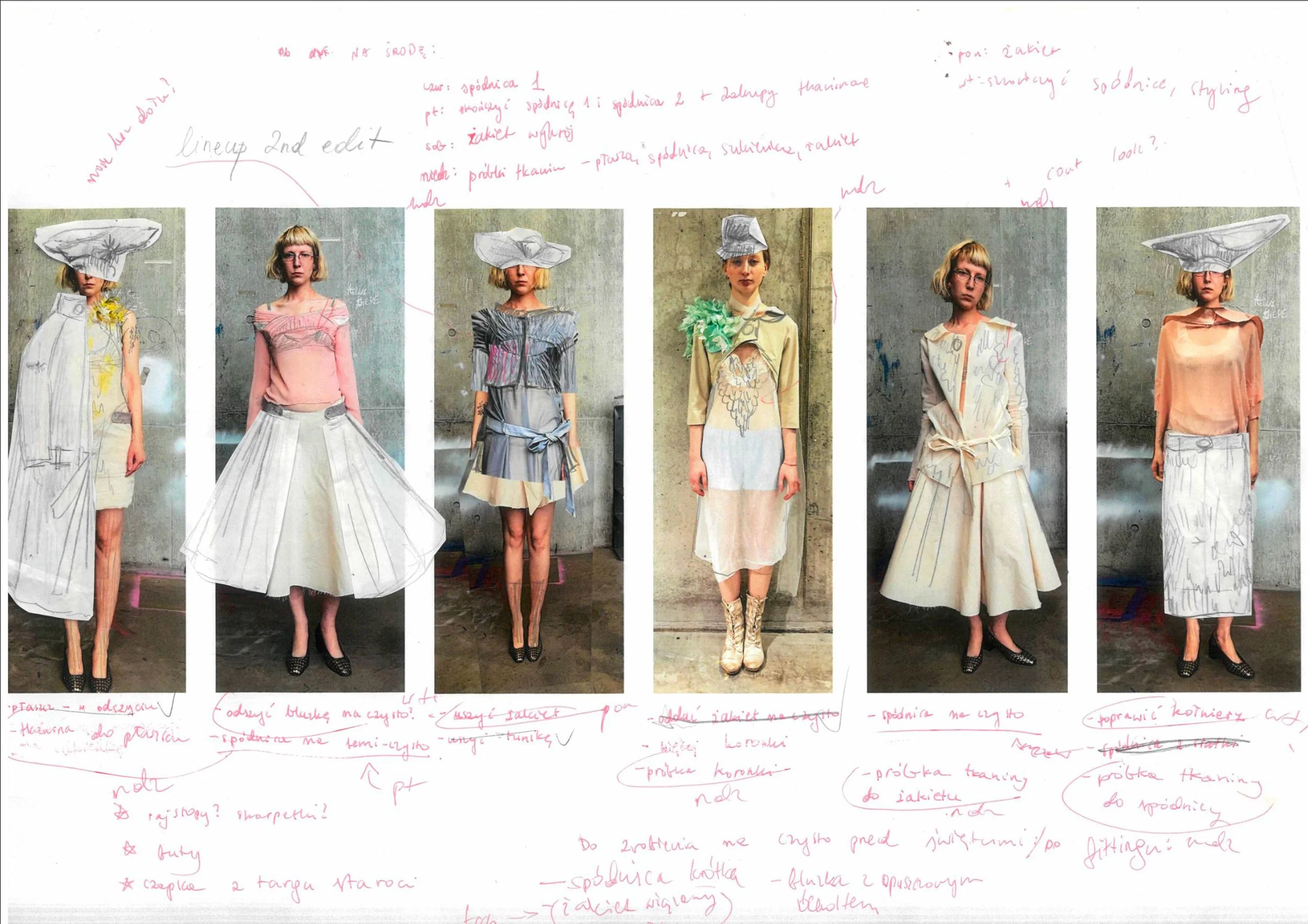
Image to Material to Form
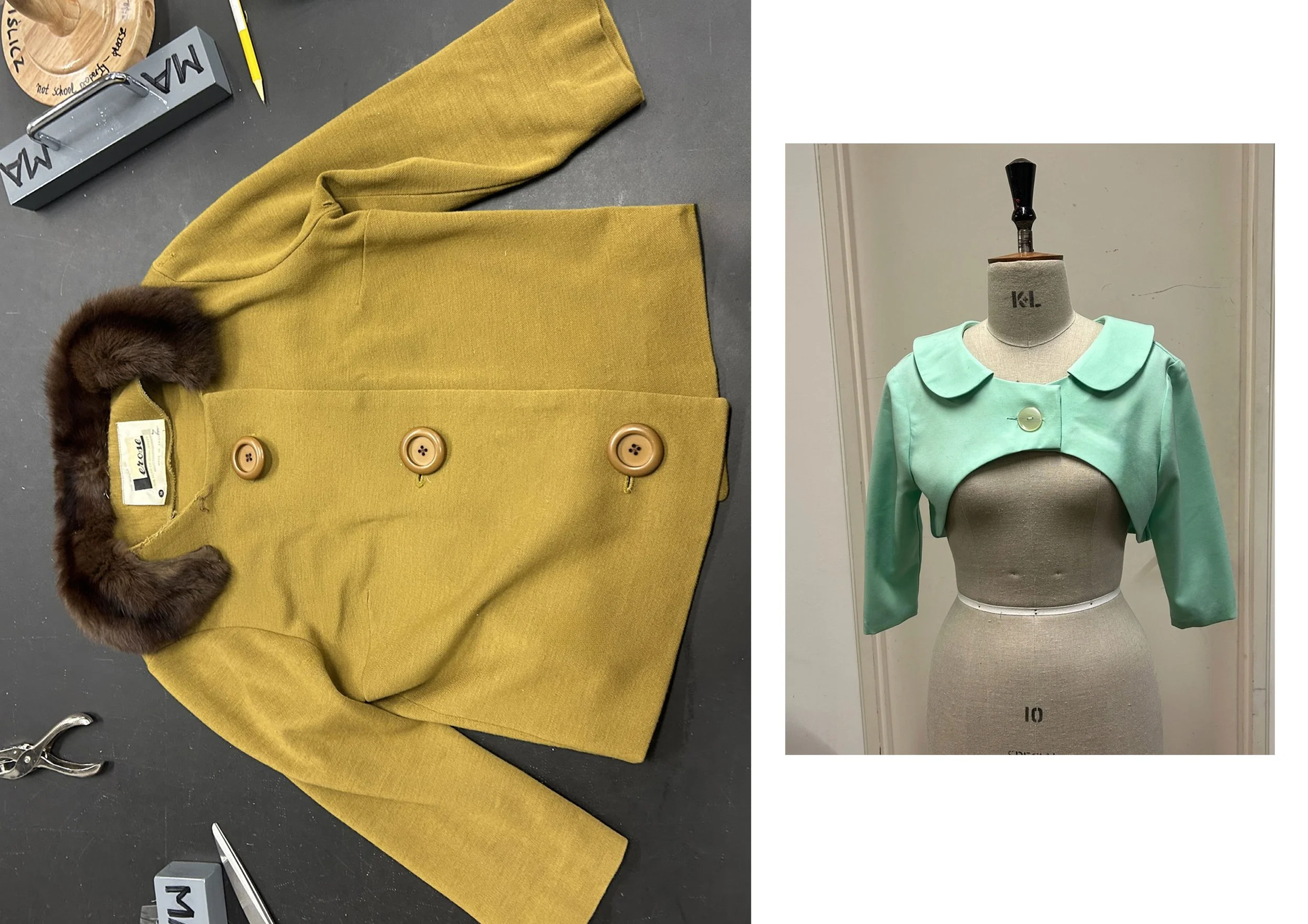
Wiślicz’s process starts with a sketch and a collage. She sorts her references into art, clothing and “other things”, using them as a starting point before moving into three-dimensional work. Fabric enters the process early, often shaping the final silhouette of a piece. “I start working with the fabric quite early on, so the shape of a piece is often dictated by the fabric itself, rather than the other way around. Looking at a fabric swatch often sparks an idea, like, ‘Oh, this could make a great jacket’, so that’s usually the order of things. It’s a combination of sketching, collage and working with fabric.” From there, she constructs preliminary mock-ups, testing them on herself and friends to observe how proportions and textures behave on a body.
Many of the finished garments are clean, simple in construction, leaving room for the material to take centre stage. “If you create a very distinctive fabric or a really unusual shape, it can become a bit visually overwhelming, to the point where it’s unclear what the viewer is actually looking at.”
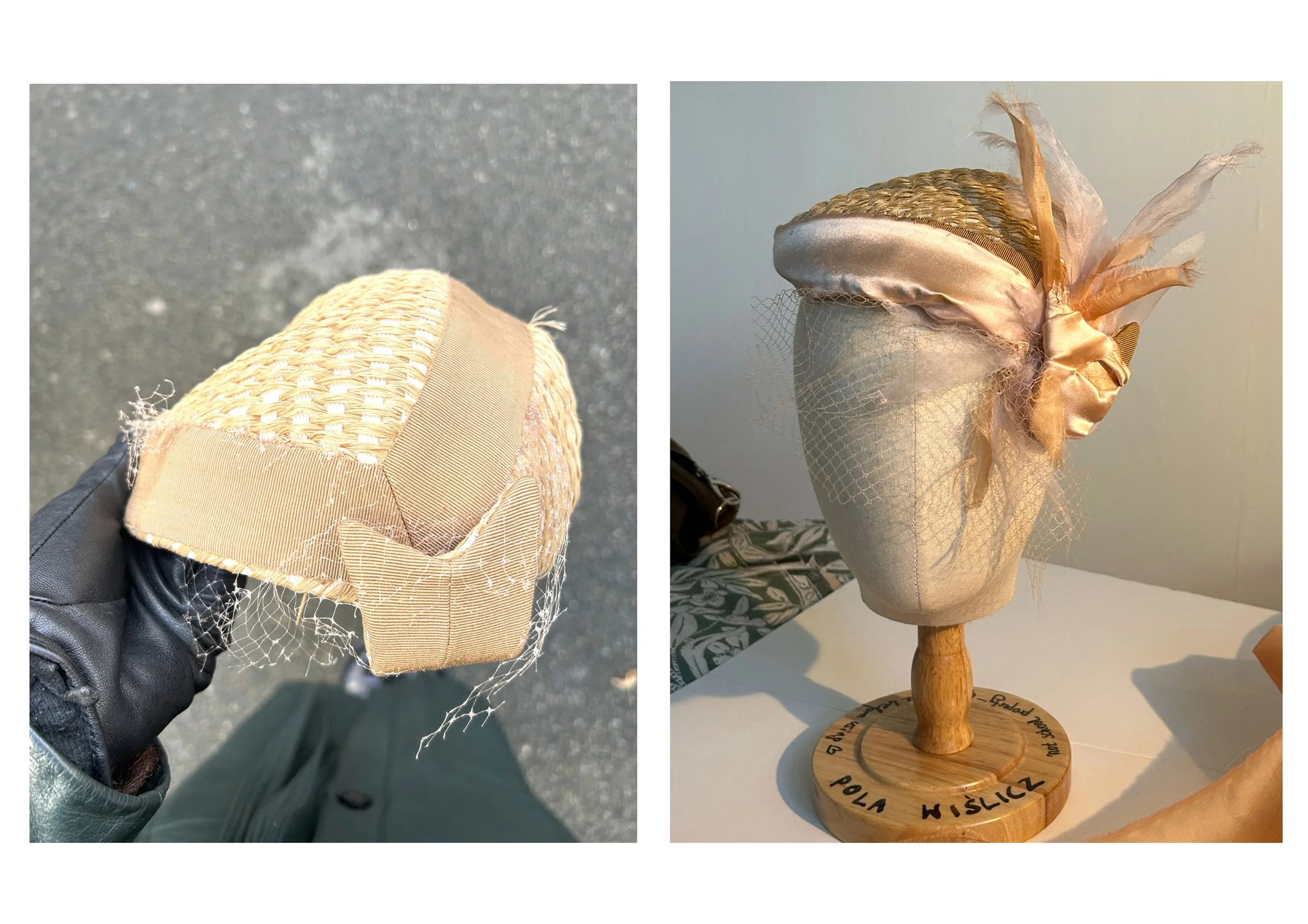
Wiślicz often sources materials second-hand. In Paris, she searched flea markets for worn and stained lace, old buttons and other pieces that already carried traces of a previous life. Some became more than references, finding their way directly into the line-up. One example is a damaged 1940s wicker hat, bought for €10 and upcycled into a look. Placing such period pieces alongside newly made garments helped create the clash of eras that gives the collection its character.
Her approach to embroidery is similarly eclectic and exploratory. Rather than relying on a specific traditional technique, Wiślicz develops her own combinations through trial, error and countless experiments. For the graduate collection, she attached metal staples directly into fabric later placed onto a transparent base, drawing inspiration from Teresa Tyszkiewicz’s Visage épingle series, in which the artist works with pins and needles. “The work was directly inspired by her art. Instead of pins, I used bent staples to achieve that metallic element.”
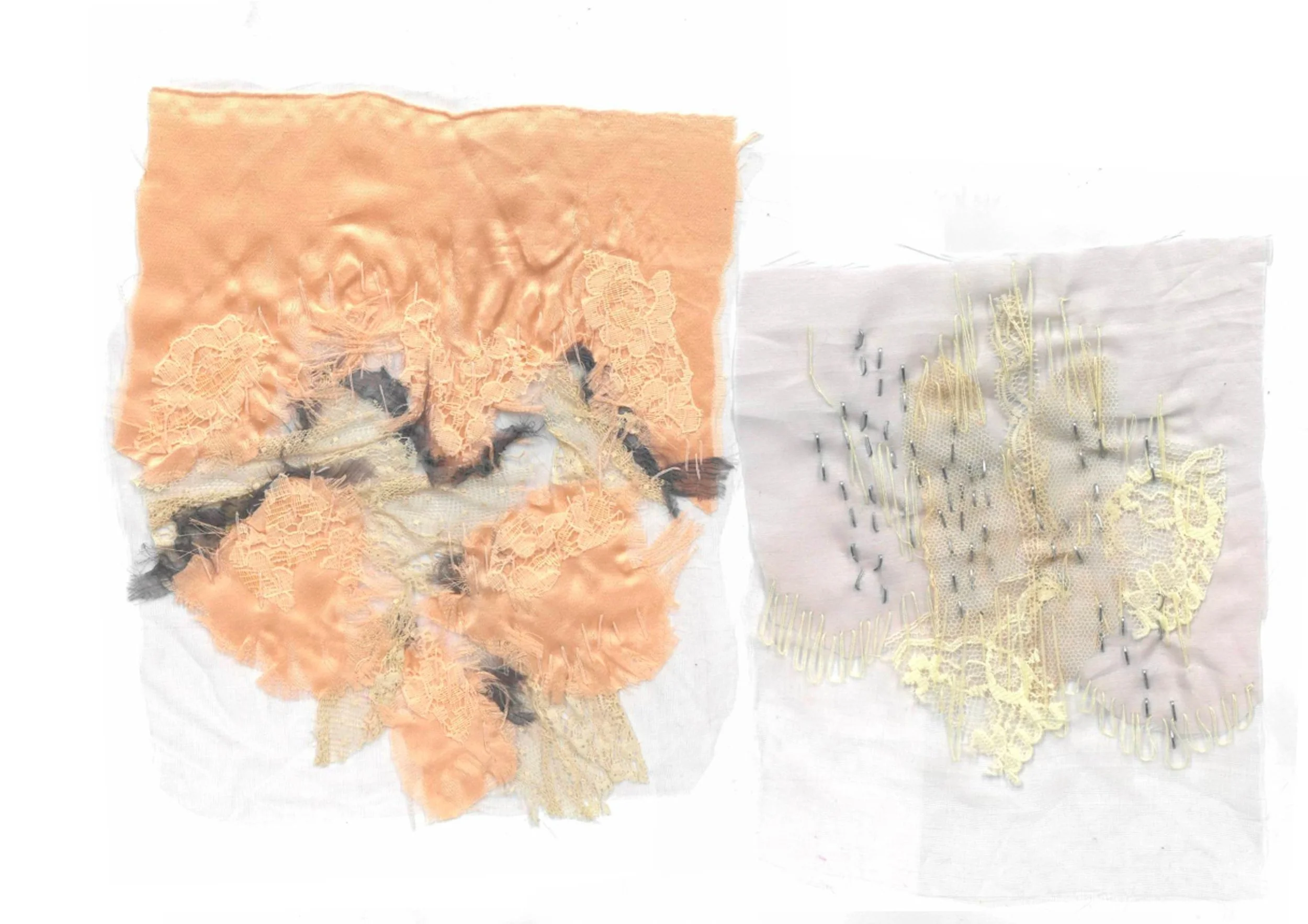
For Wiślicz, how the clothes look matters as much as how they feel to wear. She wanted even the relatively simple designs to offer something tactile. “I wanted these pieces, relatively simple in design, to be interesting to wear in some way, also from a tactile perspective. (…) It is important for me that everything is high-quality. I use natural fabrics - silk, cotton and wool- even in the coat lining - alongside second hand materials.” The embroidered surfaces were deliberately distressed “I actually achieved this effect with a cat brush,” she says, laughing. “And here it was also important that the fabric was actual silk. It wouldn’t have been possible with a different fabric, the material has to fray in a very specific way.”
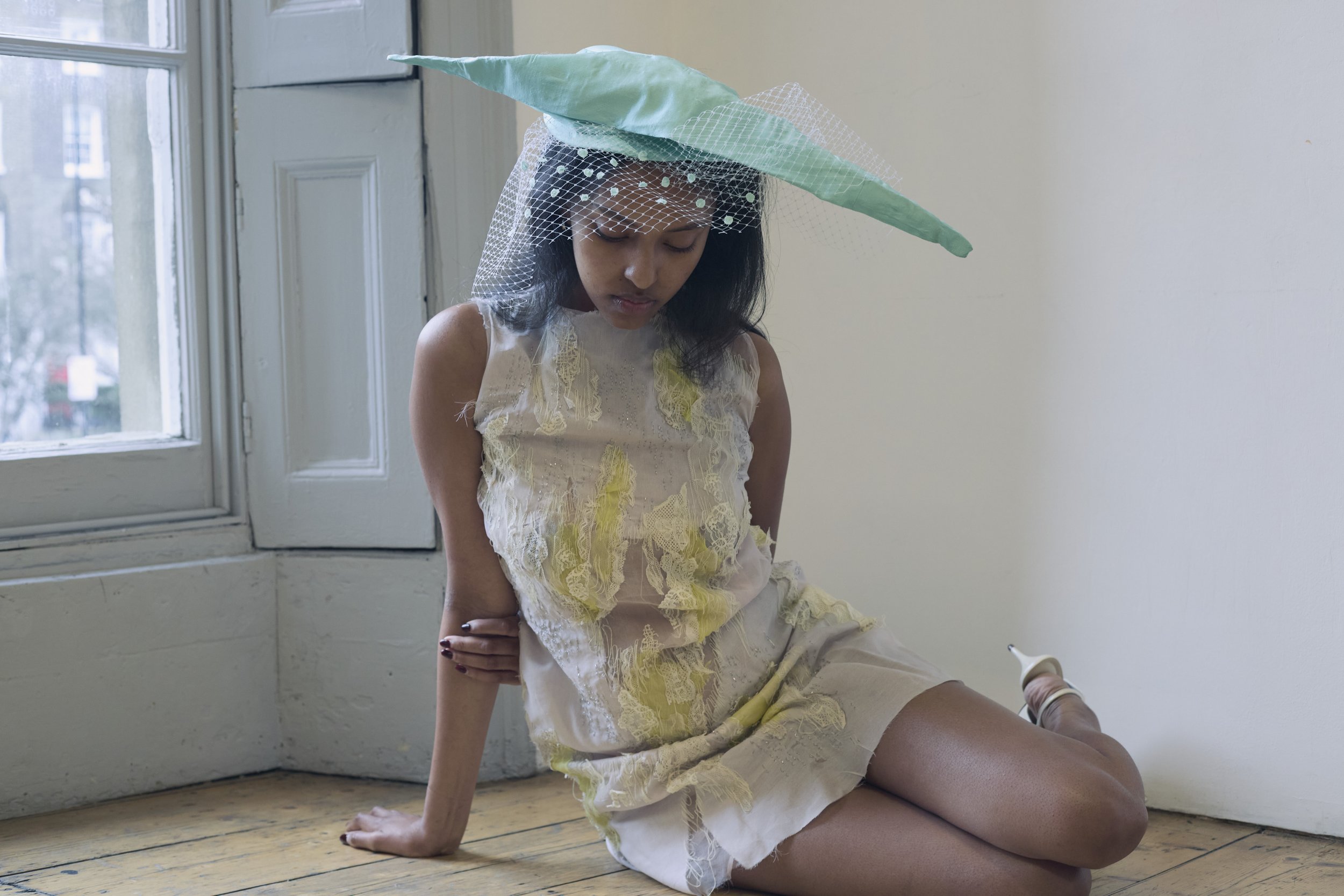
phot. Kaiwei Duan
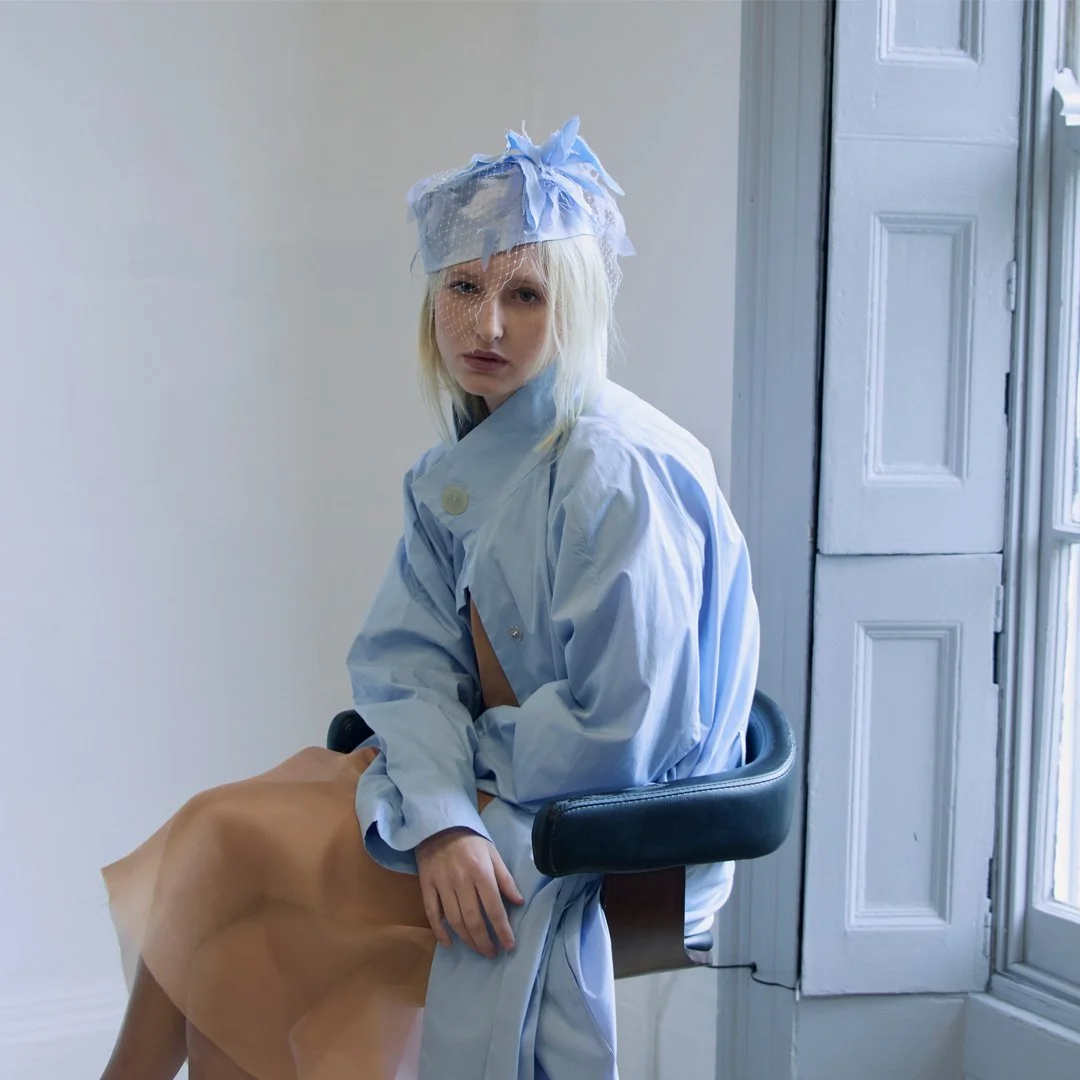
phot. Kaiwei Duan
This balance between damage and refinement was important throughout the collection. “It was really important for me to strike a balance between that ‘distressed’ look and the fact that it’s a functional, high-end piece.” That level of finish, Wiślicz acknowledges, comes at a cost, particularly in the time required to make each piece. “That is important to me as a designer - and especially with this master’s collection - realizing that if I’m creating fashion, if I’m putting so much work into it... well, we’re talking about countless hours of manual labor. So, if I were to put a price tag on it, it would naturally be a significant amount. Designing with that awareness, I want the quality to match the price. I believe we generally have an overproduction of everything, so I really didn’t want to create something that looks good on the surface but is actually poorly made – because then, what’s the point of doing it at all?”
A matter of scale
For a designer at the beginning of her career, Wiślicz holds a strikingly mature, sober view of the fashion industry and her place within it. When asked who she envisions wearing her pieces, she says “What I want most is to see them in everyday life, I’d love for someone to buy a piece and wear it to a party of their own accord. As for celebrities, I don’t have a specific list..though if Tilda Swinton wore something of mine, I’d be thrilled.”
She recalls a recent project that brought her particular satisfaction: “Someone I know collects various things, sort of artifacts, for his home. He asked me to make a hat that he simply wanted to display as a collectible object in his house. That was so special for me, knowing someone wanted my work just to have it at home.”
She has no desire to build a big fashion brand. Doing so would compromise both her process and scale of her work. Instead, she envisions creating a smaller, engaged community. “I’d much rather have a smaller clientele - people who are truly interested in what I do and for whom it actually holds meaning - than try to launch a big business and run several stores.”
She finds the same outlook among a new generation of London designers, who put community ahead of virality and treat fashion as a form of world-building.“When young designers look at these major brands, everything revolves around money … just look at how quickly creative directors change,” she reflects. “I think what really appeals today is doing something smaller in scale, or perhaps just smaller in terms of the scope of communication.” She points to Lucila Safdie, who organises screenings and events around her practice, and Kazna Asker, whose Fashion Week presentation incorporated food, tea, books and references to her Yemeni heritage. “It’s much more interesting to me when you can actually see someone pouring themselves into that community, and the community responding in kind… it’s far more authentic to me than seeing those same clothes presented in a more conventional way.”
Looking toward the future, Wiślicz hopes this community oriented, intimate approach represents a lasting shift in fashion. “I don’t want to sound alarmist, but with the rise of AI and the industrialization of everything, things are becoming impersonal very quickly.” she reflects. “I really hope we see more of personal, tangible connections between the maker and the wearer and an appreciation of craft and imperfections that come with it, especially in artistic fashion. People are exhausted by things being performative, impersonal, and overly perfect … I’d love to be part of the wave pushing back against that.”
WORDS BY PAULINA CZAJOR
Keep reading…
Paweł Robuta - craft, form and becoming
“I feel like the future of fashion isn't in building massive global brands. It's more in this local approach - where craft, durability, attention to detail, and quality of making really matter.”
“Finally, there’s pride in Eastern influences. It’s palpable. (…) We’re beginning to appreciate these local, cultural codes rather than fear or reject them.”
Arkadius: Freedom is creativity’s best friend
”One of the biggest problems in fashion and the world today is overproduction, a relentless pursuit of something undefined, and a failure to appreciate what’s most beautiful - nature in its simplest form."