Unexpected Encounter: Batik from Java to Kraków
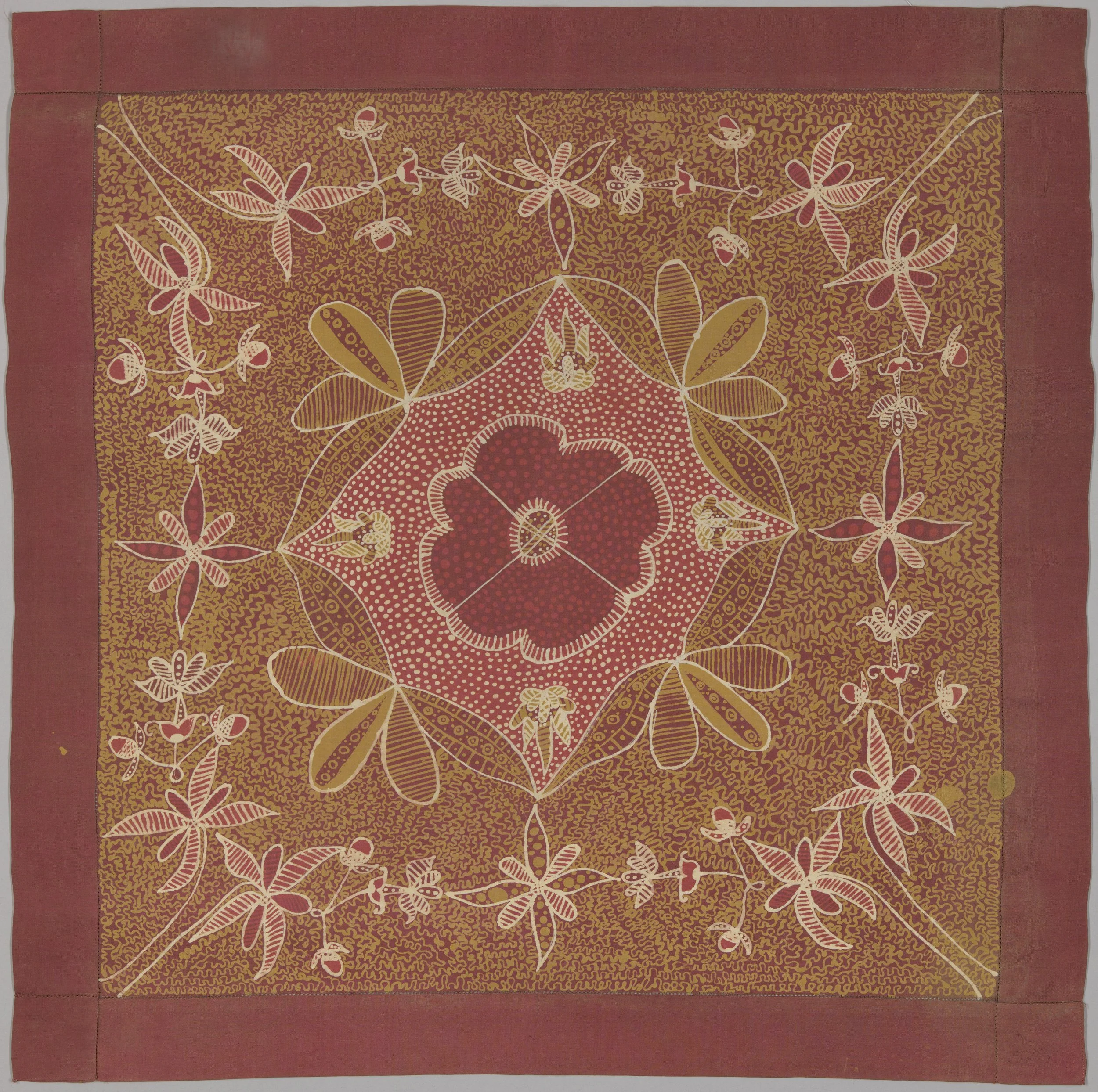
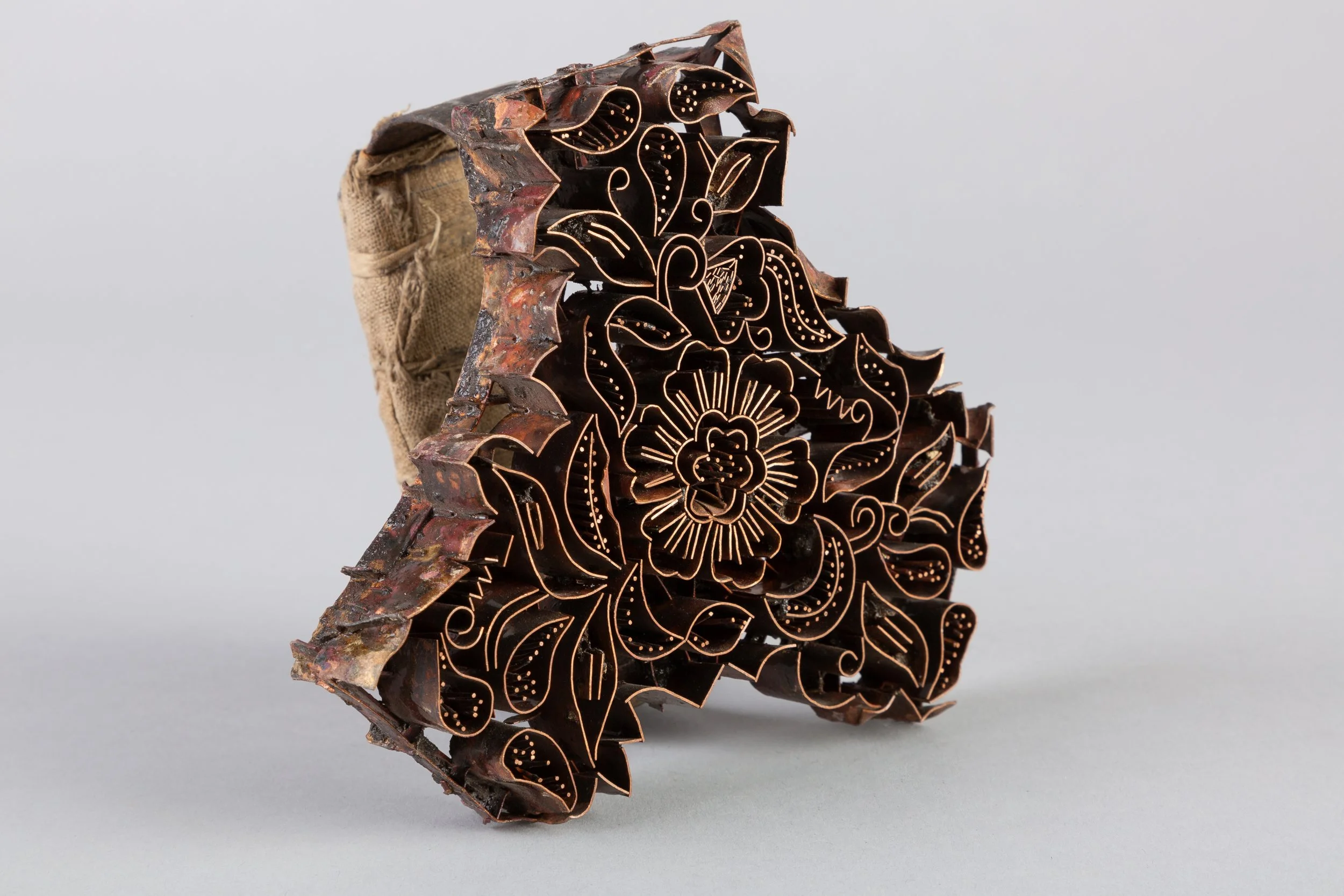
Batik is a resist-dyeing technique in which, put very simply, patterns are formed by applying wax to cloth before dyeing. Its elaborate, fine ornamentation is gradually built through successive layers of wax and dye, applied in repeated stages. The term batik is also used to describe patterned textiles created with this method. While wax-resist dyeing techniques have existed for over two thousand years across the Far East, Middle East, Central Asia, and India, batik reached its most sophisticated form on the island of Java, Indonesia. Its etymology is traced to the Javanese words amba (“to write”) and titik (“dot”), referring to the act of drawing in small marks.
There, batik became closely tied to social structure, spirituality, and philosophy. Over centuries, a distinctive visual language developed: motifs carried symbolic meanings, specific colours marked status, and compositions reflected the Javanese belief system known as kejawen. Importantly, despite the physical labour involved in its production, batik in Javanese court culture was not regarded as craft, but as an art discipline known as “alus”, highlighting its role as a vessel of cultural expression.
From the nineteenth century onwards, batik began to circulate globally, both through Dutch colonial networks and through direct contact between artists and craftspeople. It quickly captured the imagination of designers and artists across Europe.
By the early twentieth century, this fascination had evolved into what was often described as “batikomania.” Museums began collecting Javanese textiles, publications on Indonesian culture appeared across Europe, and artists reinterpreted batik within their own practices. Figures such as Henri Matisse, Charles Rennie Mackintosh, and Henry van de Velde studied its ornamental language. In fashion, Paul Poiret introduced batik into Parisian haute couture with his 1911 collection, presenting dramatic, richly patterned garments he called “Batticks”. Though brief, his engagement with batik brought it into a context of haute-couture. A decade later, Coco Chanel also explored batik in her designs, further positioning it within the language of European fashion.
From interiors to couture, batik was absorbed into a wide range of practices. Yet in each context, it took on a different character and in Poland, its story unfolded in a particularly interesting way.
BATIK MEETS PISANKI
The history of batik in Poland has been traced in depth by Maria Wrońska-Friend - an anthropologist and curator whose decades of research have made her one of the foremost authorities on the subject. Since completing her doctoral research in 1987 on the influence of Javanese batik on European art, she has continued to map its global and local trajectories. Her work builds in part on the legacy of the recognised art historian Irena Huml, who first brought attention to the existence of early Polish batiks and as Wrońska-Friend’s doctoral supervisor, played a formative role in shaping this field of study.
At the turn of the twentieth century, Kraków became a point of contact between Java and Poland. Collections of Javanese art, among them batik textiles, began to appear in the city, brought back by Polish researchers, including botanists working for the Dutch in Bogor, West Java. These objects found their way into museum collections and private archives, where they served as a source of study and admiration.
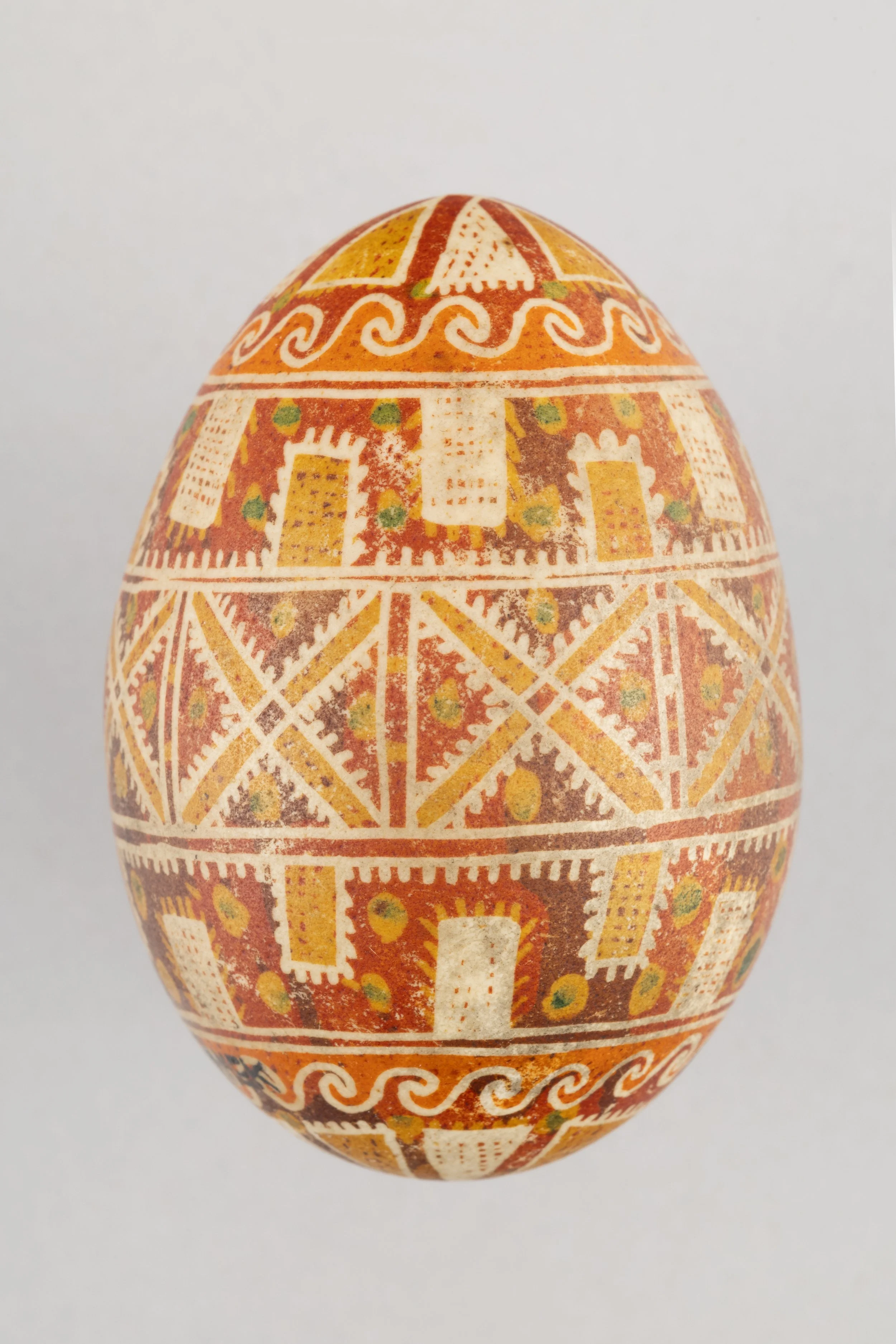
With its growing popularity across Europe in the early twentieth century, it was often framed as an imported, “Oriental” technique. In Poland, however, it was recognised as something surprisingly familiar. As Wrońska-Friend notes in her book “Art drawn with wax: Batik in Indonesia and Poland”, many Polish artists and critics at the time perceived batik not as an imported curiosity, but as a continuation of a local, Slavic tradition. For centuries though, a related wax-resist method had existed in the tradition of decorating Easter eggs called pisanki. The process of applying wax to preserve areas of colour before dyeing, closely echoed the principles of Javanese batik. What happened in Poland was therefore not simply an adoption of the batik technique, but rather a translation of it from surface of eggshell to cloth.
The earliest known examples of Polish batiks appeared around 1903 at an exhibition in Kraków, when the artist Jan Bukowski presented furniture upholstered in textiles decorated with what was called then “a manner of Easter eggs” - it was before the term batik had even entered the Polish language. From this point, other Kraków artists began to further explore the technique and its possibilities.
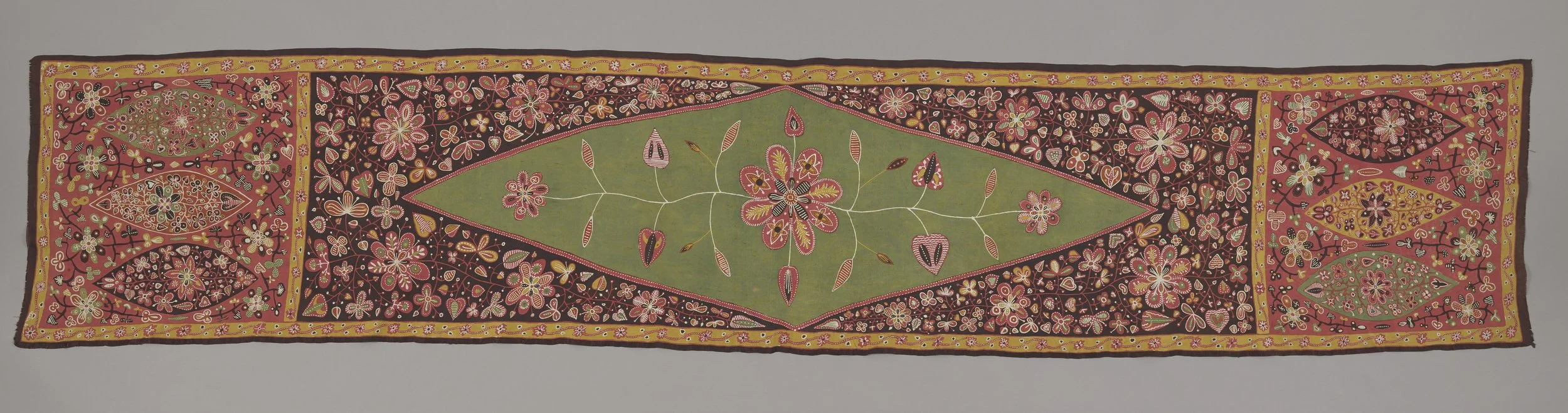
KRAKOW WORKSHOPS
The encounter of Javanese Batik and Polish culture found its most ambitious and fresh expression between 1913 and 1926 in the Kraków Workshops . Described by Irena Huml as a kind of “Polish Bauhaus” - in fact established six years before the Weimar school - the Workshops functioned as an experimental environment that brought together artists, designers, and craftspeople. Their programme encouraged collaboration and the rethinking of handicraft traditions within a modern context.
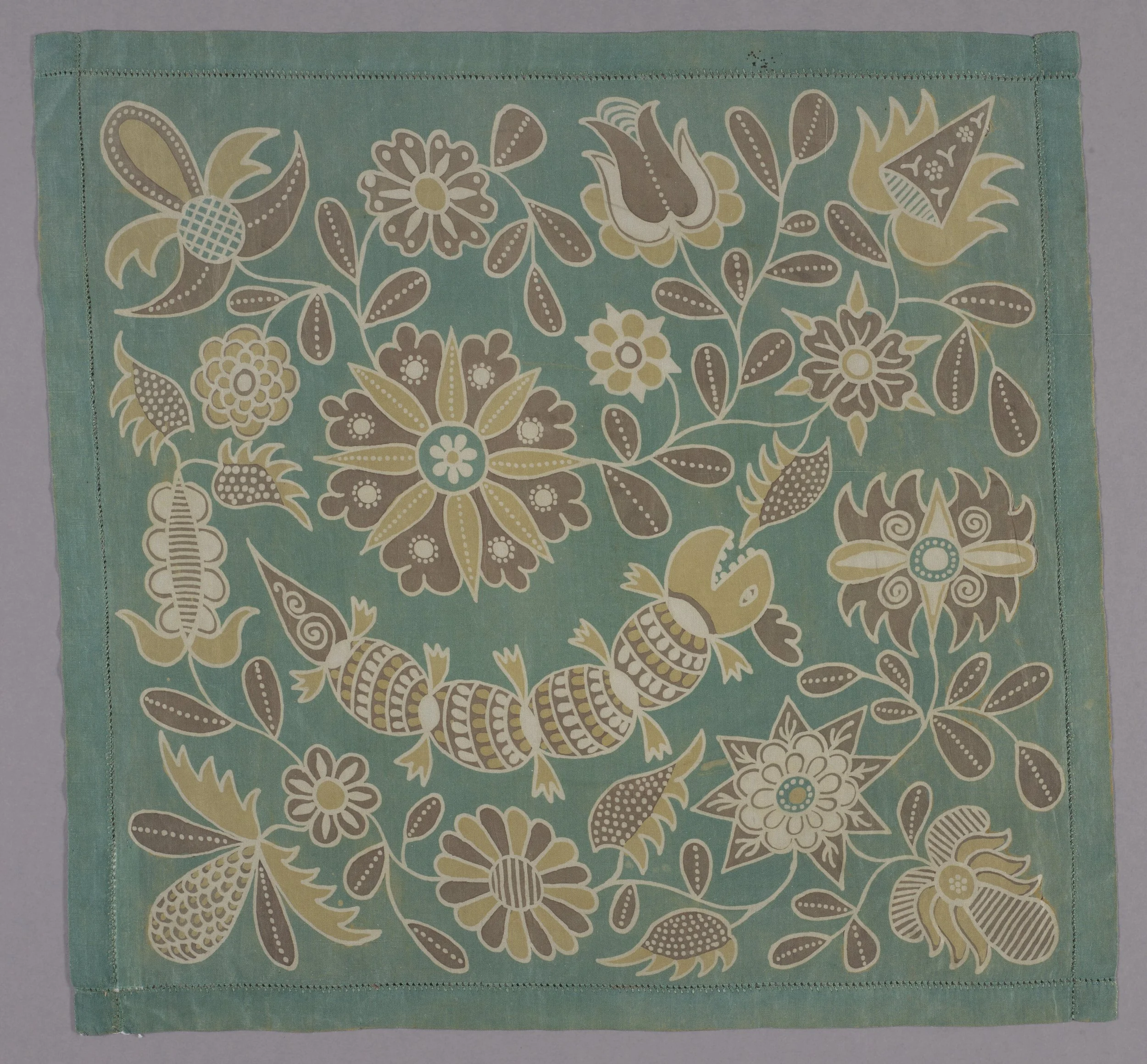
Within the organisation operated the Batik Atelier, led in its early years by Antoni Buszek - painter, technologist, teacher, one of the outstanding creators of the programme of new Polish decorative art. Under his direction, batik became both a technique and a site of in-depth inquiry. Participants engaged directly with the material process- testing methods of wax application, refining dyeing techniques, and expanding the chromatic possibilities of the medium. Polish artists developed an unusually rich palette, achieved entirely through the use of plant-based dyes.
Buszek’s pedagogical approach was as distinctive as the work itself, and was later referred to as the “Buszek method.” Rather than relying on academically trained artists, he worked with a group of young girls with no formal education. He believed in the value of intuitive, “unblemished” creativity, trusting that instinct could bring more authentic results than academic training. This approach somewhat echoed the Martine workshop established by Poiret, whom he met in Paris. Buszek’s method, however, proved more systematic and long-term, with a strong emphasis on the transmission of craft knowledge and the refinement of skills across generations.
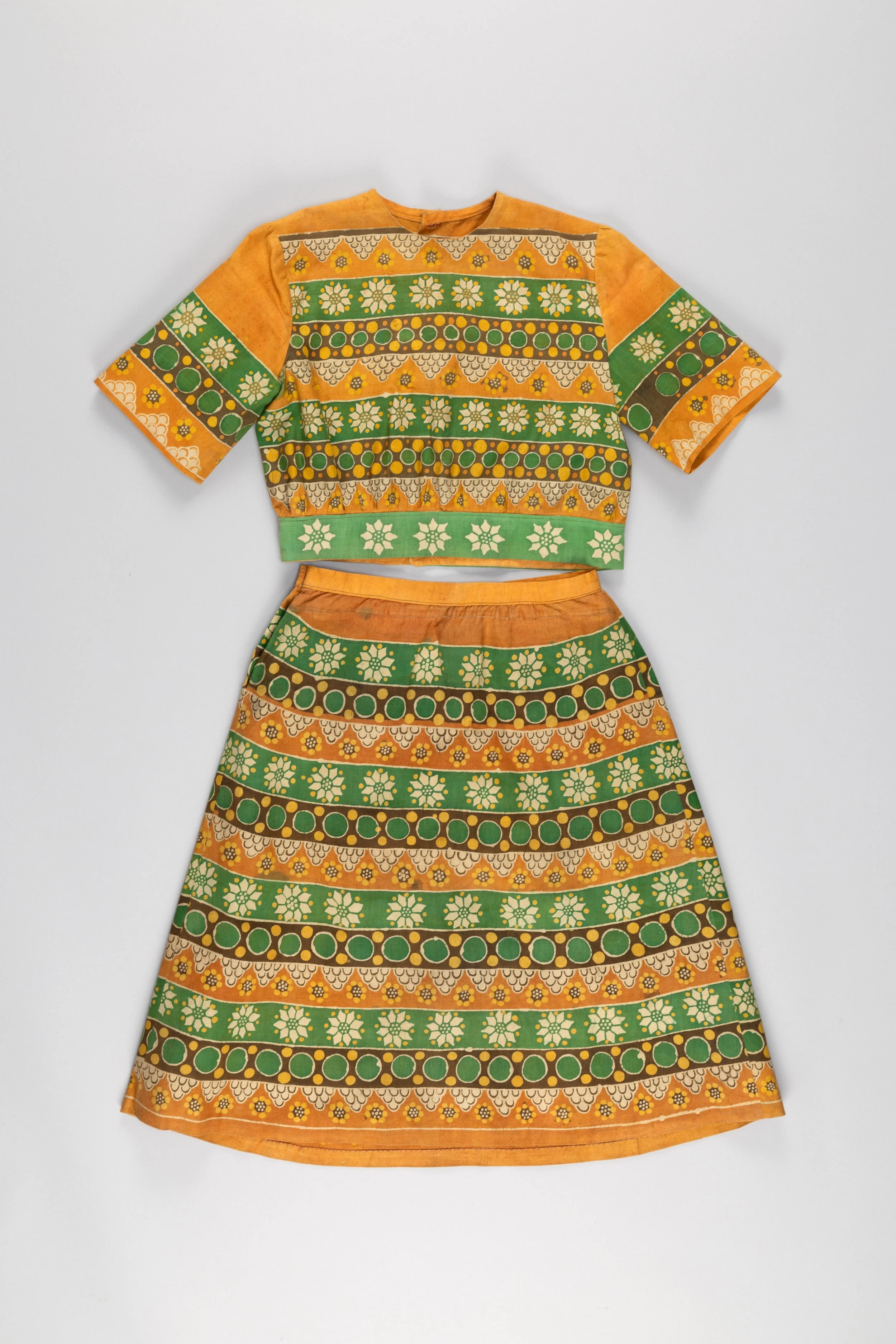
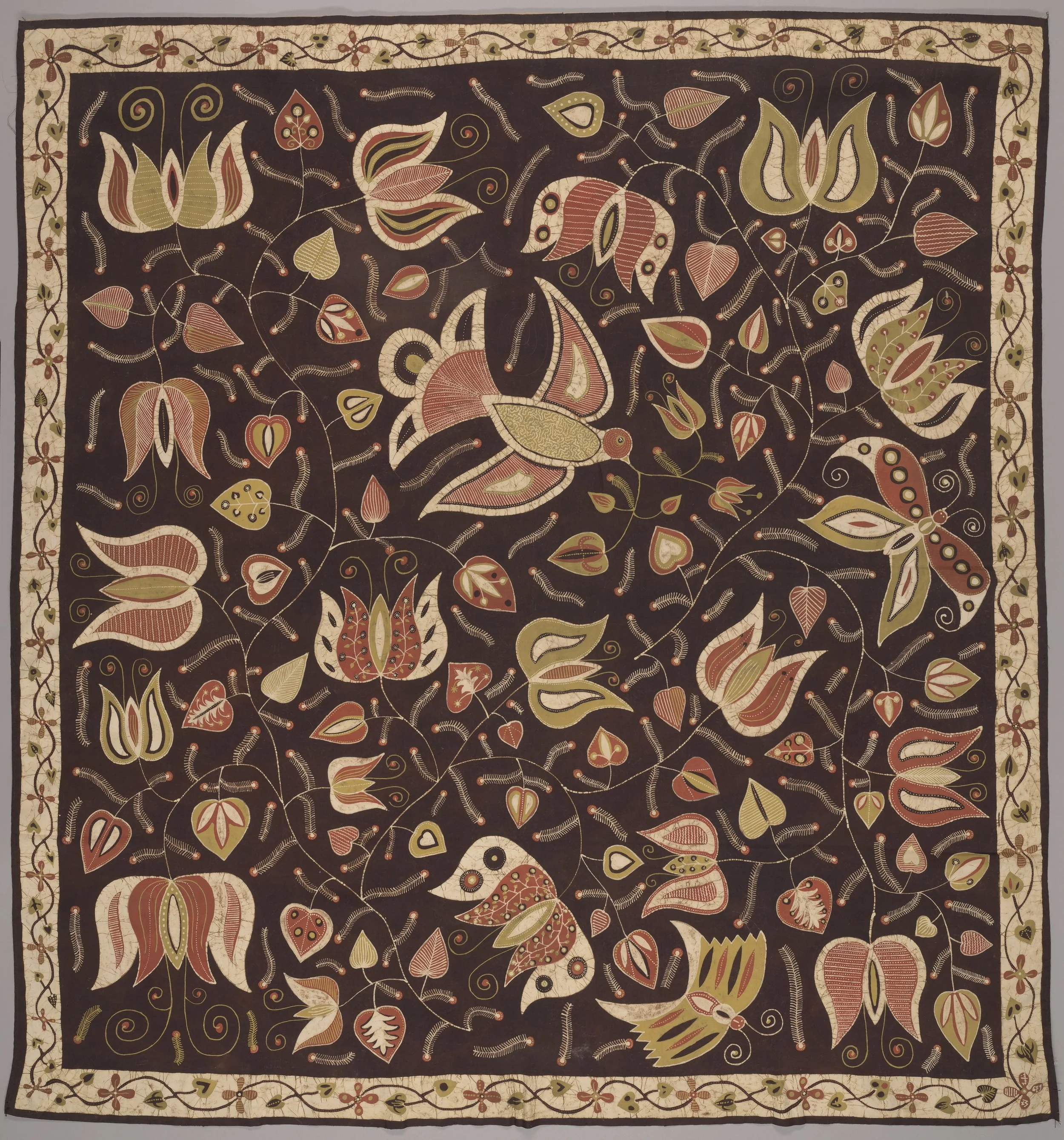
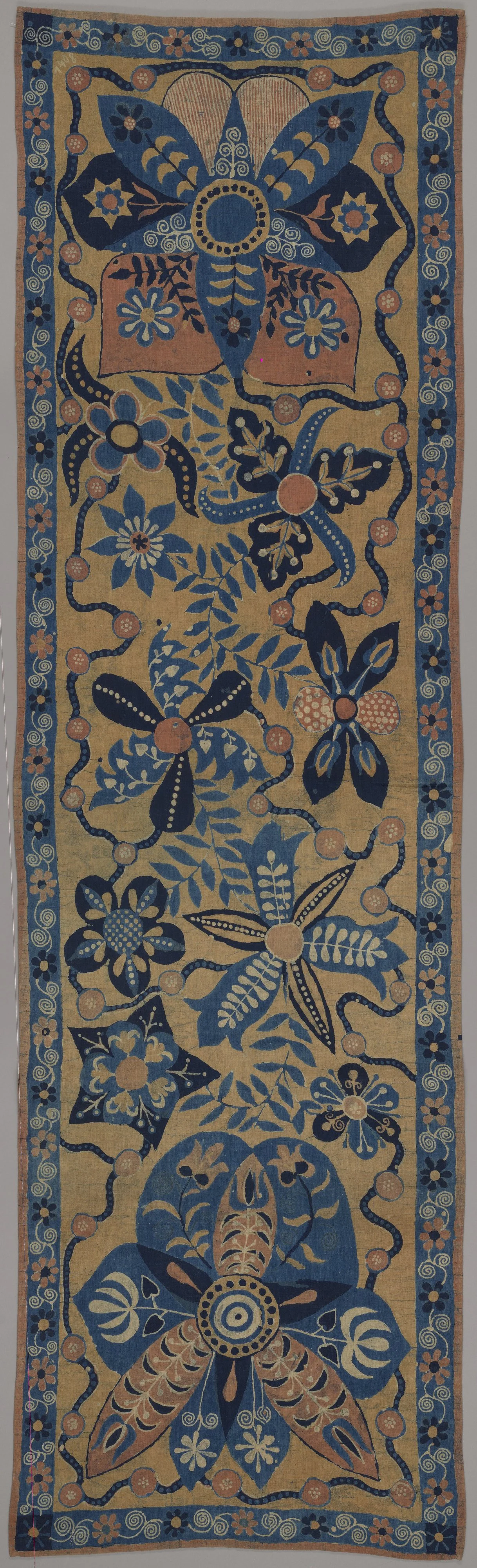
“Javanese-Kraków style”
The works produced in Poland between 1910 and 1925 reveal a compelling duality: a thorough study of Javanese compositional principles set against a deep grounding in local decorative traditions. Flowing patterns and structured geometry of batik were reinterpreted through the lens of Polish folk ornament, giving rise to what became known as the “Javanese-Kraków style” forming a genuine synthesis and fusion rather than appropriation.
By the 1920s, Polish batiks had reached a high point of international visibility exhibited near and far from Brussels, Hague, Paris to London. Batik Atelier’s work became part of the visual language through which the newly re-established Polish state presented itself to the world.
Undoubtedly a highlight came in 1925 at the International Exhibition of Decorative Arts in Paris when the atelier was awarded the Grand Prix. Batik also played a central role in the design of the Polish Pavilion. In the dining room by Wojciech Jastrzębowski, walls were lined with indigo-dyed batik panels executed by Batik Atelier’s talented practicioner Józefa Kogut, complementing the contemporary interior with a folk touch.
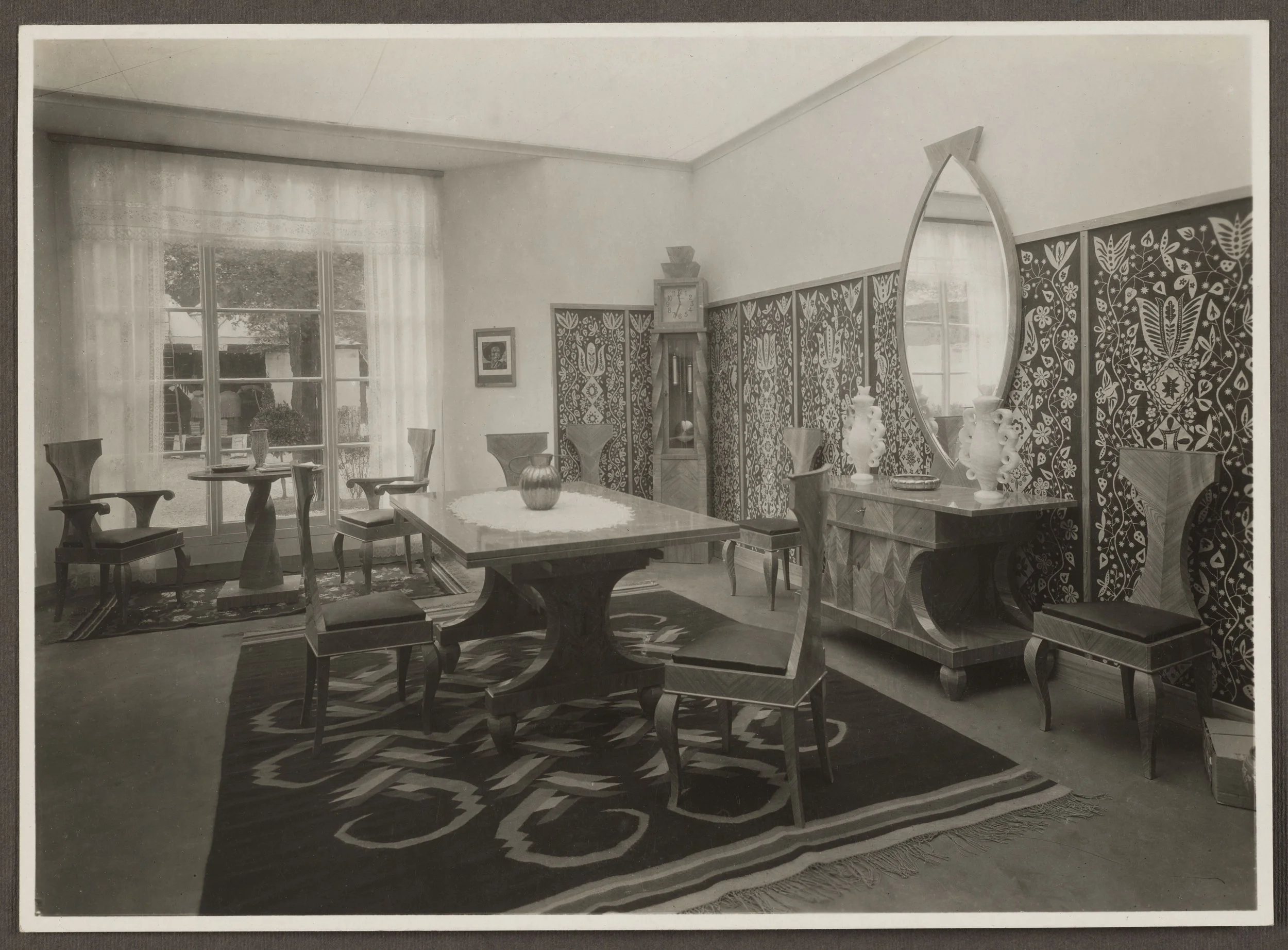


outstanding artistry of JÓZEFA KOGUT
Among the most notable artists of the Batik Atelier were Zofia and Józefa Kogut, Franciszka Delkowska, Felicja Kossowska, and Irena Chrobakówna. Out of them, Jozefa’s work is often refered to as most outstanding. Born in 1902, she began working with batik under Buszek’s mentorship at the age of eleven.
Despite the turbulence of the twentieth century - war, political shifts and economic instability, she remained committed to decorative art, maintaining a clarity of vision and a strong connection to her medium. Her work, rooted in rhythm, ornament, and playfulness continued to evolve while retaining its distinctive character. After the Second World War, her batik works became part of Cepelia’s international offering, reaching audiences in Brussels and New York.
Her legacy is now revisited and celebrated in the exhibition “Batik Girl. The Fabulous Józefa Kogut” at the Ethnographic Museum in Kraków (on view until 30th of August 2026!). It brings together nearly 200 works of the artist, and offers a rare insight into the breadth of her practice spanning textiles, paper, wood, as well as sketches, notes, and personal archives.
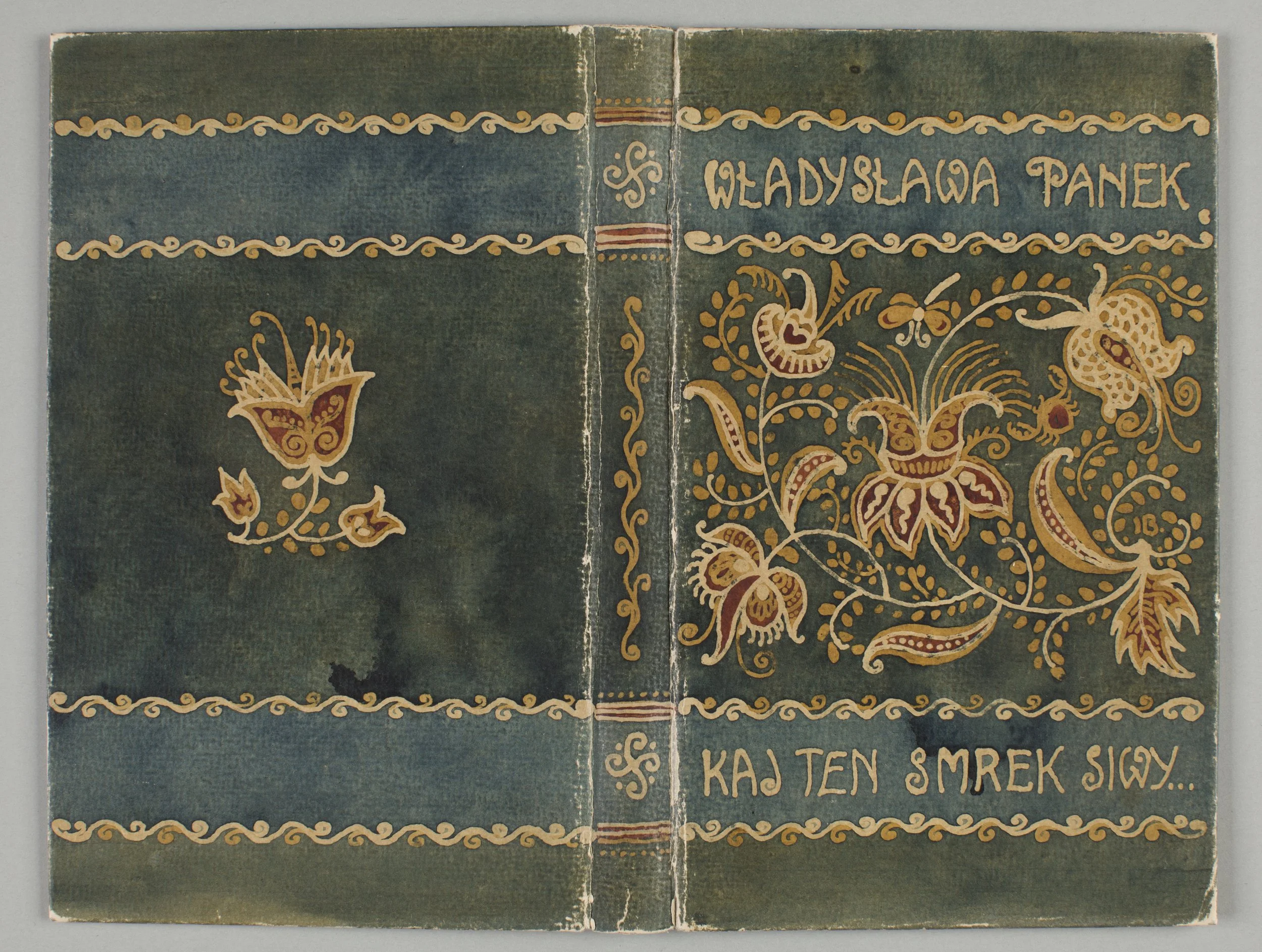
book cover in batik by Irena Bojarska; Kraków Workshops; 1921; collection of National Museum in Kraków
The early twentieth-century fascination with batik unfolded at a moment very much like today - when the pace of industrial production brought a renewed desire for things made by hand and with care. Batik, with its inherent slowness and unpredictability, offered something refreshing and inspiring then, just as it does now.
Seen from this perspective, batik is not a historical phenomenon but more of an open story, ready to continue and evolve in new directions by enchanted artists and designers.
________________________________
If you’re keen to explore batik further, Maria Wrońska-Friend’s “Art drawn with wax: Batik in Indonesia and Poland” is an inspiring read and gives an extensive deep-dive into the subject, alongside her ongoing research in the field which you can follow here.
And to encounter batik in person, don’t miss the “Batik Girl. “Batik Girl. The Fabulous Józefa Kogut” Fabulous Józefa Kogut” exhibition on your next trip to Kraków!
Words by paulina Czajor